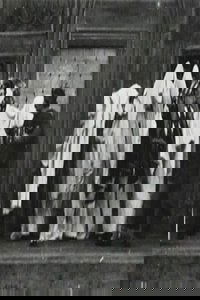
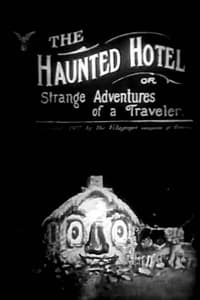
Silas Hayseed arrives in town and proceeds to put up a hotel noted for its 'tables,' which are all made of hard wood. The country yokel is shown to his room and divests himself of his best Sunday-go-to-meetin' clothes. His little bunch of whiskers that adorn his chin seem to be as proud of him as his Melindy Jane, whom he left in Grassville, back over yonder. He is finally undressed and tumbles into bed, resolving meanwhile to dream of the good prices he will realize in his produce. While pondering over matters, he looks around and discovers a Ghost standing in the middle of the room. Silas becomes scared, begosh, and leaping out on the floor begs the Ghost to do him no harm. The Ghost suddenly vanishes and the Hayseed is about to jump into bed again when Satan appears from under the sheets and scares him to such an extent that he is willing to promise him even a box of fresh rooster eggs if he will only go away.
Uncle Josh returns in this sequel to UNCLE JOSH'S NIGHTMARE. This time he checks into a hotel, presumably to get a better nights rest than he got at home. Of course the way bad luck follows Josh around we know this is a forlorn hope. Sure enough, quicker than you can say "Georges Méliès" a ghost pops up to make sure Uncle Josh is denied yet another good nights rest.
In this picture some very remarkable effects are obtained by the reversal of the motion of the negative. A man comes home, somewhat under the influence of liquor, and starts to remove his outer clothes. As fast as he removes each article and throws it from him, it immediately flies back, and when he is completely bewildered by this weird proceeding, His Satanic Majesty suddenly appears, and the man collapses.
A huge fly is bothering an old gentleman, who is trying to take a nap. The old gentleman, after standing the torment as long as he can, jumps up and taking a shot-gun, fires at the fly and blows it to pieces, then goes back to bed to sleep in peace. The idea is a very good one, and is very well worked out.
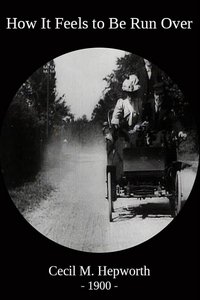
As the camera looks down an open road, a horse and carriage approaches, and passes by to one side of the field of view. Soon afterwards, an automobile comes up the road, straight towards the camera. As it gets nearer, the occupants start to wave frantically, but can a collision be avoided?
Two sets of images are superimposed. From the side, we see a two-masted ship. Across the deck walks a skeleton. It sits down, its legs akimbo. The legs separate and continue a dance while the body of the skeleton faces us and the skull moves its jaw bone. It rises and the legs rejoin the skull and body for an additional jig back and forth on deck.
The Count sets out to make a private room for him and his Countess, built in such a way no one can see, hear, and most importantly, disturb them. But unbeknownst to the Count, his wife has set her eyes on the court minstrel. Based on Edgar Allan Poe's “The Cask of Amontillado” and Honoré de Balzac's “La Grande Breteche”.
Frankenstein, a young medical student, trying to create the perfect human being, instead creates a misshapen monster. Made ill by what he has done, Frankenstein is comforted by his fiancée; but on his wedding night he is visited by the monster.
Abandoned by her maidservant in an isolated country house, a mother must protect herself and her baby from an invading tramp while her husband races home in a stolen car to save them.
Lizette loves Jean but a 10,000 franc dowry insisted upon by Jean's father is keeping them apart. Paul, Lizette's "black sheep" brother, begs that she gives him her saved money so he can increase it for her - at the gaming table!! He does win but there are a few who are determined he shall not reach home with his money. Paul also suffers from a bad heart and with the stress he feels from being set upon, he takes refuge at an inn. He seals the money up in an envelope addressed to Lizette Rouget but dies before he can deliver it safely to her. Lizette is now destitute, Jean having long ago deserted her but the ghost of Paul continues to haunt the inn's bedroom to guard the money from "unworthy hands".
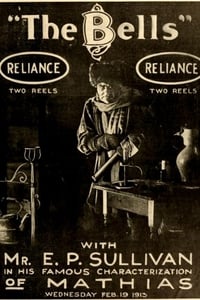
Thwarted by his despotic uncle from continuing his love affair, a young man's thoughts turn dark as he dwells on ways to deal with his uncle. Becoming convinced that murder is merely a natural part of life, he kills his uncle and hides the body. However, the man's conscience awakens; paranoia sets in and nightmarish visions begin to haunt him.
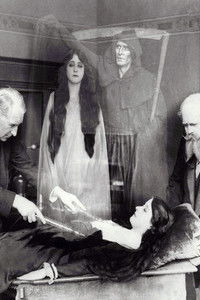
A mesmerist, obsessed with putting a beautiful woman under his power, hypnotizes her to try to force her to kill her fiancé. His plans are altered with the appearance of a deadly serpent.
Carmen, a maid, steals a locket belonging to the Aragon princess Maria Theresa and sells it to Gaines, a New York art collector, not knowing that the locket contains the clue to the Aragon family fortune's whereabouts. Based on the 1909 Broadway play of the same name by Paul Dickey and Charles W. Goddard.
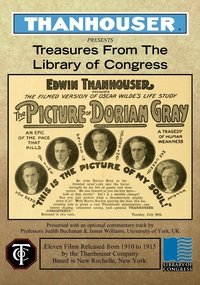
The Thanhouser Company's two-reel adaptation of Oscar Wilde's eponymous novel. “The plot is unusual, and even though none of the familiar epigrams of the author find their way into the subtitles there is an artistic flavor to the production. Dorian's picture shows evidence in the passing years of his selfish, dissipated life, though his own countenance remains unchanged. Harris Gordon handles the leading role effectively, and Helen Fulton was pleasing as the ill-fated young actress who won Dorian's heart." - The Moving Picture World, July 31, 1915.
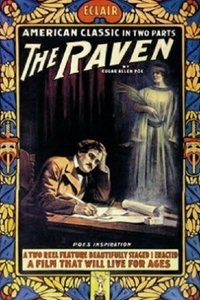
After a brief view of Edgar Allan Poe's family background, his grandfather, David Poe, Sr., an Irish immigrant to America, and his father, David Poe, Jr., the poet's life is depicted from the death of his mother and his subsequent adoption by John Allan, to his own tortured death in 1849. Expelled from the University of Virginia for incurring too many debts, Poe nonetheless courts and marries Virginia Clemm but is disowned by his foster father. While residing in Fordham, New York, Poe tries to earn a living as a writer but meets with little financial success. Overwhelmed by their impoverished state, Virginia dies and Poe sinks into a profound depression. Always a victim of alcohol and subject to hallucinations, Poe first imagines that his neighbor, Helen Whitman, is Virginia, then plunges himself into an elaborate delusion in which his wife's spirit, various other spectres and a raven finally drive him to his own death.
A young woman goes on a search for her kidnapped sister. She soon falls victim to a jealous queen who can't stand anyone who is considered more beautiful than herself. The adventure and terror begins as the young woman battles the evil queen to get to her sister.
The man is a mystery in the little town. He lives alone in his cabin and will not meet the advanced of his neighbors. One night he talks and tells the story of his life. He had been a prosperous lawyer in an eastern town and was engaged to be married to the sweetest of girls. The night before the wedding day she died and in his anguish he called in the devil. The devil said that he would bring back the departed life, but that if the man laughed he would lose his love again. And in the man's joy at his sweetheart's recovery he forgot and laughed and straight the girl died. "Here is Satan now," said the man, as he fell over dead.
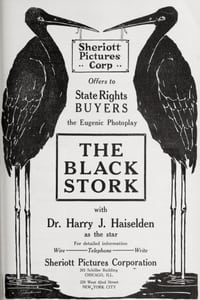
A young man and woman are considering marriage; eugenicist Harry J Haiselden warns that they are ill-matched and will produce defective offspring. He is right; their baby is born defective, dies quickly and floats into heaven.