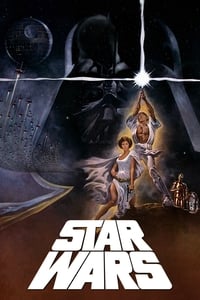
Princess Leia is captured and held hostage by the evil Imperial forces in their effort to take over the galactic Empire. Venturesome Luke Skywalker and dashing captain Han Solo team together with the loveable robot duo R2-D2 and C-3PO to rescue the beautiful princess and restore peace and justice in the Empire.
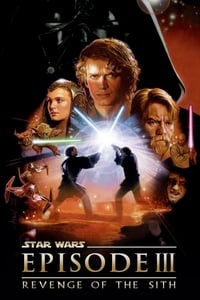
Star Wars: Episode III - Revenge of the Sith (2005)
When the sinister Sith unveil a thousand-year-old plot to rule the galaxy, the Republic crumbles and from its ashes rises the evil Galactic Empire. Jedi hero Anakin Skywalker must choose a side.
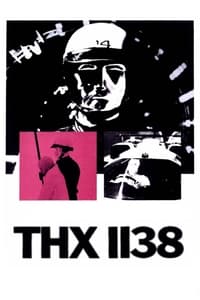
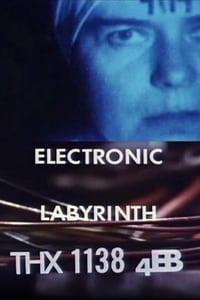
People in the future live in a totalitarian society. A technician named THX 1138 lives a mundane life between work and taking a controlled consumption of drugs that the government uses to make puppets out of people. As THX is without drugs for the first time he has feelings for a woman and they start a secret relationship.
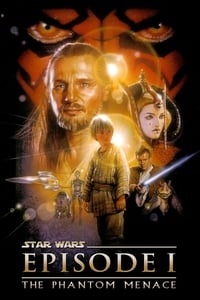
Anakin Skywalker, a young slave strong with the Force, is discovered on Tatooine. Meanwhile, the evil Sith have returned, enacting their plot for revenge against the Jedi.
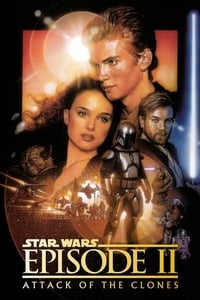
Star Wars: Episode II - Attack of the Clones (2002)
Following an assassination attempt on Senator Padmé Amidala, Jedi Knights Anakin Skywalker and Obi-Wan Kenobi investigate a mysterious plot into the heart of the Separatist movement and the beginning of the Clone Wars.
In an underground city in a dystopian future, the protagonist, whose name is "THX 1138 4EB", is shown running through passageways and enclosed spaces. It is soon discovered that THX is escaping his community. The government uses computers and cameras to track down THX and attempt to stop him; however, they fail. He escapes by breaking through a door and runs off into the sunset. The government sends their condolences to YYO 7117, THX's mate, claiming that THX has destroyed himself. Electronic Labyrinth: THX-1138 4EB is a 1967 science fiction short film written and directed by George Lucas while he attended the University of Southern California's film school.
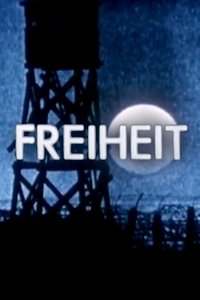
This film shows a German student escaping across the Berlin Border and being shot to death, while on the soundtrack, various platitudes about dying for freedom can be heard.
Look at Life is a short student film by George Lucas, produced for a course in animation while Lucas was a film student at USC Film School. The film's running time of exactly one minute was required by the course. This was the first film made by George Lucas and was heavily influenced by Canadian filmmaker Arthur Lipsett.
Herbie is a short 16mm black and white film by George Lucas and Paul Golding made in 1966 as part of their USC film school course. It is an abstract film with no story and no actors, that graphically depicts the reflections of moving light streaks and light flashes from traffic at night. It is set to a piece of jazz music by Herbie Hancock, whose first name was used for the title.
George Lucas's senior project at the University of Southern California in 1966. It was named for the lap time of the Lotus 23 race car that was the subject of the film. It is a nonstory visual tone poem depicting the imagery of a car going at full speed, and featuring the car's engine as the primary sound element. Shot on 16mm color film with a 14 man student crew, it was filmed at Willow Springs Raceway, north of Los Angeles, CA. The Lotus 23 was driven by Pete Brock.
6-18-67 is a short quasi-documentary film by George Lucas regarding the making of the Columbia film “Mackenna's Gold”. This non-story, non-character visual tone poem is made up of nature imagery, time-lapse photography, and the subtle sounds of the Arizona desert.
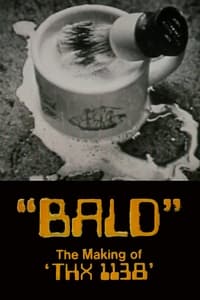
The film features a conversation between Lucas and Francis Ford Coppola, producer of THX 1138. They discuss Lucas' vision for the film, including his ideas about science fiction in general and in particular his concept of the "used future" which would famously feature in his film Star Wars. Intercut with this discussion is footage shot prior to the start of production of THX 1138 showing several of its actors having their heads shaved, a requirement for appearing in the film. In several cases the actors are shown being shaved in a public location. For example, Maggie McOmie is shaved outside the Palace of Fine Arts in San Francisco, while Robert Duvall watches a sporting event as his hair is cut off. Another actor, Marshall Efron, who would later play an insane man in the film, cut off his own hair and was filmed doing so in a bathtub.
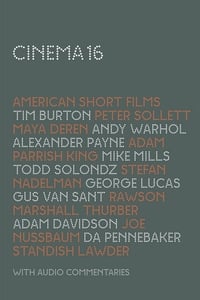
CINEMA16 celebrates the short film by showcasing some of the best classic and award-winning shorts on DVD. With over three hours of films CINEMA16: AMERICAN SHORT FILMS is essential viewing for anyone with an interest in the moving image. Films include Gus Van Sant's 1982 adaptation of a William S. Burroughs short story, The Discipline Of DE, Tim Burton's early stop motion animated classic Vincent, George Lucas' USC short Freiheit, Alexander Payne's previously unreleased UCLA graduation short Carmen, Paperboys by Mike Mills, D.A. Pennebaker's Duke Ellington scored Daybreak Express, Todd Solondz's NYU short Feelings, along with Oscar Winner The Lunch Date by Adam Davidson, Stefan Nadelman's multi- award winning documentary Terminal Bar, Joe Nussbaum's cult classic George Lucas In Love and 2006 Sundance Winner The Wraith Of Cobble Hill by Adam Parrish King. Films are subtitled in French, German, Italian, Spanish and Japanese, and include commentaries from many of the directors involved.
A program of debut shorts from some of cinema's greatest diectors. Curated by Emir Kusturica and Stephen Frears, featured auteurs include George Lucas' "1.42.08 to Qualify" (1966), Ridley Scott's "A Boy and a Bicycle" (1965), Robert Zemeckis' "The Lift" (1972), Tony Scott's "One of the Missing" (1969), Kusturica's "Guernica" (1978), Luc Besson's "L'avant dernier" (1981), Lars von Trier's "Nocturne" (1980), Terry Gilliam's "Storytime" (1968), Paul Verhoeven's "A Lizzard Too Much" (1960), Roman Polanski's "Le gros et le maigre" (1960), Jane Campion's "Peel" (1982), and Frears' "The Burning" (1967).

 age 8+