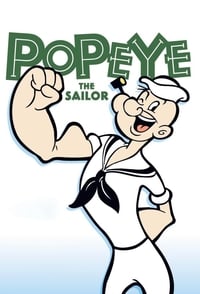
Follows the adventures of the famed spinach-eating sailor man.Popeye started out as a character in the daily comic strip "Thimble Theatre" in 1929. In the early 30s, Max and Dave Fleischer made him the star of his own cartoon. Bluto, Popeye's rival, will do anything it takes to get Olive Oyl, Popeye's girlfriend. Popeye is always willing to get her out of trouble.
"The Woody Woodpecker Show" was a long-running 30-minute American television series mainly composed of the animated cartoon escapades of Woody Woodpecker and other Walter Lantz characters including Andy Panda, Chilly Willy and Inspector Willoughby. The series was revived and reformatted several times, but remained popular for nearly four decades and allowed the studio to continue making theatrical cartoons until 1972 when it shut down. It also kept the Walter Lantz/Universal "Cartunes" made during the Golden Age of American animation a part of the American consciousness.
Mighty Mouse is an American animated anthropomorphic superhero mouse character created by the Terrytoons studio for 20th Century Fox. The character made its first appearance in 1942 (originally named Super Mouse) and subsequently appeared in 80 theatrical films produced between 1942 and 1961. These films later appeared on American television from 1955 through 1967 on the CBS television network on Saturday mornings.Mighty Mouse has also appeared in comics and other media.
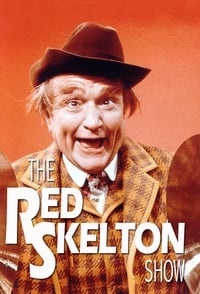
The Red Skelton Show is an American variety show that was a television staple for two decades, from 1951 to 1971. It was second to Gunsmoke and third to The Ed Sullivan Show in the ratings during that time. Skelton, who had previously been a radio star, had appeared in several motion pictures as well. Although his television series is largely associated with CBS, where it appeared for more than fifteen years, it actually began and ended on NBC. During its run, the program received three Emmy Awards, for Skelton as best comedian and the program as best comedy show during its initial season, and an award for comedy writing in 1961.
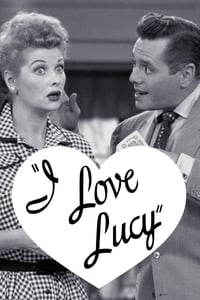
Cuban Bandleader Ricky Ricardo would be happy if his wife Lucy would just be a housewife. Instead she tries constantly to perform at the Tropicana where he works, and make life comically frantic in the apartment building they share with landlords Fred and Ethel Mertz, who also happen to be their best friends.
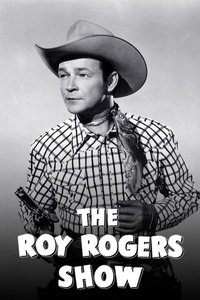
Roy Rogers is the owner of the RR Ranch in the Mineral City area, which he runs with the help of the German shepherd dog Bullet and his horse Trigger. Roy, supported by his friend Pat Brady, is often helping the weakest usually threatened by cattle thieves, dishonest sheriffs and villains of various kinds. Pat Brady works as a cook at the Eureka Café, owned by Dale Evans.
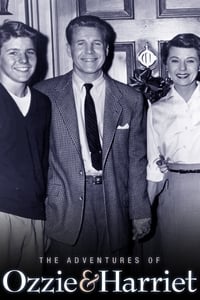
The Adventures of Ozzie and Harriet is an American sitcom, airing on ABC from October 3, 1952 through March 26, 1966, starring the real life Nelson family. After a long run on radio, the show was brought to television where it continued its success, running on both radio and television for a few years. The series stars Ozzie Nelson and his wife, singer Harriet Nelson, and their young sons, David and Eric "Ricky" Nelson. Don DeFore had a recurring role as the Nelsons' friendly neighbor "Thorny".
Our Miss Brooks is an American situation comedy starring Eve Arden as a sardonic high school English teacher. It began as a radio show broadcast on CBS from 1948 to 1957. When the show was adapted to television, it became one of the medium's earliest hits. In 1956, the sitcom was adapted for big screen in the film of the same name.
Walt Disney Productions has produced an anthology television series under several different titles since 1954. The original version of the series premiered on ABC, Wednesday night, October 27, 1954. The show, which was hosted by Walt Disney until his death and then from 1996 to 2002 by then-CEO Michael Eisner (with one-off hosts or no hosts during other periods) has since aired continually as either a weekly program or an irregular series of specials on several networks and streaming services, most recently on ABC and Disney+. The show is the second longest showing prime-time program on American television, behind its rival, Hallmark Hall of Fame. However, Hallmark Hall of Fame was a weekly program only during its first five seasons, while Disney remained a weekly program for more than forty years.
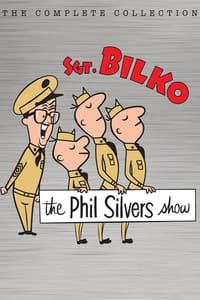
The Phil Silvers Show, originally titled You'll Never Get Rich, was a sitcom which ran on CBS from 1955 to 1959 for 142 episodes, plus a 1959 special. The series starred Phil Silvers as Master Sergeant Ernest G. Bilko of the United States Army.
The series was created and largely written by Nat Hiken, and won three consecutive Emmy Awards for Best Comedy Series. The show is sometimes titled Sergeant Bilko or simply Bilko in reruns, and is very often referred to by these names, both on-screen and by viewers. The show's success transformed Silvers from a journeyman comedian into a star, and writer-producer Hiken from a highly-regarded behind-the-scenes comedy writer into a publicly recognized creator.
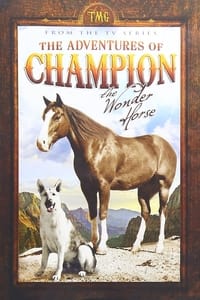
The Adventures of Champion follow a wild stallion named Champion, who remarkably becomes friends with a young boy named Ricky North.The show followed the boy and the horse as they went on crazy adventures in the Southern West during the late 1800s.
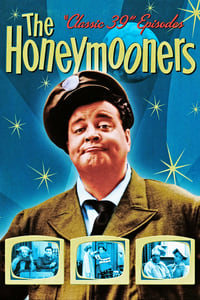
A bus driver and his sewer worker friend struggle to strike it rich while their wives look on with weary patience. One of the most influential situation comedy television series in American history.
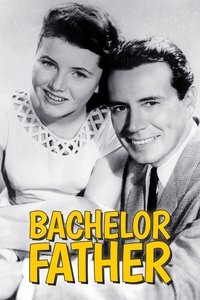
Bachelor Father is an American sitcom starring John Forsythe, Noreen Corcoran, and Sammee Tong. The series first premiered on CBS in September 1957 before moving to NBC for the third season in 1959. The series' fifth and final season aired on ABC from 1961 to 1962. A total of 157 episodes were aired. The series was based on "A New Girl in His Life", which aired on General Electric Theater on May 26, 1957.
Bachelor Father is the only primetime series ever to run in consecutive years on the three major televisions networks.
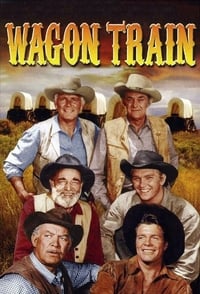
The series initially starred veteran movie supporting actor Ward Bond as the wagon master, later replaced upon his death by John McIntire, and Robert Horton as the scout, subsequently replaced by lookalike Robert Fuller a year after Horton had decided to leave the series.
The series was inspired by the 1950 film Wagon Master directed by John Ford and starring Ben Johnson, Harry Carey Jr. and Ward Bond, and harkens back to the early widescreen wagon train epic The Big Trail starring John Wayne and featuring Bond in his first major screen appearance playing a supporting role. Horton's buckskin outfit as the scout in the first season of the television series resembles Wayne's, who also played the wagon train's scout in the earlier film.
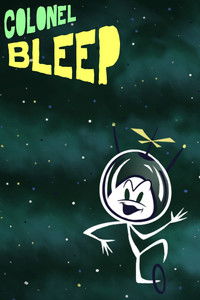
Colonel Bleep was the first color cartoon ever made for television. It was created by Robert D. Buchanan, and was filmed by Soundac of Miami. The show was originally syndicated in 1957 as a segment on Uncle Bill's TV Club. 104 episodes, of varying length of between three and six minutes each, were produced. Of these episodes, slightly fewer than half are known to survive today.
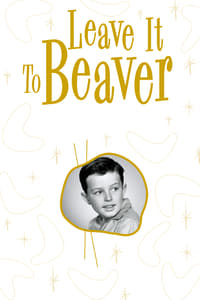
Leave It to Beaver is an American television situation comedy about an inquisitive and often naïve boy named Theodore "The Beaver" Cleaver and his adventures at home, in school, and around his suburban neighborhood. The show also starred Barbara Billingsley and Hugh Beaumont as Beaver's parents, June and Ward Cleaver, and Tony Dow as Beaver's brother Wally. The show has attained an iconic status in the US, with the Cleavers exemplifying the idealized suburban family of the mid-20th century.
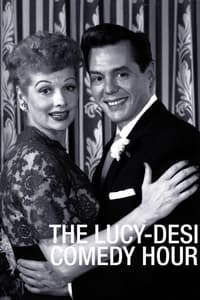
The Lucy–Desi Comedy Hour is a collection of thirteen one-hour specials airing occasionally from 1957 to 1960, and originally served as part of Westinghouse Desilu Playhouse. Its original network title was The Ford Lucille Ball-Desi Arnaz Show for the first season, and The Westinghouse Desilu Playhouse Presents The Lucille Ball-Desi Arnaz Show for the following seasons. It was the successor to the classic comedy, I Love Lucy, and featured the same major cast members. The production schedule avoided the grind of a regular weekly series.
Desilu produced the show, which was mostly filmed at their Los Angeles studios with occasional on-location shoots at Lake Arrowhead, Las Vegas and Sun Valley, Idaho. CBS reran the show under the "Lucy-Desi" title during the summers of 1962-1967, after which it went into syndication.
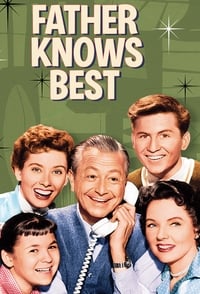
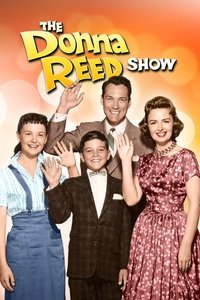
Revolves around typical family problems, such as firing a clumsy housekeeper, throwing a retirement bash for a colleague, and finding quality time away from the children.
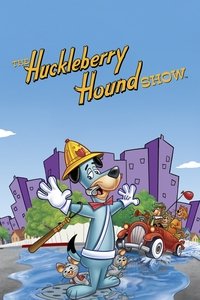
The Huckleberry Hound Show is a 1958 syndicated animated series and the second from Hanna-Barbera following The Ruff & Reddy Show, sponsored by Kellogg's. Three segments were included in the program: one featuring Huckleberry Hound; another starring Yogi Bear and his sidekick Boo Boo; and a third with Pixie and Dixie and Mr. Jinks, two mice who in each short found a new way to outwit the cat Mr. Jinks.
Felix the Cat follows the offbeat adventures of that curious feline, Felix. Although he was quickly overshadowed by Walt Disney's Mickey Mouse, America's favorite cat still remains a classic.
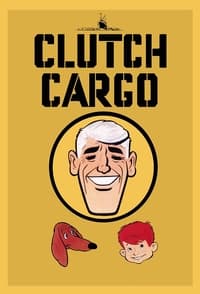
Clutch Cargo is an animated television series produced by Cambria Productions and syndicated beginning on March 9, 1959. Notable for its very limited animation, yet imaginative stories, the series was a surprise hit at the time, and could be seen on 65 stations nationwide in 1960.
This animated series was broadcast in Italy in syndication in the early 1980s with two different titles: Tre contro tutti and Clutch Cargo.
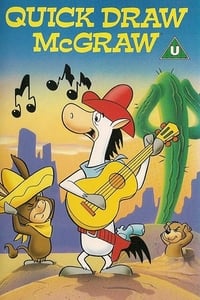
The Quick Draw McGraw Show is the third cartoon television production created by Hanna-Barbera, starring an anthropomorphic cartoon horse named Quick Draw McGraw. The series featured 3 cartoons per episode, one each by Quick Draw McGraw & Baba Looey, father and son dog duo Augie Doggie & Doggie Daddy, and cat and mouse detectives Snooper & Blabber.
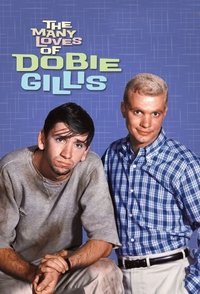
The Many Loves of Dobie Gillis is an American sitcom that aired on CBS from 1959 to 1963. The series and several episode scripts were adapted from a 1951 collection of short stories of the same name, written by Max Shulman, who had also written a feature film adaptation of his short stories for MGM in 1953, The Affairs of Dobie Gillis.
The series revolved around the life of teenager/young adult Dobie Gillis, who, along with his best friend, beatnik Maynard G. Krebs, struggles against the forces of his life - high school, the military, college, and his parents - as he aspires to attain both wealth and dates with girls. The Many Loves of Dobie Gillis was produced by Martin Manulis Productions in association with 20th Century Fox Television. Creator Shulman also wrote the theme song in collaboration with Lionel Newman.
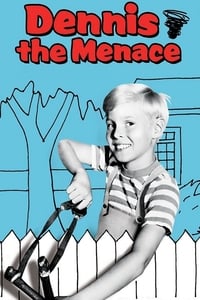
This 1959-1963 television situation comedy series follows the lives of the Mitchell family, Henry, Alice, and their only child Dennis, an energetic, trouble-prone, mischievous, but well-meaning boy, who often tangles with his peace-and-quiet-loving neighbor George Wilson, a retired salesman, or, later, with George's brother John, a writer. Dennis is basically a good, well-intentioned boy who always tries to help people, but who winds up making situations worse – often at Mr. Wilson's expense.
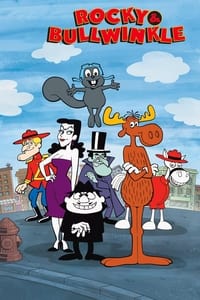
A variety show, with the main feature being the serialized adventures of the two title characters, the anthropomorphic moose Bullwinkle and flying squirrel Rocky. The main adversaries in most of their adventures are the Russian-like spies Boris Badenov and Natasha Fatale. Supporting segments include Dudley Do-Right, Peabody's Improbable History, and Fractured Fairy Tales, among others.
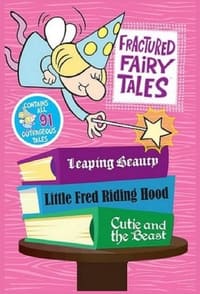
With a zany ensemble cast of princesses, fairy godmothers, evil queens and trolls, Fractured Fairy Tales presents your favorite childhood stories with a silly modern twist.
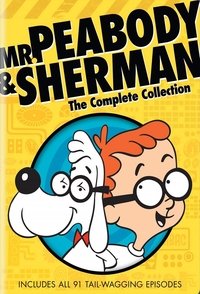
Peabody. who happens to be a dog, is the smartest being in existence. He has accomplished many things in his life as a business magnate, inventor, scientist, Nobel laureate, gourmand, and two-time Olympic medalist. Peabody becomes sad and lonely and decides to adopt his own human son. In an alley, he meets Sherman, a bespectacled, red-haired boy. After saving Sherman from a group of bullies, Peabody discovers that Sherman is an orphan and decides to adopt him.
After a court appearance and a talk with the President and the government, Peabody becomes Sherman's new guardian. Mr. Peabody tells Sherman not to call him "Daddy" and to call him by his name, "Mr. Peabody", or, when speaking informally, "Peabody".
Believing that boys need running room, Peabody invents the WABAC time machine as a birthday gift for Sherman. He and Sherman go back in time to see a Roman speaking in Latin; Peabody adds a translator circuit to the machine so that everyone seems to speak English. They see the Roman again and learn that he is a used chariot salesman. Their next trip is to see Ben Franklin flying his kite that proved lightning was electricity, but Peabody and Sherman discover that they cannot interact with the past. Peabody makes some more adjustments, turning the WABAC into a "should-have-been machine". This causes past events to seem distorted and anachronistic and famous people to behave out of character.
The Bugs Bunny Show
The Bugs Bunny Show is an Animated television anthology series hosted by Bugs Bunny, that was mainly composed of Looney Tunes and Merrie Melodies cartoons released by Warner Bros. between August 1, 1948 and the end of 1969. The show originally debuted as a primetime half-hour program on ABC in 1960, featuring three theatrical Warner Bros. Cartoons with new linking sequences produced by the Warner Bros. After three seasons, The Bugs Bunny Show moved to Saturday mornings, where it remained in one format or another for nearly four decades. The show's title and length changed regularly over the years, as did the network: both ABC and CBS broadcast versions of The Bugs Bunny Show.
Four Feather Falls was the third puppet TV show produced by Gerry Anderson for Granada Television. It was based on an idea by Barry Gray, who also wrote the show's music. The series was the first to use an early version of Anderson's Supermarionation puppetry. Thirty-nine 13-minute episodes were produced, broadcast by Granada from February until November 1960. The setting is the late 19th-century fictional Kansas town of Four Feather Falls, where the hero of the series, Tex Tucker, is sheriff. The four feathers of the title refers to four magical feathers given to Tex by the Indian chief Kalamakooya as a reward for saving his grandson: two allowed Tex's guns to swivel and fire without being touched whenever he was in danger, and two conferred the power of speech on Tex's horse and dog.
Tex's speaking voice was provided by Nicholas Parsons, and his singing voice by Michael Holliday. The series has never been repeated on British television, but it was released on DVD in 2005.
Follows the adventures of the famed spinach-eating sailor man.
Popeye is one of the most popular cartoon characters of all time. This spunky but loveable spinach-eating sailor continues to delight young and old with his comic adventures, and the entire gang is around to provide plenty of rousing fun and action: Olive Oyl, Swee'Pea, Wimpy and Bluto.
A widower and aeronautical engineer named Steven Douglas raises three sons with the help of his father-in-law, and later the boys' great-uncle. An adopted son, a stepdaughter, wives, and another generation of sons join the loving family in later seasons.
The Andy Griffith Show is an American sitcom first televised on CBS between October 3, 1960 and April 1, 1968. Andy Griffith portrays the widowed sheriff of the fictional small community of Mayberry, North Carolina. His life is complicated by an inept, but well-meaning deputy, Barney Fife, a spinster aunt and housekeeper, Aunt Bee, and a precocious young son, Opie. Local ne'er-do-wells, bumbling pals, and temperamental girlfriends further complicate his life. Andy Griffith stated in a Today Show interview, with respect to the time period of the show: "Well, though we never said it, and though it was shot in the '60s, it had a feeling of the '30s. It was when we were doing it, of a time gone by."
The series never placed lower than seventh in the Nielsen ratings and ended its final season at number one. It has been ranked by TV Guide as the 9th-best show in American television history. Though neither Griffith nor the show won awards during its eight-season run, series co-stars Knotts and Bavier accumulated a combined total of six Emmy Awards. The show, a semi-spin-off from an episode of The Danny Thomas Show titled "Danny Meets Andy Griffith", spawned its own spin-off series, Gomer Pyle, U.S.M.C., a sequel series, Mayberry R.F.D., and a reunion telemovie, Return to Mayberry. The show's enduring popularity has generated a good deal of show-related merchandise. Reruns currently air on TV Land, and the complete series is available on DVD. All eight seasons are also now available by streaming video services such as Netflix.
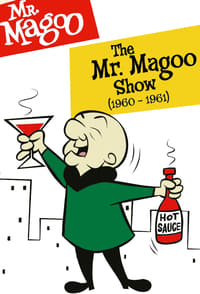
The Mister Magoo Show is an American animated television series which was produced from November 7, 1960 to February 2, 1962. A single episode included five five-minute shorts and could either be aired together with bumpers as a single half-hour show, or it could be split up with one short aired each weekday, along with other cartoons. It was produced by United Productions of America.
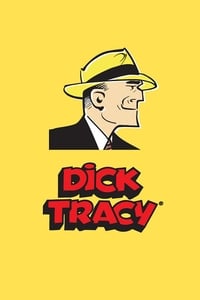
The Dick Tracy Show was an American animated television series based on Chester Gould's comic strip crime fighter. The series was produced from 1961 to 1962 by UPA.
Wilbur Post and his wife Carol move into a beautiful new home. When Wilbur takes a look in his new barn, he finds that the former owner left his horse behind. This horse is no ordinary horse . . . he can talk, but only to Wilbur, which leads to all sorts of misadventures for Wilbur and his trouble-making sidekick Mister Ed.
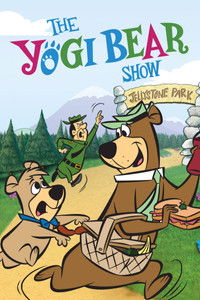
From his home in Jellystone Park, Yogi Bear dreams of nothing more in life than to outwit as many unsuspecting tourists as he can and grab their prized picnic baskets all while staying one step ahead of the ever-exasperated Ranger Smith. Yogi's little buddy, Boo-Boo, tries to keep Yogi out of trouble but rarely succeeds. That's okay because not even Ranger Smith can stay mad for long at the lovable, irresistible Yogi Bear.
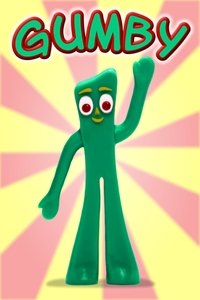
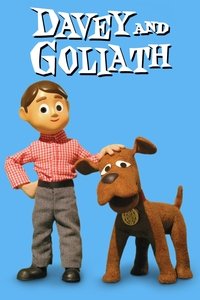
Davey and Goliath is a 1960s stop-motion animated children's Christian television series. The programs, produced by the Lutheran Church in America, were produced by Art Clokey after the success of his Gumby series.
Each 15-minute episode features the adventures of Davey Hansen and his "talking" dog Goliath as they learn the love of God through everyday occurrences.
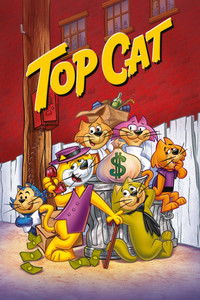
Top Cat, known as T.C. to his alley cat friends, is a mischievous prankster who lives in a trash can in the alley ways of New York City. He and his alley-cat cohorts think of get rich schemes and assorted pranks which are mostly involving and aimed at Officer Dibble, their nemesis and friend. T.C. manages to get out of his tight situations with hilarity and charm and even helps Dibble on occasion who is underscored by his overbearing sergeant...
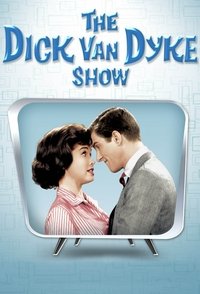
The Dick Van Dyke Show centers around the work and home life of television comedy writer Rob Petrie. The plots generally revolve around problems at work, where Rob got into various comedic jams with fellow writers Buddy Sorrell, Sally Rogers and producer Mel Cooley.
Each episode starts off with Touché popping forth from inside his shell. He then gets a phone call from someone who's in dire straits. His phone usually rests upon a sterling silver plate. Touché accepts all major credit cards. Thus, Touché and Dum-Dum go off into the crime scene and do their shtick, which may involve swordplay, box-fighting, martial arts, tom-foolery, work with pyrotechnics/explosives... and so on. "Touché-Away!!" The original show of 52 episodes first aired on TV between September 1962 and August 1963. Touché and Dum Dum have appeared together in only a handful of 1960s-early 1970s H-B comic books, and both also showed up on Hanna-Barbera's 50th anniversary special in 1988 (you may find that on video).





 age 6+