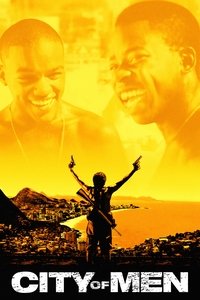
In the poverty-stricken favelas of Rio de Janeiro in the 1970s, two young men choose different paths. Rocket is a budding photographer who documents the increasing drug-related violence of his neighborhood, while José “Zé” Pequeno is an ambitious drug dealer diving into a dangerous life of crime.
A woman married to a former politician during the 1971 military dictatorship in Brazil is forced to reinvent herself and chart a new course for her family after a violent and arbitrary act.
The lively João Grilo and the sly Chicó are poor guys living in the hinterland who cheat a bunch of people in a small town in Northeastern Brazil. When they die, they have to be judged by Christ, the Devil and the Virgin Mary before they are admitted to paradise.
10-year-old Pixote endures torture, degradation, and corruption at a local youth detention center where two of its members are murdered by policemen who frame Lilica, a 17-year-old trans hustler. Pixote helps Lilica and three other boys escape and they start to make their living by a life of crime which only escalates to more violence and death.
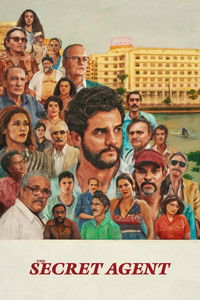
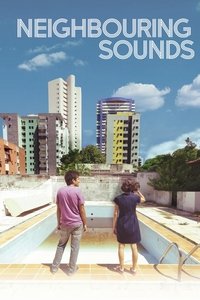
In 1977 Brazil, technology specialist Marcelo, fleeing a mysterious past, returns to Recife in search of peace, but realizes the city is far from the refuge he seeks.
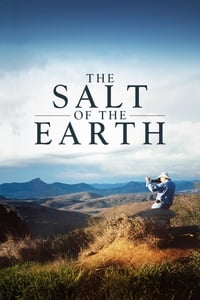
During the last forty years, the photographer Sebastião Salgado has been travelling through the continents, in the footsteps of an ever-changing humanity. He has witnessed the major events of our recent history: international conflicts, starvations and exodus… He is now embarking on the discovery of pristine territories, of the wild fauna and flora, of grandiose landscapes: a huge photographic project which is a tribute to the planet's beauty. Salgado's life and work are revealed to us by his son, Juliano, who went with him during his last journeys, and by Wim Wenders, a photographer himself.
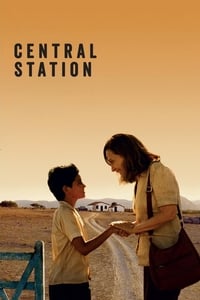
An emotional journey of a former school teacher, who writes letters for illiterate people, and a young boy, whose mother has just died, as they search for the father he never knew.
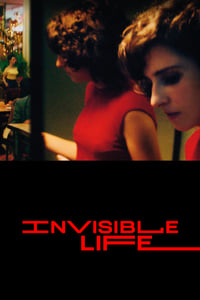
Rio de Janeiro, Brazil, 1950. In the conservative home of the Gusmão family, Eurídice and Guida are two inseparable sisters who support each other. While Guida can share with her younger sister the details of her romantic adventures, Eurídice finds in her older sister the encouragement she needs to pursue her dream of becoming a professional pianist.
Downtown Recife’s classic movie palaces from the 20th century are mostly gone. That city area is now an archaeological site of sorts that reveals aspects of life in society which have been lost. And that’s just part of the story.
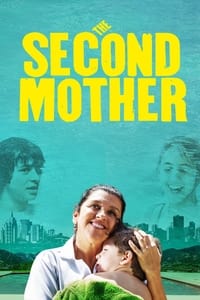
After leaving her daughter Jessica in a small town in Pernambuco to be raised by relatives, Val spends the next 13 years working as a nanny to Fabinho in São Paulo. She has financial stability but has to live with the guilt of having not raised Jessica herself. As Fabinho’s university entrance exams approach, Jessica reappears in her life and seems to want to give her mother a second chance. However, Jessica has not been raised to be a servant and her very existence will turn Val’s routine on its head. With precision and humour, the subtle and powerful forces that keep rigid class structures in place and how the youth may just be the ones to shake it all up.
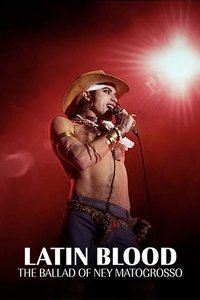
From a repressive childhood to artistic revolution, Ney Matogrosso transforms Brazil's stages — and himself — through music, creativity and inner fire.
A tomato is planted, harvested and sold at a supermarket, but it rots and ends up in the trash. But it doesn’t end there: Isle of Flowers follows it up until its real end, among animals, trash, women and children. And then the difference between tomatoes, pigs and human beings becomes clear.
Clara, a vibrant former music critic and widow with flowing tresses is the only remaining apartment owner in a beautiful older building targeted for demolition by ruthless luxury high-rise developers. Clara proves to be a force to be reckoned with as she thwarts the builders plans to kick her out of the apartment.
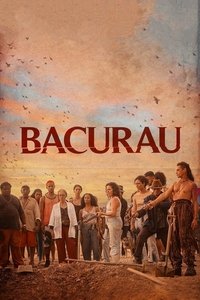
Bacurau, a small town in the Brazilian sertão, mourns the loss of its matriarch, Carmelita, who lived to be 94. Days later, its inhabitants notice that their community has vanished from most maps.
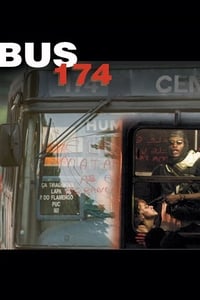
Documentary depicts what happened in Rio de Janeiro on June 12th 2000, when bus 174 was taken by an armed young man, threatening to shoot all the passengers. Transmitted live on all Brazilian TV networks, this shocking and tragic-ending event became one of violence's most shocking portraits, and one of the scariest examples of police incompetence and abuse in recent years.
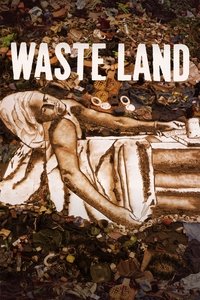
An uplifting feature documentary highlighting the transformative power of art and the beauty of the human spirit. Top-selling contemporary artist Vik Muniz takes us on an emotional journey from Jardim Gramacho, the world's largest landfill on the outskirts of Rio de Janeiro, to the heights of international art stardom. Vik collaborates with the brilliant catadores, pickers of recyclable materials, true Shakespearean characters who live and work in the garbage quoting Machiavelli and showing us how to recycle ourselves.
The arrival of a new student in school changes Leonardo's life. This 15 year-old blind teenager has to deal with the jealousy of his friend Giovana while figuring out the new feelings he's having towards his new friend, Gabriel.
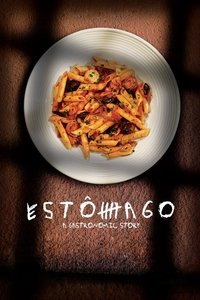
In a dog-eat-dog world, Raimundo Nonato has found an alternative way to move ahead: he cooks. No matter what social strata this deceptively innocent young man inhabits, he hones his skills and sharpens his knives—and then he falls in love. Jorge's nimble comic fable provides a smartly constructed gastronomic allegory for ambition and survival.
Leonardo is a blind teenager dealing with an overprotective mother while trying to live a more independent life. To the disappointment of his best friend, Giovana, he plans to go on an exchange program abroad. When Gabriel, a new student in town, arrives at their classroom, new feelings blossom in Leonardo making him question his plans.
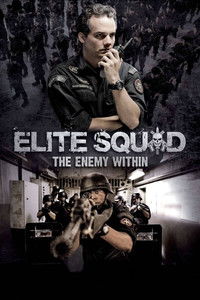
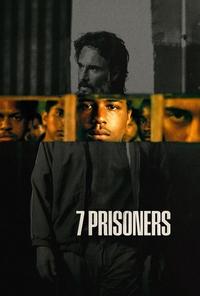
After a bloody invasion of the BOPE in the High-Security Penitentiary Bangu 1 in Rio de Janeiro to control a rebellion of interns, the Lieutenant-Colonel Roberto Nascimento and the second in command Captain André Matias are accused by the Human Right Aids member Diogo Fraga of execution of prisoners. Matias is transferred to the corrupted Military Police and Nascimento is exonerated from the BOPE by the Governor.
1980s. Brazilian television exploding in color and auditorium programs not so politically correct. In the middle of this fervor, Augusto Mendes, a young rising actor, seeks his place in the sun. From porn studios to soap operas, he finally finds success and fame when he becomes "Bingo", a TV host clown from one of the audience leader TV shows for children. It turns out that behind the rice powder and red nose, nobody knows who he is.
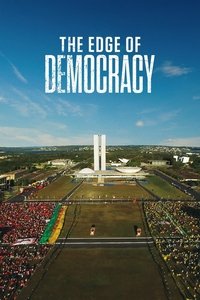
A cautionary tale for these times of democracy in crisis—the personal and political fuse to explore one of the most dramatic periods in Brazilian history. With unprecedented access to Presidents Dilma Rousseff and Lula da Silva, we witness their rise and fall and the tragically polarized nation that remains.
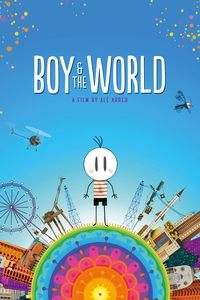
Suffering because of his father's departure to the big city, a boy leaves his village and discovers a fantastic world dominated by bug-engines and strange beings. An unusual animation with various artistic techniques that portrays the issues of the modern world through the eyes of a child.
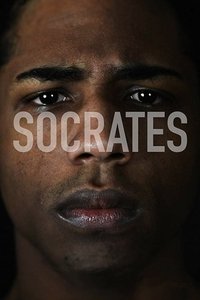
After his mother's sudden death, Socrates, a 15-year-old living on the margins of São Paulo's coast, must survive on his own while coming to terms with his grief.
The story of two radically different men thrown together in a Latin American prison cell. One is Valentin, a journalist being tortured for his political beliefs. The other is Molina, a gay window-dresser who fills their lonely nights by spinning romantic fantasies drawn from memories of old movies.
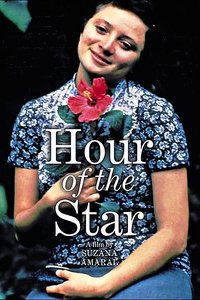
Macabéa has just moved to the big city after her aunt, who raised her, died. She gets a job as a typist and moves into a boarding house with three other women. In her spare time, she listens to a radio station called Time; on Sundays, she likes to ride the metro. Then she meets Olímpico, a northeasterner like herself, who has dreams of becoming a congressman.
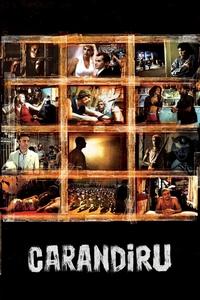
When a doctor decides to carry out an AIDS prevention program inside Latin America’s largest prison: the Casa de Detenção de São Paulo - Carandiru, he meets the future victims of one of the darkest days in Brazilian History when the State of São Paulo’s Military Police, with the excuse for law enforcement, shot to death 111 people. Based on real facts and on the book written by Dráuzio Varella.
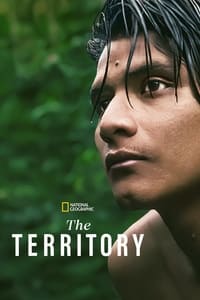
The Indigenous Uru-eu-wau-wau people have seen their population dwindle and their culture threatened since coming into contact with non-Native Brazilians. Though promised dominion over their own rainforest territory, they have faced illegal incursions from environmentally destructive logging and mining, and, most recently, land-grabbing invasions spurred on by right-wing politicians like President Jair Bolsonaro. With deforestation escalating as a result, the stakes have become global.
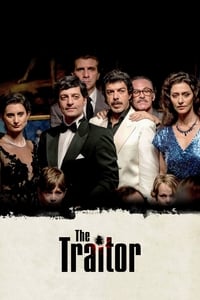
Palermo, Sicily, 1980. Mafia member Tommaso Buscetta decides to move to Brazil with his family fleeing the constant war between the different clans of the criminal organization. But when, after living several misfortunes, he is forced to return to Italy, he makes a bold decision that will change his life and the destiny of Cosa Nostra forever.
Petra heads to New York in search of her older sister after a long time of being separated. They are both movie actresses and heirs of the wounds of the Brazilian dictatorship. But Petra has only a few clues: home movies, newspaper clippings, a diary...
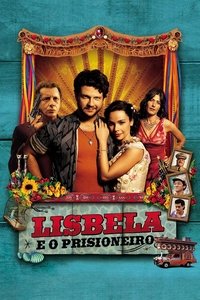
Lisbela is a young woman who loves going to the movies. Leléu is a con man, going from town to town selling all sort of things and performing as master of ceremonies for some cheesy numbers, such as the woman who gets transformed into a gorilla. He gets involved with Linaura, a sexy and beautiful woman who happens to be the wife of the most frightening hitman of the place. The hitman finds out his wife's affair and goes after Leléu, who has to leave in a hurry. In another town, he meets and falls instantly in love with Lisbela, who is engaged to Douglas, a hillbilly who tries hard to pass for a cosmopolitan Rio de Janeiro dweller.
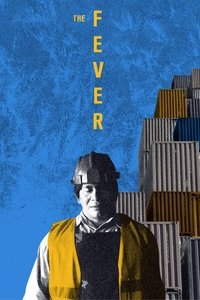
Justino, a 45-year-old member of the indigenous Desana people, is a security guard at the Manaus harbor. As his daughter prepares to soon depart to Brasília, Justino comes down with a mysterious fever.
Pierre is seventeen and in the middle of puberty. He plays in a band, has sex at parties and secretly tries on women’s clothing and lipstick in front of a mirror. Ever since his father’s death, his mother Aracy has looked after him and his younger sister Jacqueline, spoiling them both. But when he discovers that she stole him from a hospital when he was a new born baby, Pierre’s life changes dramatically. In her new film, director Anna Muylaert explores the mother-child relationship through the eyes of a rebellious son whose whole world unravels overnight.
Neto is a middle class teenager living a normal life. After his father finds a marijuana cigarette on his pocket, he is sent to a mental institution, where he gets to know a completely absurd and inhumane reality in which people are devoured by a corrupt and cruel system.
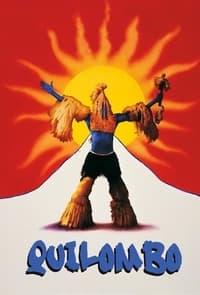
Quilombo dos Palmares was a real-life democratic society, created in Brazil in the 17th century. This incredibly elaborate (and surprisingly little-known) film traces the origins of Quilombo, which began as a community of freed slaves. The colony becomes a safe harbor for other outcasts of the world, including Indians and Jews. Ganga Zumba (Toni Tornado) becomes president of Quilombo, the first freely elected leader in the Western Hemisphere. Naturally, the ruling Portuguese want to subjugate Zumba and his followers, but the Quilombians are ready for their would-be oppressors. The end of this Brave New World is not pleasant, but the followers of Zumba and his ideals take to the hills, where they honor his memory to this day. Writer/director Carlos Diegues takes every available opportunity to compare the rise and fall of Quilombo with the state of affairs in modern-day Brazil.
Best buddies Acerola and Laranjinha, about to turn 18, discover things about their missing fathers' pasts which will shatter their solid friendship, in the middle of a war between rival drug gangs from Rio's favelas.
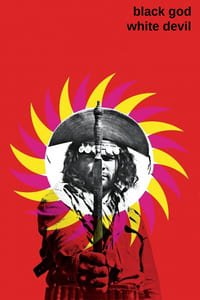
Wanted for killing his boss, Manuel flees with his wife Rosa to the sertão, the barren landscape of Northern Brazil. Thrust into a primordial violent region, Manuel and Rosa come under the influence and control of a series of frightening figures.
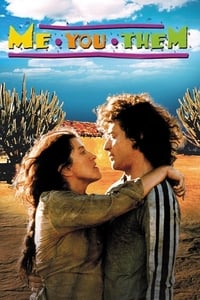
A true story that comically depicts the relationship between an ordinary woman and her three husbands, who live in the same house in a poor and arid small village of the Brazilian northeast.
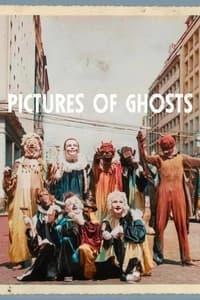
Chinese filmmaker Jia Zhangke returns to the shooting locations of his films, along with his actors, friends and close collaborators. Jia recalls the inspiration sources for his movies, such as Platform, Still Life and A Touch of Sin. The film is the memory of a filmmaker and of a country in convulsion, China, which reveals itself little by little.
Brazil 1821. Upon his return to the imposing farmhouse, Antonio, a rich cattle herder, finds out that his wife dies in labor. Forced to live in the property with numerous African slaves, he marries his wife's niece. A restless soul, he returns to droving, leaving his young wife behind alone with the slaves.
The story of Francisco, a very simple and poor man whose dream was to see his children become country music stars, and who made all the efforts to make it happen.
In 1997, before the visit of the pope to Rio de Janeiro, Captain Nascimento from BOPE (Special Police Operations Battalion) is assigned to eliminate the risks of the drug dealers in a dangerous slum nearby where the pope intends to be lodged.

 age 18+