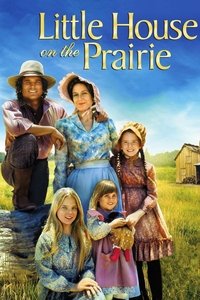
When the big woods of Wisconsin becomes a difficult spot for hunting, Charles Ingalls reluctantly decides to move his family, pioneering west. Their life on the farm in Walnut Grove, Minnesota, in the 1870s and 1880s is full of adventure, tragedy, and triumph. Based on the books of Laura Ingalls Wilder.
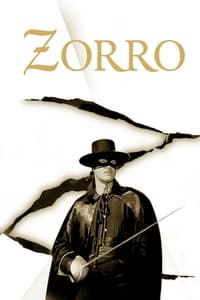
Diego de la Vega, the son of a wealthy landowner, returns from his studies in Spain and discovers that Los Angeles is under the command of Capitan Monastario, a cruel man who relishes in the misuse of his power for personal gain. Knowing that he cannot hope to single-handedly defeat Monastario and his troops, Diego resorts to subterfuge. He adopts the secret identity of Zorro, a sinister figure dressed in black, and rides to fight Monastario's injustice.
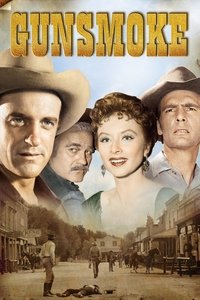
Gunsmoke is an American radio and television Western drama series created by director Norman MacDonnell and writer John Meston. The stories take place in and around Dodge City, Kansas, during the settlement of the American West. The central character is lawman Marshal Matt Dillon, played by William Conrad on radio and James Arness on television.
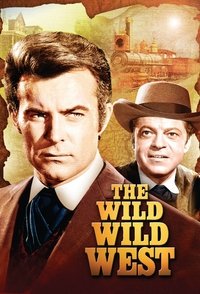
The Wild Wild West is an American television series. Developed at a time when the television western was losing ground to the spy genre, this show was conceived by its creator, Michael Garrison, as "James Bond on horseback." Set during the administration of President Ulysses Grant, the series followed Secret Service agents James West and Artemus Gordon as they solved crimes, protected the President, and foiled the plans of megalomaniacal villains to take over all or part of the United States.
The show also featured a number of fantasy elements, such as the technologically advanced devices used by the agents and their adversaries. The combination of the Victorian era time-frame and the use of Verne-esque style technology have inspired some to give the show credit for the origins of the steam punk subculture.
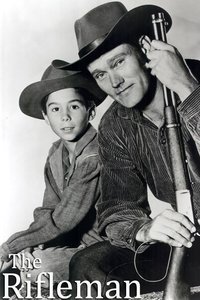
The Rifleman is an American Western television program starring Chuck Connors as rancher Lucas McCain and Johnny Crawford as his son, Mark McCain. It was set in the 1880s in the town of North Fork, New Mexico Territory. The show was filmed in black-and-white, half-hour episodes. "The Rifleman" aired on ABC from September 30, 1958 to April 8, 1963 as a production of Four Star Television. It was one of the first prime time series to have a widowed parent raise a child.
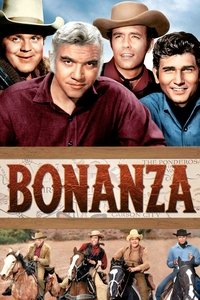
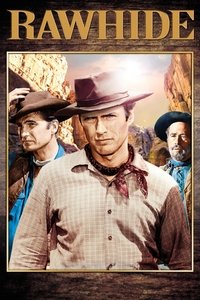
The tale of trail boss Gil Favor and his trusty foreman Rowdy Yates as they drives cattle across the old west. Along the way they meet up with adventure and drama.
Have Gun – Will Travel is an American Western television series that aired on CBS from 1957 through 1963. It was rated number three or number four in the Nielsen ratings every year of its first four seasons. It was one of the few television shows to spawn a successful radio version. The radio series debuted November 23, 1958.
The television show is presently shown on the Encore-Western channel.
Have Gun – Will Travel was created by Sam Rolfe and Herb Meadow and produced by Frank Pierson, Don Ingalls, Robert Sparks, and Julian Claman. There were 225 episodes of the TV series, 24 written by Gene Roddenberry. Other contributors included Bruce Geller, Harry Julian Fink, Don Brinkley and Irving Wallace. Andrew McLaglen directed 101 episodes and 19 were directed by series star Richard Boone.
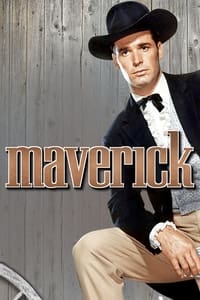
The Maverick boys - Bret, Bart, Beau and Brent - are a clan of well-dressed dandies, gamblers who'd much rather make their money playing cards than messing up their fine clothing with actual work. Sly and clever, none of the Mavericks are much for acts of derring do, but they can be courageous when the situation calls for it. Most often, however, they live by their wits and considerable charm.
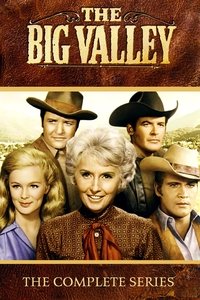
The Big Valley is an American western television series which ran on ABC from September 15, 1965, to May 19, 1969. The show stars Barbara Stanwyck, as the widow of a wealthy nineteenth century California rancher. It was created by A.I. Bezzerides and Louis F. Edelman, and produced by Levy-Gardner-Laven for Four Star Television.
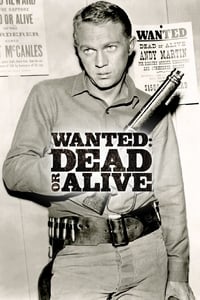
Wanted: Dead or Alive is an American Western television series starring Steve McQueen as the bounty hunter Josh Randall. It aired on CBS for three seasons from 1958–61. The black-and-white program was a spin-off of a March 1958 episode of Trackdown, a 1957–59 western series starring Robert Culp. Both series were produced by Four Star Television in association with CBS Television.
The series launched McQueen into becoming the first television star to cross over into comparable status on the big screen.
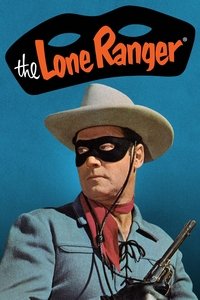
The Lone Ranger is an American western television series that ran from 1949 to 1957, starring Clayton Moore with Jay Silverheels as Tonto. The live-action series initially featured Gerald Mohr as the episode narrator. Fred Foy served as both narrator and announcer of the radio series from 1948 to its finish and became announcer of the television version when story narration was dropped there. This was by far the highest-rated television program on the ABC network in the early 1950s and its first true "hit".
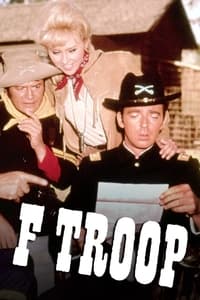
F Troop is a satirical American television sitcom that originally aired for two seasons on ABC-TV. It debuted in the United States on September 14, 1965 and concluded its run on April 6, 1967 with a total of 65 episodes. The first season of 34 episodes was filmed in black-and-white, but the show switched to color for its second season.
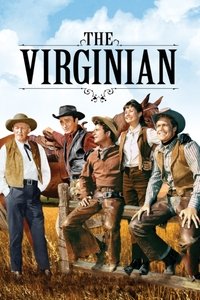
The Shiloh Ranch in Wyoming Territory of the 1890s is owned in sequence by Judge Henry Garth, the Grainger brothers, and Colonel Alan MacKenzie. It is the setting for a variety of stories, many more based on character and relationships than the usual western.
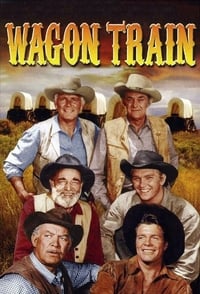
The series initially starred veteran movie supporting actor Ward Bond as the wagon master, later replaced upon his death by John McIntire, and Robert Horton as the scout, subsequently replaced by lookalike Robert Fuller a year after Horton had decided to leave the series.
The series was inspired by the 1950 film Wagon Master directed by John Ford and starring Ben Johnson, Harry Carey Jr. and Ward Bond, and harkens back to the early widescreen wagon train epic The Big Trail starring John Wayne and featuring Bond in his first major screen appearance playing a supporting role. Horton's buckskin outfit as the scout in the first season of the television series resembles Wayne's, who also played the wagon train's scout in the earlier film.
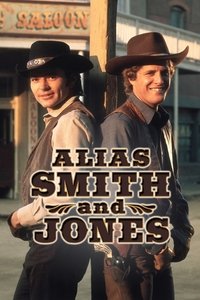
Alias Smith and Jones is an American Western series that originally aired on ABC from 1971 to 1973. It stars Pete Duel as Hannibal Heyes and Ben Murphy as Jedediah "Kid" Curry, a pair of cousin outlaws trying to reform. The governor offers them a conditional amnesty, as he wants to keep the pact under wraps for political reasons. The condition is that they will still be wanted— until the governor can claim they have reformed and warrant clemency.
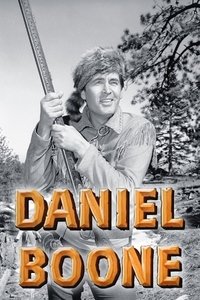
Daniel Boone is an American action-adventure television series starring Fess Parker as Daniel Boone that aired from September 24, 1964 to September 10, 1970 on NBC for 165 episodes, and was made by 20th Century Fox Television. Ed Ames co-starred as Mingo, Boone's Cherokee friend, for the first four seasons of the series. Albert Salmi portrayed Boone's companion Yadkin in season one only. Dallas McKennon portrayed innkeeper Cincinnatus. Country Western singer-actor Jimmy Dean was a featured actor as Josh Clements during the 1968–1970 seasons. Actor and former NFL football player Rosey Grier made regular appearances as Gabe Cooper in the 1969 to 1970 season. The show was broadcast "in living color" beginning in fall 1965, the second season, and was shot entirely in California and Kanab, Utah.
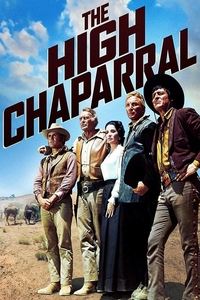
The High Chaparral is an American Western-themed television series starring Leif Erickson and Cameron Mitchell which aired on NBC from 1967 to 1971. The series, made by Xanadu Productions in association with NBC Productions, was created by David Dortort, who had previously created the hit Bonanza for the network. The theme song was also written and conducted by Bonanza scorer David Rose, who also scored the two-hour pilot.
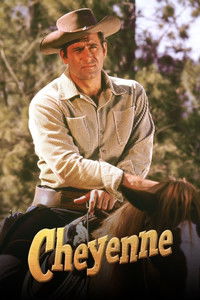
Cheyenne Bodie was a big man, a former army scout who went west after the American Civil War and drifted from job to job, here a cowboy, there a lawman, and always a larger-than-life hero.
CHEYENNE is an American western television series of 108 black-and-white episodes broadcast on ABC from 1955 to 1963. The show was the first hour-long western, and in fact the first hour-long dramatic series of any kind, with continuing characters, to last more than one season. It was also the first series to be made by a major Hollywood film studio which did not derive from its established film properties, and the first of a long chain of Warner Brothers original series produced by William T. Orr.
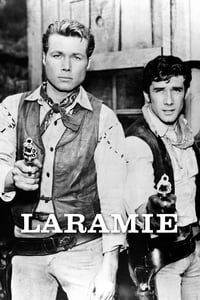
Laramie is an American Western television series that aired on NBC from 1959 to 1963. A Revue Studios production, the program originally starred John Smith as Slim Sherman, Robert Fuller as Jess Harper, Hoagy Carmichael as Jonesy and Robert L. Crawford, Jr., as Andy Sherman.
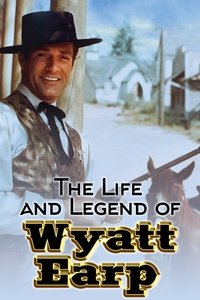
The Life and Legend of Wyatt Earp is a television western series loosely based on the life of frontier marshal Wyatt Earp. The half-hour black-and-white program aired for 229 episodes on ABC from 1955 to 1961 and featured Hugh O'Brian in the title role.
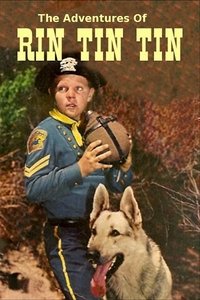
The Adventures of Rin Tin Tin is an American children's television program. Beginning in October 1954 until May 1959, 166 episodes originally aired on ABC television network. It starred child actor Lee Aaker as Rusty, a boy orphaned in an Indian raid, who was being raised by the soldiers at a US Cavalry post known as Fort Apache. He and his German shepherd dog, Rin Tin Tin, helped the soldiers to establish order in the American West. Texas-born actor James Brown appeared as Lieutenant Ripley "Rip" Masters. Co-stars included veteran actor Joe Sawyer and actor Rand Brooks from Gone with the Wind fame.
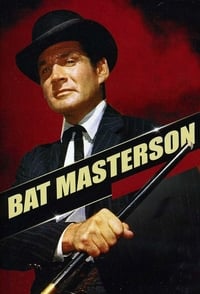
Bat Masterson is an American Western television series which showed a fictionalized account of the life of real-life marshal/gambler/dandy Bat Masterson. The title character was played by Gene Barry and the half-hour black-and-white shows ran on NBC from 1958 to 1961. The series was produced by Ziv Television Productions, the company responsible for such hit series as Sea Hunt and Highway Patrol.
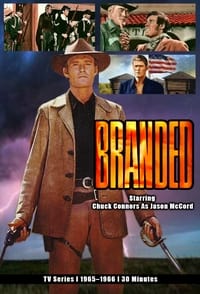
Branded is an American Western series which aired on NBC from 1965 through 1966, sponsored by Procter & Gamble in its Sunday night 8:30 p.m. Eastern Time period, and starred Chuck Connors as Jason McCord, a United States Army Cavalry captain who had been drummed out of the service following an unjust accusation of cowardice.
Death Valley Days is an American radio and television anthology series featuring true stories of the old American West, particularly the Death Valley area. Created in 1930 by Ruth Woodman, the program was broadcast on radio until 1945 and continued from 1952 to 1970 as a syndicated television series, with reruns continuing through August 1, 1975.
The series was sponsored by the Pacific Coast Borax Company and hosted by Stanley Andrews, Ronald Reagan, Robert Taylor, and Dale Robertson. With the passing of Dale Robertson in 2013, all the former Death Valley Days hosts are now deceased.
Here Come the Brides is an American comedy Western series from Screen Gems that aired on the ABC television network from September 25, 1968 to April 3, 1970. The series was loosely based upon the Mercer Girls, Asa Mercer's efforts to bring civilization to old Seattle by importing marriageable women from the east coast of the United States in the 1860s, where the ravages of the American Civil War left towns short of men.
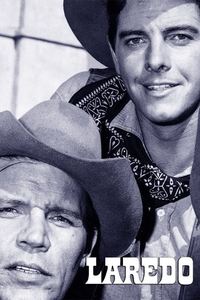
Laredo is an American Western television series that aired on NBC from September 16, 1965, to April 7, 1967. Laredo stars Neville Brand, William Smith, Peter Brown, and Philip Carey as Texas Rangers. It is set on the Mexican border about Laredo, Texas. The program was produced by Universal Television.
The pilot episode of Laredo aired on NBC's The Virginian under the title, "We've Lost a Train". It was released theatrically in 1969 under the title Backtrack. Three episodes from the first season of the series were edited into the 1968 feature film Three Guns for Texas.
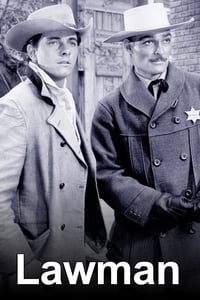
Lawman is an American western television series originally telecast on ABC from 1958 to 1962 starring John Russell as Marshal Dan Troop and featuring Peter Brown as Deputy Marshal Johnny McKay. The series was set in Laramie, Wyoming during 1879 and the 1880s. Warner Bros. already had several western series on the air at the time, having launched Cheyenne with Clint Walker as early as 1955. The studio continued the trend in 1957 with the additions of Maverick with James Garner and Jack Kelly, Colt .45 with Wayde Preston, and Sugarfoot with Will Hutchins. One year later, Warner Bros. added Lawman and Bronco with Ty Hardin.
Prior to the beginning of production, Russell and Brown and producer Jules Schermer made a pact to maintain the quality of the series so that it would not be seen as "just another western." At the start of season two, Russell and Brown were joined by Peggie Castle as Lily Merrill, the owner of the Birdcage Saloon, and a love interest for Dan.
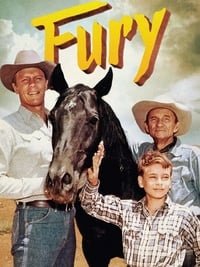
Fury is an American western television series that aired on NBC from 1955 to1960. It stars Peter Graves as Jim Newton, who operates the Broken Wheel Ranch in California; Bobby Diamond as Jim's adopted son, Joey Clark Newton, and William Fawcett as ranch hand Pete Wilkey. Roger Mobley co-starred in the two final seasons as Homer "Packy" Lambert, a friend of Joey's.
The frequent introduction to the show depicts the beloved stallion running inside the corral and approaching the camera as the announcer reads: "FURY!..The story of a horse..and a boy who loves him." Fury is the first American series produced originally by Television Programs of America and later by the British-based company ITC Entertainment.
Cimarron Strip is an American Western television series that aired on CBS from September 1967 to March 1968. Starring Stuart Whitman as Marshal Jim Crown, the series was produced by the creators of Gunsmoke. Reruns of the original show were aired in the summer of 1971.
Cimarron Strip was one of only three 90-minute weekly Western series that aired during the 1960s, and the only 90-minute series of any kind to be centered primarily around one lead character. Cimarron Strip was set in the Oklahoma Panhandle, which comprises, east to west, Beaver, Texas, and Cimarron counties in Oklahoma. The show is set in 1888, just as the continuous frontier of the West, which once ran from the Canadian to the Mexican border, was closing. In less than five years there would no longer be that "continuous frontier," only pockets of undeveloped land. This was the late "Wild West" that Marshall Jim Crown was called to defend.
Boomtown was a weekend children's show on WBZ-TV in Boston, Massachusetts that ran from 1956 through 1974.
The show was a live, three-hour broadcast hosted by Rex Trailer, a singing cowboy. The first part of the show always took place in the bunkhouse. Trailer would then mount his horse, Goldrush, and ride across a "prairie wide" onto the western-themed Boomtown studio set for several hours on Saturday and Sunday mornings. Somehow, he and his crew were able to convincingly re-create the Old West on Soldiers Field Road in Brighton for generations of viewers.
With a natural ease and charisma, Trailer led his young studio audience in contests of skill and singalongs. Trailer also regularly demonstrated his considerable cowboy skills, which he picked up while spending his childhood summers on his grandfather's ranch in Texas. In addition, Rex worked with guests who made educational presentations, took part in skits, and he introduced the cartoons that rounded out the program, including Popeye, Davey and Goliath, The Mighty Hercules among others. He was aided on the show by a succession of sidekicks over the years, including Pablo, Cactus Pete, and Sgt. Billy.
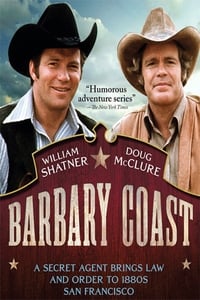
Barbary Coast is an American television series that aired on ABC. The pilot movie first aired on May 4, 1975 and the series itself premiered September 8, 1975; the last episode aired January 9, 1976.
Barbary Coast was inspired by a similar 19th-century spy series, The Wild Wild West, and like the earlier program, Barbary Coast mixed the genres of Western and secret agent drama.
Short-lived kids' series found Lash La Rue, as his U.S. Marshal alter-ego, sitting in his office recounting tales of the old west involving his grandfather. These tales were represented by extracts from La Rue's western movies made after WWII for Ron Ormond and Western Adventures, Inc., the precursor of Howco Productions, who also made this show. As the series episodes lasted only 15 minutes, the material from each movie stretched over several episodes, giving the series a serial-like quality. The series aired on ABC on Sunday night at 6:30 p.m Eastern time from January 4, 1953 to April 26, 1953.
Action in the Afternoon is an American western television series that aired live on CBS from February 2, 1953 to January 29, 1954. The series originated from the studios and back lot of WCAU-TV, Channel 10 in Philadelphia, Pennsylvania, and was broadcast Monday through Friday regardless of the weather. The half-hour series aired variously at 3:30 pm or 4:00 pm, throughout its run.
Pony Express is an American western television series about the adventures of an agent in the 1860s of the Central Overland Express Company, better known as the Pony Express. The half-hour program starring Grant Sullivan was created by California National Productions. Pony Express ran for thirty-five episodes in syndication from the fall of 1959 until the May 1960.
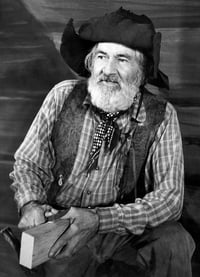
The Gabby Hayes Show is a general purpose western television series in which the film star and Roy Rogers confidant, George "Gabby" Hayes, narrated each episode, showed clips from old westerns, or told tall tales for a primarily children's audience.
Saturday Roundup is an American Western television program that aired on NBC on Saturday night from June 10, 1951 to September 1, 1951 at 8:00 p.m Eastern time .
In an alternate version of America, legendary outlaws Butch Cassidy and The Sundance Kid take on their biggest heist yet — this time with the fate of the world hanging in the balance.
Wrangler is an American Western television series starring Jason Evers that aired on the NBC television network from August 4 to September 15, 1960.
In Wrangler, Evers played Pitcairn, a wrangler who roamed the Old West, finding adventures along the way. However, Wrangler did not have much of a chance to find adventure because the series lasted only for six episodes. It was a summer replacement series for The Ford Show Starring Tennessee Ernie Ford, but did not garner high enough ratings to become a full-fledged series.
Guest stars included Tyler McVey in the episode "Incident at the Bar M".
Three years after Wrangler, Evers landed the lead in the 26-episode ABC drama Channing set on a fictitious college campus.
About a freckle-faced Spin and wealthy city kid Marty at the Triple R Ranch summer camp. Adding to the fun are exclusive interviews with the original cast members and a special tour of the original filming site.
Steve Donovan, Western Marshal is an American Western series that aired in syndication from September 1955, to June 1956. The series stars Douglas Kennedy as Marshal Steve Donovan and Eddy Waller as his sidekick, Rusty Lee. The series, set in Wyoming, was also broadcast under the title Western Marshal.
Two Faces West is a 39-episode half-hour syndicated television western series set in Gunnison in southwestern Colorado, which aired from October 17, 1960, to July 31, 1961. It stars Scottish native Charles Bateman in the dual roles of twin brothers, Rick January, M.D., and Marshal Ben January. Matthew Rapf produced the series.
Francis De Sales appeared as Sheriff Maddox; Joyce Meadows portrayed Stacy, and Paul Comi played Deputy Johnny Evans. In the marshal's role, Bateman played a man prone to violent outbursts in his pursuit of law and order; as the physician, he demonstrated calmness and compassion. The series was filmed by Screen Gems at the Iverson's Movie Ranch in Chatsworth in Los Angeles County, California.

 age 7+