In official collaboration with the 9/11 Memorial & Museum, this documentary series takes viewers through harrowing moments of the historic morning of September 11, 2001.
Using highly advanced colourisation techniques, critical moments from World War II, from Stalingrad to The Battle of Britain, are shown in a whole new light.
Real crimes, disease outbreaks and accidents around the world are solved by experts using scientific laboratory analysis which helps them find previously undetectable evidence. Brilliant scientific work helps convict the guilty and free the innocent.
A mind-bending, thrilling journey exploring the fragility and wonder of planet Earth, one of the most peculiar, unique places in the entire universe, brought to life by the only people to have left it behind – the world’s most well known and leading astronauts.
Have you ever wondered how the products you use every day are made? How It's Made leads you through the process of how everyday products, such as apple juice, skateboards, engines, contact lenses, and many more objects are manufactured.
Hawking gives us the ultimate guide to the universe, a ripping yarn based on real science, spanning the whole of space and time -- from the nature of the universe itself, to the chances of alien life, and the real possibility of time travel.
World War II In Colour is a 13-episode television documentary miniseries recounting the events of World War II narrated by Robert Powell. The show covers the Western Front, Eastern Front, and the Pacific War. It is on syndication in America on the Military Channel. This series is in full color, combining both original and colorized footage.
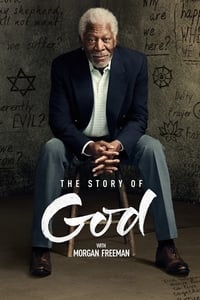
Morgan Freeman presents his quest in order to find how most religions perceive life after death, what different civilizations thought about the act of creation and other big questions that mankind has continuously asked.
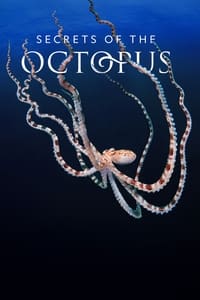
Octopuses are like aliens on Earth: three hearts, blue blood and the ability to squeeze through a space the size of their eyeballs. But there is so much more to these weird and wonderful animals. Intelligent enough to use tools or transform their bodies to mimic other animals and even communicate with different species, the secrets of the octopus are more extraordinary than we ever imagined.
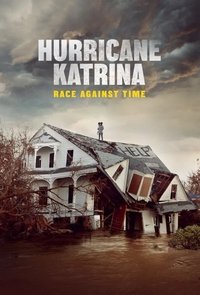
Offers the most intimate and profound exploration into the wide-ranging impacts of the Hurricane Katrina disaster to date. Weaving together critical moments of the crisis and the past events that precipitated it, the series delivers an unparalleled, emotionally raw examination of the storm’s personal, political and societal fallout.
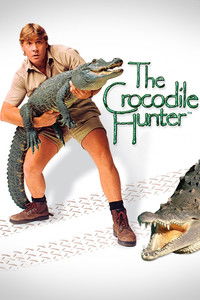
Australian host Steve Irwin and his wife Terri run a wildlife refuge. Their shared passion is educating the world about wildlife, including the much feared crocodile and numerous venomous snakes. Steve's specialty is the capture and relocation of crocodiles. No animal appears too threatening to Steve, his true respect for animals is the foundation for everything he does.
Follow Stanley Tucci as he returns to Italy for more food-based adventures, seeking out the essence of each region and its people through the food they eat.
Drugs: A multi-billion-dollar industry that fuels crime and violence like no other substance on the planet. Turning cartel leaders into billionaires, the illegal drug industry also provides vital income to hundreds of thousands of poor workers across the globe. While some users sacrifice their lives to an addiction they can't escape, others find drugs to be their only saving grace from physical or emotional pain almost impossible to overcome. Where should the lines be drawn in this lucrative industry?
The show features accounts of individuals and groups caught in dangerous scenarios, presented both through interviews and dramatic reenactments. The main focus is how the survivors survived and the decisions they made that kept them alive.
A miniseries documenting American human spaceflight, spanning from the first Mercury flights through the Gemini program to the Apollo moon landings, the Space Shuttle, and the construction of the International Space Station. It was created in association with NASA to commemorate the agency's fiftieth anniversary in 2008.
An adrenaline-fueled ride through the culture of speculation, innovation and disruption during Silicon Valley’s unprecedented tech boom and subsequent bust in the 1990s. This mostly scripted series weaves in select documentary elements that help tell the true inside story of the internet’s formative years.
Shot from land and air, in trees and cliff-blinds, on ice floes and underwater, this documentary tells the powerful stories of many of the planet's species and their movements, while revealing new scientific insights with breathtaking high-definition clarity and emotional impact. The beauty of these stories is underscored by a new focus into these species; fragile existence and their life-and-death quest for survival in an ever-changing world.
Weird or What? is a series on the Discovery Channel and History hosted by William Shatner. Each episode contains three separate stories of the bizarre and unexplained. As the show unfolds, it weighs various supernatural and scientific theories that attempt to explain the story, and sometimes features tests conducted as proof of a theory's plausibility. The show features strange occurrences such as ghosts, aliens, monsters, medical oddities and natural disasters.
Delve into the secret underworld of the American Mafia, as told by the criminals who lived it and the law enforcers who hunted it. This dramatic six-part series chronicles the true-life story of the modern Mob in America, as former mobsters, informants, and FBI agents expose the takedown of the deadliest and most infamous organized crime ring in U.S. history. A combination of recently declassified files, first-person accounts by federal officials and the mafioso themselves, and rare archival footage sheds a new light on the raw, violent, and corrupt underworld that gripped America for decades.
Maritime mysteries—old and new—come to life in this series, combining scientific data and digital re-creations to reveal shipwrecks, treasures, and sunken cities on the bottom of lakes, seas and oceans around the world.
This six part documentary draws attention to the most extraordinary — almost supernatural — accounts of animals that have adapted to the cruelest evolutionary curveballs.
Seconds from Disaster is a US/UK-produced documentary television programme that investigates historically relevant man-made and natural disasters of the 20th century. Each episode aims to explain a single incidental by analyzing the causes and circumstances that ultimately effected the disaster. The program uses re-enactments, interviews, testimonies, and CGI to analyze the sequence of events second-by-second for the audience.
Narrators for the show are Ashton Smith, Richard Vaughan and Peter Guinness.
Extreme Engineering covers major construction projects from all around the world. Some are futuristic projects that may never be done, others are projects that are on there way to completion.
True-crime thriller that follows a team of homicide detectives as they open an 18-year-old cold case that occurred in one of America's notorious body-dumping grounds, the Louisiana swamplands.
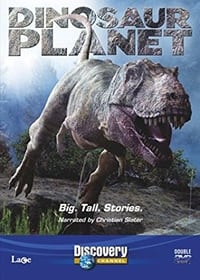
Dinosaur Planet, not to be confused with Planet Dinosaur, is a four-part American nature documentary first aired on Discovery Channel in 2003. It was hosted by Scott Sampson and narrated by Christian Slater.
Dinosaur Planet depicts dinosaurs living in various parts of the world 80 million years ago, using CGI. In actuality, a good part of the dinosaurs were designed by Mark Dubeau, who was the art director and primary creature designer on the aforementioned "When Dinosaurs Roamed America".
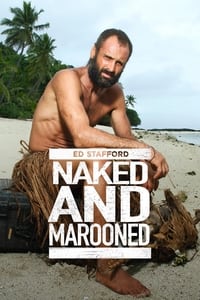
Ed Stafford undertakes an extreme survival challenge as he washes up naked and alone on a desert island, Olorua, south east of Fiji. He has only his brain, bare hands and a camera to keep him alive. He'll take no food, water, clothes, knife or tools, so from the moment he arrives he is on a race to stay alive. As man can only last three days without water and three weeks without food, Ed will attempt to survive on the island physically and mentally, for 60 days.
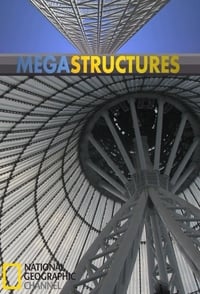
MegaStructures is a documentary television series appearing on the National Geographic Channel in the United States and the United Kingdom, Channel 5 in the United Kingdom, France 5 in France, and 7mate in Australia.
Each episode is an educational look of varying depth into the construction, operation, and staffing of various structures or construction projects, but not ordinary construction products.
Generally containing interviews with designers and project managers, it presents the problems of construction and the methodology or techniques used to overcome obstacles. In some cases this involved the development of new materials or products that are now in general use within the construction industry.
MegaStructures focuses on constructions that are extreme; in the sense that they are the biggest, tallest, longest, or deepest in the world. Alternatively, a project may appear if it had an element of novelty or are a world first. This type of project is known as a Megaproject.
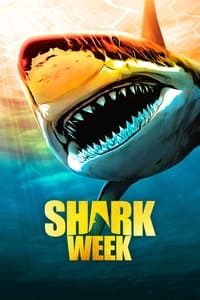
The Discovery Channel's Shark Week, first broadcast on July 17, 1987, is a weeklong series of feature television programs dedicated to sharks. Held annually, normally in July or August, Shark Week was originally developed to raise awareness and respect for sharks. It is the longest-running cable television programming event in history. Now broadcast in over 72 countries, Shark Week is promoted heavily via social networks like Facebook and Twitter.
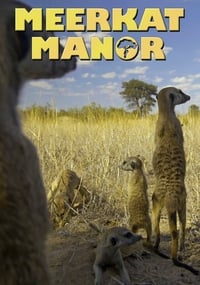
Meerkat Manor is a British television programme produced by Oxford Scientific Films for Animal Planet International that premiered in September 2005 and ran for four series until its cancellation in August 2008. Blending more traditional animal documentary style footage with dramatic narration, the series told the story of the Whiskers, one of more than a dozen families of meerkats in the Kalahari Desert being studied as part of the Kalahari Meerkat Project, a long-term field study into the ecological causes and evolutionary consequences of the cooperative nature of meerkats. The original programme was narrated by Bill Nighy, with the narration redubbed by Mike Goldman for the Australian airings and Sean Astin for the American broadcasts. The fourth series, subtitled The Next Generation, saw Stockard Channing replacing Astin as the narrator in the American dubbing.
Featuring interviews with Hillsong insiders, megachurch experts, and Ranin Karim – the woman whose five-month affair with celebrity senior pastor Carl Lentz led to his downfall – the series explores the high-profile, star-studded church’s alleged exploitation, abuse, and cover-ups.
Dinosaur Revolution is a four-part American nature documentary produced by Creative Differences. It utilizes computer-generated imagery to portray dinosaurs and other animals from the Mesozoic era. The program was originally aired on the Discovery Channel and Science.
Dinosaur Revolution was released to mixed reviews, with some citing the quality of its animation and a lack of seriousness in its tone as reasons for criticism. It was, however, praised for its educational content and general energy.
Providing a thought-provoking and imaginative perspective on scientific discovery as it unfolds, each episode follows scientific explorers working on cutting-edge projects with breakthrough potential, revealing the world of tomorrow... today.
Explore what it will be like to be human one million years into the future. Today’s brightest futurists, scientists, scholars and notable science fiction writers guide viewers through the very latest advances in technology, ideas and innovations that likely will power the evolution of our species.
Richard Hammond embarks on a global adventure to explore the world’s biggest structures and machines and discover how engineers build, maintain and use them.
Follow Terri, Bindi and Robert Irwin as they run the extraordinary Australia Zoo in the bushlands of northern Australia. Caring for over 1,200 animals, overseeing a world-class wildlife hospital, and conducting high-octane global conservation expeditions, the Irwins’ lives are full of adventure, fueled by their love of animals and passion for protecting them.
We travel the globe to meet different families of elephants, each with their own set of remarkable cultural behaviors which they’ve adapted to suit the environment in which they live.
Adam Savage combines his insatiable curiosity and nearly unparalleled inventiveness as he attempts to build working, innovative items. Each episode will focus on one project as Adam collaborates with notable experts in their fields, friends, colleagues and others.
Taking an interdisciplinary approach to the history of science and invention, Connections explores an "Alternative View of Change" that rejects the conventional linear and teleological view of historical progress. To demonstrate this view, Burke begins each episode with a particular event or innovation in the past (usually ancient or medieval) and traces a path from that event through a series of connections to a fundamental and essential aspect of the modern world.
An immersive, action-packed and discovery-led series following International teams of Egyptologists as they unearth the world's richest seam of ancient archaeology - Egypt's Valley of the Kings.
Curiosity is an American documentary television series that premiered on August 7, 2011, on the Discovery Channel. Each episode focuses on one question in science, technology, and society and features a different celebrity host. Stephen Hawking hosted the premiere episode titled "Did God Create the Universe?", which aired simultaneously on seven Discovery Communications networks: Discovery Channel, TLC, Discovery Fit and Health, Animal Planet, Science, Investigation Discovery, and Planet Green. Season one consists of 16 episodes.
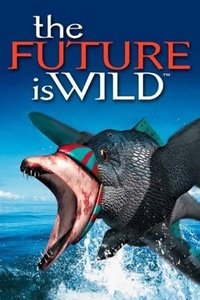
The Future Is Wild was a 2002 thirteen-part documentary television miniseries. Based on research and interviews with several scientists, the miniseries shows how life could evolve in the future if Homo sapiens left the earth. The version broadcast on the Discovery Channel modified this premise, supposing instead that the human race had completely abandoned the Earth and had sent back probes to examine the progress of life on the planet. The show took the form of a nature documentary.
The miniseries was released with a companion book written by geologist Dougal Dixon, the author of several "anthropologies and zoologies of the future", in conjunction with natural history television producer John Adams. For a time in 2005, a theme park based on this program was opened in Japan. In 2008 a special on the Discovery Channel about the development of the video game Spore was combined with airings of The Future Is Wild.
A film version of the series was picked up by Warner Bros.








 age 7+