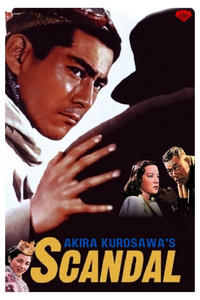

A gentle, war-shattered ex-soldier, Kinji Kameda, arrives in wintry Hokkaidō and is pulled into a volatile tangle of love and pity between the disgraced Taeko Nasu, the proud Ayako, and his possessive friend Akama. Kameda’s saintly compassion exposes everyone’s wounds, steering the quartet toward jealousy, violence, and inexorable tragedy. Adapted from Dostoevsky’s novel.
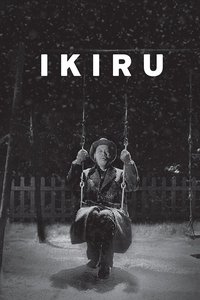
Kanji Watanabe is a middle-aged man who has worked in the same monotonous bureaucratic position for decades. Learning he has cancer, he starts to look for the meaning of his life.
A samurai answers a village's request for protection after he falls on hard times. The town needs protection from bandits, so the samurai gathers six others to help him teach the people how to defend themselves, and the villagers provide the soldiers with food.
An aging foundry patriarch, gripped by terror of nuclear annihilation, tries to uproot his family to Brazil. When they petition to have him declared incompetent, a family-court counselor witnesses his obsession slide into ruin—and asks whether ignoring the atomic threat is any saner.
Returning to their lord's castle, samurai warriors Washizu and Miki are waylaid by a spirit who predicts their futures. When the first part of the spirit's prophecy comes true, Washizu's scheming wife, Asaji, presses him to speed up the rest of the spirit's prophecy by murdering his lord and usurping his place. Director Akira Kurosawa's resetting of William Shakespeare's "Macbeth" in feudal Japan is one of his most acclaimed films.
Residents of a rundown boardinghouse in 19th-century Japan, including a mysterious old man and an aging actor, get drawn into a love triangle that turns violent. When amoral thief Sutekichi breaks off his affair with landlady Osugi to romance her younger sister, Okayo, Osugi extracts her revenge by revealing her infidelity to her jealous husband.
In feudal Japan, during a bloody war between clans, two cowardly and greedy peasants, soldiers of a defeated army, stumble upon a mysterious man who guides them to a fortress hidden in the mountains.
In this loose adaptation of "Hamlet," illegitimate son Kôichi Nishi climbs to a high position within a Japanese corporation and marries the crippled daughter of company vice president Iwabuchi. At the reception, the wedding cake is a replica of their corporate headquarters, but an aspect of the design reminds the party of the hushed-up death of Nishi's father. It is then that Nishi unleashes his plan to avenge his father's death.
A nameless ronin, or samurai with no master, enters a small village in feudal Japan where two rival businessmen are struggling for control of the local gambling trade. Taking the name Sanjuro Kuwabatake, the ronin convinces both silk merchant Tazaemon and sake merchant Tokuemon to hire him as a personal bodyguard, then artfully sets in motion a full-scale gang war between the two ambitious and unscrupulous men.
Toshiro Mifune swaggers and snarls to brilliant comic effect in Kurosawa's tightly paced, beautifully composed "Sanjuro." In this companion piece and sequel to "Yojimbo," jaded samurai Sanjuro helps an idealistic group of young warriors weed out their clan's evil influences, and in the process turns their image of a proper samurai on its ear.
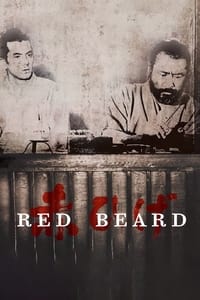
Aspiring to an easy job as personal physician to a wealthy family, Noboru Yasumoto is disappointed when his first post after medical school takes him to a small country clinic under the gruff doctor Red Beard. Yasumoto rebels in numerous ways, but Red Beard proves a wise and patient teacher. He gradually introduces his student to the unglamorous side of the profession, ultimately assigning him to care for a prostitute rescued from a local brothel.
On a Tokyo dump’s shantytown edge, interwoven vignettes follow residents scraping by: a boy who “drives” an imaginary trolley, a homeless father and son designing a dream house, a young woman brutalized at home, drunks, schemers, and saints of small kindnesses. Kurosawa crafts a ragged mosaic of hardship, fantasy, and flickers of grace that keep people moving forward.
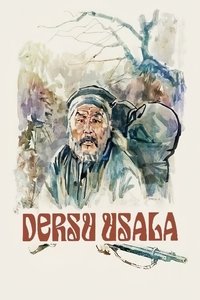
A military explorer meets and befriends a Goldi man in Russia’s unmapped forests. A deep and abiding bond evolves between the two men, one civilized in the usual sense, the other at home in the glacial Siberian woods.
Akira Kurosawa's lauded feudal epic presents the tale of a petty thief who is recruited to impersonate Shingen, an aging warlord, in order to avoid attacks by competing clans. When Shingen dies, his generals reluctantly agree to have the impostor take over as the powerful ruler. He soon begins to appreciate life as Shingen, but his commitment to the role is tested when he must lead his troops into battle against the forces of a rival warlord.
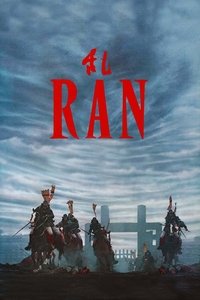
Shakespeare's King Lear is reimagined as a singular historical epic set in sixteenth-century Japan where an aging warlord divides his kingdom between his three sons.
Eight visually rich vignettes drawn from Kurosawa’s own dreams—fox weddings and vanished orchards, a soldier’s ghosts, a walk through Van Gogh’s canvases, nuclear nightmares, and a water-mill utopia—meditate on childhood, art, mortality, and humanity’s uneasy bond with nature.
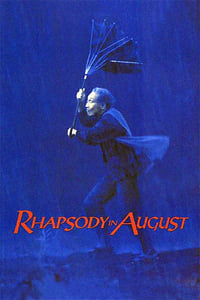
An elderly Nagasaki hibakusha spends a summer caring for her four grandchildren, whose curiosity about the 1945 bombing stirs buried memories and moral questions. When an American nephew from Hawaii visits, the family confronts grief, guilt, and the possibility of reconciliation across generations.
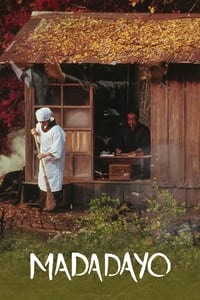
In postwar Tokyo, beloved writer-professor Hyakken Uchida retires and is buoyed through hardship by the fierce devotion of his former students, who honor him each year with a raucous “Not yet!” birthday toast. Told in warm, gently comic vignettes, Kurosawa’s farewell celebrates aging, friendship, and the sustaining ritual of teacher and pupils refusing to say goodbye.