mdblist.com logo The Best Tokuji Kobayashi Movies. Go to The Best Shows


Ratings
Between
and
Between
and
Between
and
With at least
votes
Between
and
With at least
votes
Between
and
With at least
votes
Between
and
With at least
votes
Between
and
With at least
votes
Between
and
With at least
votes
Between
and
With at least
votes
Between
and
With at least
votes
Additional filters
m
Lists, Streaming Services, Cast and more
Create List (88 items)

Login to create a dynamic list


poster
Criterion Channel
81
72
7.8
/5316/
76
/92/
74
/161/
4.0
/10755/
89
/9/
87
/49/
83
/6/

Equinox Flower (1958)
Wataru Hirayama's outwardly liberal views on marriage are severely tested when his daughter declares that she is in love with a coworker and is adamant to live life her own way, instead of agreeing to an arranged marriage. Outwitted by his female relatives, Hirayama stubbornly refuses to admit defeat.
poster
Criterion Channel
76
66
7.2
/4072/
73
/79/
72
/88/
3.8
/7470/
88
/8/
75
/49/

One Wonderful Sunday (1947)
Two broke sweethearts wander war-scarred Tokyo on a single Sunday, stretching 35 yen as they chase housing, small pleasures, and a little hope.
poster
Criterion Channel
78
59
8.0
/3168/
74
/47/
76
/90/
4.1
/4391/

Twenty-Four Eyes (1954)
From 1928 to 1946, the lives of 12 young people and their school teacher in a poor Japanese village are profoundly affected by historical events and personal circumstances.
poster
Criterion Channel
75
38
7.1
/721/
63
/16/
69
/20/
3.7
/1555/
100
/25/

Apart from You (1933)
An aging geisha, whose angry teenage son is ashamed of her profession, works alongside a young geisha, resentful of her family for forcing her into a life of ignominy.
poster
Criterion Channel
68
26
6.9
/634/
61
/11/
70
/15/
3.6
/1487/

I Will Buy You (1956)
A talent scout moves sharply, dead-set on signing a promising athlete to the baseball team the Toyko Flowers.
poster
Criterion Channel
68
21
7.1
/490/
60
/14/
69
/18/
3.6
/822/

Stakeout (1958)
Two detectives begin a stakeout based on the slim chance of catching a murderer whom they suspect will try to reunite with an old flame.
poster
Criterion Channel
62
14
6.2
/330/
56
/8/
65
/13/
3.3
/585/

The Neighbour's Wife and Mine (1931)
A playwright moves to a rural neighborhood to avoid the distractions of the city, but he discovers there are plenty of ways to get sidetracked in his new home, too.
poster
Criterion Channel
68
13
7.0
/409/
58
/9/
75
/12/
3.6
/385/

The River Fuefuki (1960)
In a time of continuous civil wars ravaging the fields of feudal Japan, the eldest son of a very poor peasant family, living alongside the bridge over the Fuefuki river, decides to serve a warlord to escape his miserable condition, being soon followed by his younger brothers. Although not all the men of the family take this tragic path of death, women of the family will be doomed to endure the pain of loss during the next five generations.
poster
55
12
6.1
/309/
41
/8/
52
/16/
3.4
/443/

Day-Dream (1964)
While under sedation in a dentist's office, a young art student has sex fantasies about naked women, vampires and a beautiful patient he saw in the office.
poster
Criterion Channel
63
11
7.3
/443/
51
/6/
53
/14/
3.6
/353/

A Japanese Tragedy (1953)
At the close of the war in Japan, a widowed mother makes every possible sacrifice to bring up her ungrateful son and daughter who are unimpressed with their poor standard of living at home. They gradually reject her in search of the material comforts that working as a maid cannot provide. The mother's despair becomes interminable.
poster
?
10
/1/

Parakin to Kyū-chan mōshiwakenai yarō-tachi (1962)
1962 Japanese movie
poster
?
10
/1/

涙の花道 (1956)
Nakamura Yukinojō, Edo's most popular actor, discovered that his parent's enemy, Ohara Genba, had changed his name to Isshiki Kurōnosuke and become a hatamoto, a direct retainer of the shogun. Yukinojō's younger brother, Shingorō, traveling to Edo from their hometown, helped the town boy Kiyohē and his daughter Michi from troublemakers led by Kumosuke. This act led to a reunion with Yukinojō through the assistance of their associate, Daisaburō.
poster
?
10
/1/

A Comedy in Front of the Station: Onsen (1962)
Fourth entry in the Ekimae series, focusing on the restoration of a Fukushima hot spring inn.
poster
?
6.9
/70/
70
/1/

So Goes My Love (1938)
Shigeo is an aspiring writer living with his girl friend Minako and hoping for success and a better tomorrow every day. Both live on what Minako earns from working in a café. Shigeo is not happy with the situation and neither is his family who do not approve of Minako. Especially his uncle tries to convince him to leave Minako, even using his influence behind the scenes. Things start to change when Shigeo's sister pays the young couple a visit, being the first member of Shigeo's family to actually get to know Minako in person.
poster
?
46
/4/

Lady Doctor Kinuyo (1937)
Kinuyo is a daughter of doctor of Chinese medicine, and Yasuo is a son of surgeon. Their families always fight like cat and dog. This relationship is ancestral. Although Kinuyo and Yasuo love each other, they have different thoughts toward treatments.
poster
?
6.2
/16/

Men vs. Women (1936)
A musical film made for the inauguration of Shochiku's Ofuna Studio, with an all-star cast of the era.
poster
?
10
/1/

Next Door to Happiness (1955)
The Nakata family, father, mother, son Hideo, and daughters Taeko and Akiko live in the poorer section of modern Tokyo. Their troubles start when the father leaves with another woman, returns after he is rejected, and leaves again with the family's money.
poster
?
10
/1/

Hikkoshi yatsure (1961)
Manao Horiuchi movie
poster
?
10
/1/

Sono yoru no tsuma (1952)
Hiroo Ikeda movie
poster
?
10
/1/

Hearts A-Flutter (1957)
N/A
poster
?
5.4
/9/
10
/1/

Maria of the Ant Village (1958)
Alongside Tokyo's Sumida River is a ragpickers' settlement known as Ant Village. One night, a young Catholic girl, Satoko Kitahara, who has been baptized under the name of Maria, comes to offer her services. However, Ant Village is not just an ordinary vagrants' community but a fine autonomous organization, and as the municipal authorities have long been demanding that the people of Ant Village leave the site, Satoko is utilized to publicize the Village and win public sympathy. While being utilized in this manner, Satoko is nevertheless glad to be able to help the people of Ant Village, especially the children, and when the summer vacation comes she decides to take the children on an excursion to Hakone. To raise funds for this purpose she becomes a rag-picker herself.
poster
?
10
/1/

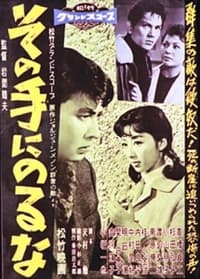
その手にのるな (1958)
A woman in a bar was killed at a new construction site in an apartment building, and a handbag containing the value of five million yen was taken away. Detective Kuribayashi, who was involved in the investigation, turned his eyes to Kishida Ryohei, a cabaret musician who lives in a nearby apartment. He had a criminal record for stabbing his wife, who had betrayed him, and a match he worked for had fallen at the scene of the murder. However, Kishida, who appeared at the police station, stubbornly denied the crime, and he returned to his apartment without physical evidence.However, the residents of the apartment who learned of this had been cold-blooded and rumored to be a murderer. Kishida has a secret crush on the stripper Tachibana Yumi, who lives in the apartment directly opposite.However, Yumi has a lover of a plumber named Maki Shinji.
poster
?
10
/1/

悪魔の顔 (1957)
N/A
poster
?
7.5
/10/

Love, Be with Humanity: Part 2 (1931)
The three-hour Ai yo jinrui to tomo ni are / Love, Be with Humanity (1931) starts as a satire of alienation in the world of money, develops into a lumberland epic with a forest fire on Sakhalin Island, turns into a tragedy of King Lear dimensions, and manages to amaze the blasé audience with a happy end in the Wild West.
poster
?
10
/1/

White Blaze (1958)
A masterpiece depicting the true feelings, grief and joy of a woman. An adaptation of the novel of the same name by Yasushi Inoue.
poster
?
7.0
/88/
67
/3/

Okoto and Sasuke (1935)
A period piece about the love of a wealthy blind woman, a teacher of koto and shamisen, and her devoted manservant. Based on a novella by Tanizaki Junichiro.
poster
?
7.2
/32/

Chûshingura - Zempen: Akahokyô no maki (1932)
N/A
poster
?
6.2
/11/

Hotaru no hikari (1938)
Approaching their graduation ceremony, Saegusa, Sanae, and their classmates go on an overnight trip to Hakone with their teacher Ms. Kawahara, who will soon leave school. They thank her doing so and go on their respective paths, ending soon their student life.
poster
?
10
/1/

Hattari Seinen Shinshi (1961)
Japanese comedy film.
poster
?
10
/1/

Mado Kara Tobidase (1950)
The movie "Jump Out of the Window" is a heartwarming work that depicts the interaction between two families. Shusuke Tokuyama (Den Obinata) runs an agricultural and livestock industry, and has his father Ritaro (Hiroshi Shiomi), younger brother Yuji (Keiju Kobayashi), wife Fujiko (Kiko Todoroki), and four children (three of whom are Obinata's sons). They lived in a large family of 8 people, including 2 children and 2 daughters. The Fujieda family next door is Chieko (Ayako Okamura), whose husband, a captain, died in a shipwreck at sea, her daughter Mariko (Kyoko Kagawa), and her son Michio (Oohinata's son), who has a leg disability and is undergoing rehabilitation. ) We were a family of three. Through the interaction between the Tokuyama family and the Fujieda family, the importance of family and the kindness of people are reflected on the screen.
poster
?
6.7
/29/

Love (1933)
Heinosuke Gosho evokes in this film the family conflicts engendered by the eternal problem of a father who projects his professional desires on the life of his son. The sister Machiko is the essential link that will allow everyone to apologize to each other and achieve reconciliation.
poster
?
6.2
/27/
60
/1/

The Groom Talks in His Sleep (1935)
This pair of gentle yet witty and inventive comedies from the director of The Neighbour's Wife and Mine typify both the formal experimentation of early Japanese sound cinema and the social milieux that Shochiku tended to depict. 'Virtually plotless, and feeling more like comic sketches than fully developed stories,' writes Arthur Nolletti, Jr, 'these light comedies, or farces, take a wholly trivial matter (often a socially embarrassing situation) and use it as a springboard for a succession of gags.' Much of the films' distinction comes from the wit of Gosho's direction, the imaginative use of the new sound technology and the charm of the acting, particularly of the heroines (Kinuyo Tanaka in Bride; Hiroko Kawasaki in Groom). Yet in both films, Gosho finds room for some shrewd observation of character and environment, subtly exploring the values and assumptions of the suburban petit bourgeoisie.
poster
?
10
/1/

Beauty of Life (1951)
Inochi uruwashi
poster
?
7.3
/20/
10
/1/
80
/1/

Snow-Flake (1950)
N/A
poster
?
10
/1/

Haru no Wakakusa (1954)
N/A
poster
?
7.9
/16/
10
/1/

Elegy (1951)
Wataru Naohiko who has the prosecutor general as his father became a young composer and its symphony "saint" invoked the world echoed. But his disciple Uchiyama and his best friend prosecutor Daisuke Toki accused his music as a sesame of pause-only technique, not a truly heart-hungry art.
poster
?
7.0
/93/
55
/2/
56
/5/

A Brother and His Younger Sister (1939)
A man who works late hours at a deadening job lives together with his wife and his younger sister. The younger sister's a modern girl who's starting to receive romantic attention from one of her co-workers.
poster
?
10
/1/

Haha machi gusa (1951)
Asako works in a hostel for troubled young women. When a beautiful young girl is brought in one day after committing theft, Asako finds out from the older widow she works with that the new girl is undoubtedly her half-sister. When the younger sister suddenly flees on account of a misunderstanding, Asako makes up her mind to find the mother who deserted them both.
poster
?
7.1
/76/
70
/1/

The Trio's Engagements (1937)
Three men vying for the same job end up chasing the same girl in this comedy-drama from noted Japanese director Yasujiro Shimazu.
poster
?
5.7
/19/

Marching On (1930)
A farmer’s boy, obsessed with his balsa-and-paper flying models and with dreams of real aircraft, develops a friendship with the daughter of the local squire, who introduces the lad to her pilot brother and his flying officer friends; through hard work, and despite the handicap of a lowly class status, he eventually succeeds in qualifying as a pilot and joining the air force.
poster
?
6.8
/24/
10
/1/

Dancing Girls of Izu (1954)
A dancer girl in a touring company met a high school boy in a port town. The story is about their first love that is very touching and sorrowful. An adaptation of the Kawabata Yasunari short story.
poster
?
6.6
/21/
10
/2/

Family Meeting (1936)
A melodrama about a businessman's relations with the three women in his life.
poster
?
6.0
/42/

The Bride Talks in Her Sleep (1933)
This pair of gentle yet witty and inventive comedies from the director of The Neighbour's Wife and Mine typify both the formal experimentation of early Japanese sound cinema and the social milieux that Shochiku tended to depict. 'Virtually plotless, and feeling more like comic sketches than fully developed stories,' writes Arthur Nolletti, Jr, 'these light comedies, or farces, take a wholly trivial matter (often a socially embarrassing situation) and use it as a springboard for a succession of gags.' Much of the films' distinction comes from the wit of Gosho's direction, the imaginative use of the new sound technology and the charm of the acting, particularly of the heroines (Kinuyo Tanaka in Bride; Hiroko Kawasaki in Groom). Yet in both films, Gosho finds room for some shrewd observation of character and environment, subtly exploring the values and assumptions of the suburban petit bourgeoisie.
poster
?
6.8
/14/
60
/1/

My Elder Brother (1934)
Jyuta, an honest owner of a taxi company, has a younger half-brother who is involved in the yakuza world and doesn’t get along well with his mother. Jyuta tries to correct him…
poster
Criterion Channel
52
?
6.6
/141/
36
/3/
54
/7/

The Rose on His Arm (1956)
Ignoring the protests of his working-class mother, a young man becomes wrapped up in the world of delinquents and yakuza.
poster
63
?
7.9
/227/
10
/1/
90
/5/
3.8
/348/

Happiness of Us Alone (1961)
The story is of two people. One is deaf, the other deaf and mute. They marry after meeting at a school reunion, and the film follows their trials and tribulations ... and joys.
poster
?
10
/1/

A Woman's Life (1955)
The film adaptation of Yuzo Yamamoto's novel tells the story of the difficult fate of a single mother in pre-war Japan.
poster
?
6.7
/56/
60
/4/

The Lights of Asakusa (1937)
Pre-war Asakusa was a riotous district of cabarets, dance-halls and brothels - a striking backdrop for Shimazu's story of innocence and experience. Pretty, young Reiko is the new dancer in an infamous theatre troupe, and her fellow performers try to protect her virtue in a land of vice. Meanwhile, an ageing actor wants to be a hero off stage as well as on, and the troupe matriarch Marie has to keep them all together.


mdblist.com © 2020 | Contact | Reddit | Discord | API | Privacy Policy