mdblist.com logo The Best Marie Nademlejnská Movies. Go to The Best Shows


Ratings
Between
and
Between
and
Between
and
With at least
votes
Between
and
With at least
votes
Between
and
With at least
votes
Between
and
With at least
votes
Between
and
With at least
votes
Between
and
With at least
votes
Between
and
With at least
votes
Between
and
With at least
votes
Additional filters
m
Lists, Streaming Services, Cast and more
Create List (78 items)

Login to create a dynamic list


poster
Criterion Channel
77
63
7.7
/3290/
76
/78/
75
/67/
3.9
/6585/
81
/655/

Witchhammer (1970)
In the 1600s, an overzealous clergy hauls innocent women in front of tribunals, forces them to confess to imaginary witchery, and engages in brutal torture and persecution of their subjects.
poster
74
37
8.0
/1556/
78
/75/
69
/45/
3.6
/618/

The Emperor and the Golem (1952)
The Emperor's mismanagement of his country is provoking some in his court to plot to overthrow him. He feels successful, at least, when he discovers the legendary Golem, which he believes can protect him and even cure his imaginary illnesses but, when he disappears while on a bender, his kindly baker, who looks just like him, is mistaken for him, and begins to put things in order. However, the conspirators, not to be outdone, determine to bring the Golem back to life to do their bidding.
poster
71
15
7.5
/423/
73
/16/
67
/14/
3.6
/445/

The White Disease (1937)
In a country whose people have just been successfully persuaded of their superiority and the justification for military expansion by the fiery speeches of a dictator, the bacillus of a highly destructive form of leprosy has spread. It is called morbus Tshengi, or popularly „white disease“. The only one who has developed an effective cure for it is a physician of the poor named Galén. But he refuses to reveal the secret of his cure as long as the powerful destroy human lives through wars.
poster
?
10
/1/

Hrozné dítě (1962)
N/A
poster
?
5.8
/13/
10
/1/
50
/1/

Králíci ve vysoké trávě (1962)
N/A
poster
?
6.3
/17/
65
/4/
50
/1/

Black Saturday (1961)
N/A
poster
?
5.8
/14/
10
/1/
50
/1/

Pochodně (1961)
N/A
poster
?
10
/1/
50
/1/

Po noci den (1956)
A Czech art film set in a modern village. The main character of the film is Karla Tolarová, a worker from a Prague printing house, who arrives for a harvest shift at a unified agricultural cooperative in Běšíčice at a critical time for the cooperative. The grain in the fields is ripe, the machine-tractor station does not have the necessary machines for the cooperative, the cooperative members do not trust each other, they lose interest in working together.
poster
?
10
/1/

Kam s ním? (1956)
Based on Jan Neruda's column of the same name, which depicts the troubles of an old straw man. The film is introduced by poet Jaroslav Seifert with a speech about Jan Neruda and his work.
poster
?
3.6
/7/
10
/1/
40
/1/

Usměvavá zem (1952)
N/A
poster
?
4.0
/10/
10
/1/
50
/1/

Mordová rokle (1952)
A new owner of the estate, Konrád Ritter von Schiess, arrives in the Czech village of Sluky. On his orders, the inhabitants of the village are to be evicted and only 30 families are allowed to remain, who volunteer to work on the estate. However, the inhabitants refuse to work for the lords, and their solidarity only strengthens when one of them is murdered by the Gestapo based on a report by the estate manager Prokeš...
poster
?
7.0
/15/
10
/1/
60
/1/

Early Days (1953)
Early Days follows the early life of famous Czech writer Alois Jirásek. Jirásek had already developed his own view of the history of the Czech nation while he was at grammar school in Broumov. When he becomes the supply teach in Litomyšl, he has already written his first book and a number of poems. The local dignitaries await the arrival of the young writer in excited anticipation. Jirásek, however, is sickened by the empty patriotism from the depths of his soul and soon becomes disagreeable to the notables. The district sheriff tries to remove Jirásek from the school and drive him out of town. Unable to do this, the sheriff appoints a pro-Austrian headmaster who attempts to sabotage Jirásek. The students stand behind Jirásek , however, and discontent is not only felt in Litomyšl but throughout Bohemia.
poster
?
5.4
/19/
35
/2/
50
/1/

Racek Is Late (1950)
Baker Jan Racek (Vladimír Repa) is a very hard-working and sensible man. His great passion is pigeon-keeping and also, for many years, Ruzenka (Ludmila Vostrcilová). They are going to get married but Racek is busy waiting for the pigeons' return and misses the wedding. The engaged couple is already getting a little older so the otherwise kind Ruzenka gets very angry at this and gives Racek an ultimatum - it's going to be her or the pigeons.
poster
71
?
7.6
/126/
67
/14/
71
/8/

Hostinec „U kamenného stolu“ (1949)
An innkeeper is grieving because his wife left him for a second-rate actor. His two nephews, who are not on speaking terms, have to take over the running of the establishment...
poster
?
6.3
/72/
70
/1/
65
/2/

The Portrait (1948)
People are afraid of the usurer Chazaj and are convinced that he is the bearer of evil. One day Chazaj pays a visit to the poor artist Simon Jordán and asks him to paint his portrait. Simon agrees but as he progresses with the work his mind conjures up terrible thoughts and in the end he commits suicide. The portrait looks lifelike and Chazaj is content with the results. After Chazaj's death the picture changes hands and brings misfortune to all who own it. The last victim is the young painter Roman who buys Chazaj's portrait in a bazaar. He finds a treasure in the frame and begins to live well off it. The comfortable life suits him so well that he rejects his original artistic aims and becomes a painter of fashionable kitsch.
poster
?
6.8
/10/
10
/1/
50
/1/

O ševci Matoušovi (1948)
The revolutionary year of 1848 brought great hopes among the hitherto silent classes, awakening social and national hopes. The response also penetrated the remote countryside, even as far as the Podkrkonoše Mountains. The young shoemaker there began to take an interest in social and political events, and he also experienced disappointment in later developments.
poster
?
50
/1/

The Musician (1948)
N/A
poster
?
6.9
/104/
84
/7/
48
/4/

13th district (1946)
Inspector Cadek from the 13th police station should keep an eye on the released safe-cracker nicknamed The Cat. He rightly suspects that Cat will go and pick up his last loot which the police didn't manage to find and that he will want revenge on Karta who helped get him behind bars. At the hospital, Cat's ex-lover Fróny hopelessly falls for doctor Chrudimský and decides to start a new life. She still refuses to help the inspector in his search for The Cat and Karta.
poster
?
5.0
/9/
60
/1/

Nadlidé (1946)
N/A
poster
?
6.6
/26/
70
/1/

Mist on the Moors (1944)
Mist on the Moors examines fates of just about a few people. Their stories are outlined in a short space of time and are a symbolic representation of the drama of life, struggle for justice, human cognizance and the healing power of love. One of the most important components of the film is the nature, which ceases to be a mere stage for its plot—it serves almost as an autonomous plot agent. The movie landscape is a precisely defined and localized one. Only the South Bohemian ponds can serve as the right environment for development of such earthy and typically human stories as we encounter in the Mist on the Moors.
poster
?
6.7
/12/
60
/1/

Girl from the Beskids (1944)
N/A
poster
?
6.3
/18/
50
/1/

Okouzlená (1942)
N/A
poster
?
5.4
/10/
10
/1/
60
/1/

Martin and Nine Fools (1966)
Captain Martin from the police's child department and his colleague Kraus are called to Znojmo to help solve a case regarding stolen toys found in the town's subterranean passages. The members of the local police department are convinced that the thieves are the well-known "customers" from the Znojmo elementary school, pupils Exner and Mandlík. Martin, however, has doubts about these culprits. These doubts grow even stronger after the local self-service shop is robbed and the local tobacco store reports that it is missing a lot of imported cigarettes. Martin questions the children, inspects both shops and searches through the underground.
poster
?
7.8
/14/
70
/1/

Preludium (1941)
N/A
poster
?
4.2
/8/

Pražský flamendr (1942)
N/A
poster
?
5.4
/27/
63
/3/
55
/2/

Pantáta Bezoušek (1941)
N/A
poster
?
6.8
/50/
72
/4/
70
/3/

Dva týdny štěstí (1940)
N/A
poster
?
6.7
/10/

Minulost Jany Kosinové (1940)
N/A
poster
?
5.8
/10/
46
/3/
70
/1/

Teď zas my (1939)
N/A
poster
?
6.0
/8/
70
/1/
30
/1/

Paní Kačka zasahuje... (1939)
N/A
poster
?
5.1
/12/
40
/1/
53
/3/

Ženy u benzinu (1939)
N/A
poster
?
4.6
/8/

Dvojí život (1939)
N/A
poster
?
5.8
/11/
50
/2/
50
/1/

Man from the Unknown (1939)
Venice Film Festival 1940
poster
?
3.8
/9/
10
/1/
40
/2/

Zvony z rákosu (1951)
The North Bohemian town of Chudoplesy in the middle of the 19th century: the only local industry is the domestic production of reed goods. The poor reeders organize a revolt against the exploitative factors.
poster
?
4.5
/12/
10
/1/
40
/1/

Ještě svatba nebyla... (1954)
At the annual festival in Strážnice, long-time rivals - cooperative members from the neighboring municipalities of Dubnice and Bojanova - met. This time, the people of Dubnice are leading both in selling sausages and in the artistic forum. Despite the protests of the accounting cooperative Ambrože, the youth from Bojanova establish a singing and dancing group, led by teacher Bartoš, whom Ambrože's daughter Eva loves. However, they go all the way to Dubnice to practice so that the irritable Ambrož does not know about it. This is the reason for the rift between Eva and Bartoš. They only reconciled after the defeat of the Bojanova group in the regional round of the competition. It turns out that neither Bojanova nor Dubnice alone can build an artistically strong group, but if they unite, they have hope for success in the next year of Strážnice.
poster
?
5.0
/7/

Jan Výrava (1938)
N/A
poster
?
4.4
/10/
70
/1/

Na Svatém Kopečku (1934)
N/A
poster
?
4.7
/17/

The settlement of the young dream (1931)
N/A
poster
?
6.7
/89/
35
/2/
28
/4/

May Stars (1959)
May 1945. On the outskirts of Prague, ordinary people meet Soviet soldiers-liberators with tears of joy in their eyes. In the early days of the lull, someone sadly recalls a pre-war life; someone unexpectedly meets his love; someone is returning from enemy dungeons looking hopefully into the future; and someone, having moved from a tank into a Czech tram, warmly recalls his craft as a car driver... These days, all those who survived the Great War fire swear an oath to keep peace on Earth forever, honoring the memory of those who gave their lives for simple human happiness.
poster
?
5.7
/27/
10
/1/
50
/1/

Občan Brych (1959)
František Brych, a principled lawyer, refuses to back the new Communist regime at his factory and grows increasingly alienated, even as his former love Irena, unhappily married to factory owner Ondřej Ráž, seeks his understanding. When he helps plan an escape over the Šumava border, the group’s panic and violence lead to murder, prompting Brych to abandon the scheme and return home with Irena.
poster
?
4.3
/14/
40
/1/
60
/2/

Venoušek a Stázička (1939)
N/A
poster
?
6.7
/23/
35
/2/
70
/1/

Páté kolo u vozu (1958)
Although the emancipated editor of a women's magazine proclaims that grandparents in particular should not be abused by their adult children, she accepts without scruple the fact that her mother, still a sprightly pensioner, works in her household as a jack-of-all-trades without receiving not only any pay but also no recognition. However, the grandmother learns from an article written by her daughter - and rebels.
poster
?
7.2
/65/
55
/4/
54
/7/

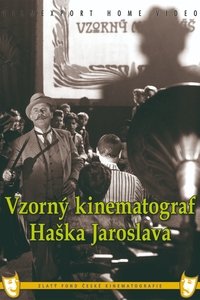
Jaroslav Hasek's Exemplary Cinematograph (1956)
Jaroslav Hašek screens four film stories in the fairground shed around 1900. After period advertising slides and a "newspaper", we see "the first part of a sensational, exemplary, parfuss, salon program - a film from the life of school-age children, shot under very difficult circumstances". The plot of this film takes place partly in a school classroom and partly in a gymnasium toilet, where the primate Chocholka took refuge from a Latin composition. "Exemplary Family Happiness" is the second film that takes the viewer into the family of the municipal official Honzátek, in which many stormy scenes occurred when the hamster, provided by Honzátek Jr., moved into the sofa - a wedding gift from Sister Ema. Equally surprising are two other stories, one of which tells about the "father of the poor", the owner of a company with unrecoverable cash flow and a famous patron, and the other about the fateful consequences of a joint trip between the old bachelor Mr. Hanzlíček and his neighbors.
poster
66
?
7.0
/255/
66
/16/
62
/9/

Jan Hus (1955)
The first part of the "Hussite Revolutionary Trilogy", completed with Jan Žižka (1955) and Proti všem (Against All Odds, 1957). The film captures the period from May 1412 to the summer of 1415, a turbulent time in the Czech Kingdom, during which there were protests in Prague against the sale of "omnipotent indulgences" whose sale throughout the kingdom was announced by Pope John XXIII. The ideological leader of this movement is the preacher Master Jan Hus, whose words, calling for the elimination of church abuses, are listened to in the Bethlehem Chapel by thousands of ordinary Praguers, Czech lords and Queen Sophie, wife of the Czech King Wenceslas IV.
poster
?
5.6
/8/
80
/1/
50
/1/

V horách duní (1946)
N/A
poster
?
50
/1/

Průlom (1946)
N/A
poster
?
7.0
/66/
71
/6/
60
/1/

Tetička (1941)
Rich spinster Berta celebrates her sixtieth birthday. Her faithful admirer Dr. Jelinek proposes. But Berta can not forget Edward, the great love of her life, and refuses the offer…
poster
?
4.7
/18/
60
/2/
60
/1/

Vzbouření na vsi (1949)
The new era brings with it progress, which must inevitably penetrate even the most remote corners. It has also reached the village of Čirá. The men there have a number of modern machines that make their work in the fields easier, while their wives still toil in the household. One help is readily available - a communal laundry could replace the traditional washcloths. However, the men who rule the municipal council do not want to hear about such spending. So the wives join forces in resistance and resort to severely repressive means...


mdblist.com © 2020 | Contact | Reddit | Discord | API | Privacy Policy