mdblist.com logo The Best Sergey Oskolkov Movies. Go to The Best Shows


Ratings
Between
and
Between
and
Between
and
With at least
votes
Between
and
With at least
votes
Between
and
With at least
votes
Between
and
With at least
votes
Between
and
With at least
votes
Between
and
With at least
votes
Between
and
With at least
votes
Between
and
With at least
votes
Additional filters
m
Lists, Streaming Services, Cast and more
Create List (3 items)

Login to create a dynamic list


poster
?
8.3
/20/
73
/3/

The Birth of Music (2010)
The film is an allegory in which the attempt is made to show the inner process of movement of the composer's soul at the time of the birth of music.
poster
?
7.9
/20/
73
/3/

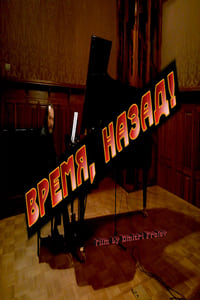
Time, Ago! (2017)
"Time, forward!" - two orchestral suites by George Sviridov, published for the first time in 1968 (first suite) and in 1977 (second suite). The suites were created on the basis of music for the film "Time, Forward!" By Mikhail Schweitzer (based on the novel of the same name by Valentin Kataev, shot in 1965, released in 1966), dedicated to the construction of the Magnitogorsk Metallurgical Combine. From the first suite, the most famous part is "Time, forward!". Subsequently, it was used in a number of films, in television and radio programs, documentary films about the first five-year plans, industrialization, and post-war reconstruction. Sergei Oskolkov composed his suite: "Time, back!" The film is dedicated to the 100th anniversary of the revolution in Russia.
poster
90
?
8.0
/138/
100
/1/

Dreams of the Past (2022)
A film about peace, love and war. Dedicated to the 100th anniversary of the end of the Civil War in Russia. The film takes place at the end of the summer of 1917, when Russia and the whole world were at a crossroads between two eras. None of the people could even imagine how much his life would change in the very near future. In a strange way, the atmosphere of the film echoes our current reality and what is happening in Russia today. According to the form of visualization, the film belongs to experimental mockumentary cinema. To give greater authenticity to what is happening on the screen, the shooting was carried out on black-and-white negatives of 16 and 35 mm, hand-operated cameras were used and the material was developed in manual spiral tanks. The documentary chronicle of the Kolchak army of 1919 and the White army in the Far East of 1922 is embedded in the finale of the film.


mdblist.com © 2020 | Contact | Reddit | Discord | API | Privacy Policy