mdblist.com logo The Best Daniel Kremer Movies. Go to The Best Shows


Ratings
Between
and
Between
and
Between
and
With at least
votes
Between
and
With at least
votes
Between
and
With at least
votes
Between
and
With at least
votes
Between
and
With at least
votes
Between
and
With at least
votes
Between
and
With at least
votes
Between
and
With at least
votes
Additional filters
m
Lists, Streaming Services, Cast and more
Create List (25 items)

Login to create a dynamic list


poster
?
80
/1/

William Wyler: Forty Takes Willy (2025)
Documentary on the life and career of famed director William Wyler. An Academy Award-winning director and 14-time Oscar nominee, Wyler was known for shooting multiple takes of a scene before he was satisfied. This documentary takes a deep dive into his extraordinary career, featuring never-before-seen material provided by Wyler's children.
poster
?
100
/1/

Love Left the Masquerade: Peter Medak's Cinema of Pretenders (2025)
Peter Medak's films toy with notions of cosplay, masquerade, gamesmanship, and how power and permission structures figure into these human diversions. His filmography includes The Ruling Class (1972), The Changeling (1980), A Day in the Death of Joe Egg (1971), The Krays (1990), and others, all which capitalize on these ideas. Sanity is fragile, ephemeral, and suspended from a very thin tether in all his films. This piece gets to the bottom of why Medak centers his work on such themes, and why they carry biographical weight for him personally.
poster
?
5.5
/11/

The Fourth Movement (2017)
Four interlocking stories with a Jazz theme. Four Women go out to visit the sites of the jazz clubs where Lou, 65 and dying of cancer, claims she once performed as a young singer. It's election night, Nov. 8, 2016 and the women follow the results on their cell phones. It's also opening night for the C Flat jazz club where they end the evening up as their worst fears are realized: Trump has won the election.
poster
?
9.8
/6/

The Wind Blows Where It Wishes (2011)
Carla Durkow is a filmmaker from Istanbul who screens her latest work, entitled Farewell Mighty Spirit, at a Philadelphia art gallery. Her film-within-a-film details the aftermath of the death of the Grand Poet of Santa Maria, and the reading of his will.
poster
?
7.7
/12/

Ben Fries the Slaves (2007)
Fourteen year-old Ben Fries has a cult following, a 22-year-old girlfriend, and a mortal enemy named Rick Algarosa.
poster
?
80
/2/

Dead Neon: The Many Faces of Lenny Bruce on Film (2023)
Lenny Bruce's depiction on film did not start or end with Bob Fosse's Lenny (1974). Through these other often offbeat cinematic incarnations, this essay piece considers how Lenny Bruce was the perfect Bob Fosse subject, and how Fosse's focus on the lives of performers invigorated his portrait of the controversial, trail-blazing comic.
poster
?
8.5
/11/

It's a Zabriskie, Zabriskie, Zabriskie, Zabriskie Point (2023)
Worlds collide in this unconventional essay film, when filmmaker, film historian, and archivist Daniel Kremer seamlessly edits Michelangelo Antonioni's legendary but controversial counterculture art film Zabriskie Point (1970) into the same narrative universe as Stanley Kramer's madcap epic comedy extravaganza It's a Mad, Mad, Mad, Mad World (1963). In creating these new sequences, Kremer comes to recognize that the exercise effortlessly draws cultural and historical parallels in twentieth-century American life that echo in present-day America. The editorial mashups weave a tangled web of social and cinematic history that root our notions of Americana in the mythology of the desert. As Kremer expounds in his narration on these often astonishing and sometimes shocking associations, his very personal ties to the subject matter become manifest.
poster
?
20
/1/

Danny and the Scatman (1999)
The story of how two people have chosen to deal with what many consider a disability. One is a young boy from Pittsburgh well on his way to realizing his dream of becoming a film director. The other is an established musician who decided one day that his "disability" could become a gift.
poster
?
7.0
/34/
10
/1/
45
/2/

Ezer Kenegdo (2017)
Frictions develop when Yisroel "Izzy" Jonigkeyt, a Chassidic Jew from Crown Heights, travels to San Francisco to visit Polish-born Catholic friend Marek Wisniewski with the intent of discovering why a Bay Area art-world iconoclast named Harry Kierk seeks to destroy a lifetime's worth of his own work. As the visit progresses, Izzy and Marek discover for the first time that complex historical baggage impinges on their curious friendship and, soon, they begin to understand why Kierk is driven towards destruction. Continued encounters with Marek's vaguely anti-Semitic cousin Irek (who is their only gateway to contact Kierk) only compound these tensions.
poster
?

Now, Irving Rapper (2026)
Irving Rapper is, in many ways, Hollywood's forgotten man. After getting his start as a "dialogue director" at Warner Bros. in the mid 30's, he became synonymous with the studio's "women's pictures" and rose in prominence as one of Bette Davis's most consistent collaborators, including on her biggest commercial success, Now Voyager (1942). He was a rebel who led the studio in suspensions for chronically refusing to direct the scripts handed to him by the brass, waiting instead for material that better suited his interests and thematic preoccupations. He was also one in a secretive fraternity of gay directors who had to conceal their identities and shield their private lives from potential public ruination. Daniel Kremer takes you through an unexamined and misunderstood life of a man of great artistic inclination who expressed his innermost yearnings covertly through his work in motion pictures.
poster
?

Cruel, Usual, Necessary: The Passion of Silvio Narizzano (2024)
Perhaps at first glance, the filmography of Silvio Narizzano appears unremarkable. Thanks to his sleeper hit Georgy Girl (1966), he's known largely as a "one-hit wonder" director. Upon closer inspection, however, likely no other filmmaker used cinema as effectively to exorcise personal demons in ways both ugly and beautiful. And few directors' sensibilities were more gay, both overtly and covertly. Film historian Daniel Kremer is your tour guide through an obscure, perplexing body of work heretofore ignored and often unfairly shunned. Cruel, Usual, Necessary: The Passion of Silvio Narizzano is an essay documentary of discovery.
poster
?

Clear Lines of Sight: Sidney J. Furie at Paramount (2023)
Canadian-born filmmaker Sidney J. Furie made his name with British hits like The Young Ones (1961), The Leather Boys (1964), and The Ipcress File (1965). When he arrived in Hollywood, Marlon Brando and Frank Sinatra wreaked havoc on his first major studio productions. In 1968, the newly emigrated director joined a stable of cutting-edge filmmakers at Paramount Pictures, under the new leadership of Bob Evans. His films saw both a stylistic departure and a shift in thematic focus. What was behind the evolution, and which aspects unite all of Furie's films?
poster
?

The Great Ecstasy of Tree-Climber Otto, or How I Learned to Stop Worrying and Love Late Preminger (2022)
Otto Preminger wasn't only one of the most famous directors of classic Hollywood. He was a presence, a brand, and the only one who rivaled Hitchcock as the greatest showman and self-promoter of his generation. But toward the end of his career, his attempts to "get with the times" (with films like Skidoo, Tell Me That You Love Me Junie Moon, Such Good Friends, Hurry Sundown, and others) shocked, alienated, and outright repelled audiences. What happened to Otto and how can one best appreciate and enjoy those confounding later works?
poster
?

Elective Vicissitudes: The Radical Exiles of Jules Dassin (2023)
In 1968, filmmaker Jules Dassin collaborated with Ruby Dee and civil rights activist Julian Mayfield on Uptight, a "politically radical" film noir about Black revolution, framed against the April 4 assassination of Dr. Martin Luther King, Jr. Director, producer and co-writer Dassin, a blacklisted American exile, returns to his birth country after having gone into a second exile from his adopted country Greece, then makes a film that roiled the powers that be (or "powers that were") in the U.S. government. The material so upset the FBI that they closely monitored the production up until the eve of its premiere, recruiting crew members as moles. The irony is rich, as Uptight was a remake of John Ford's The Informer (1935) and dealt with a turncoat character who engineers the assassination of a revolutionary leader. How is Uptight both an outlier (or anomaly) as well as simultaneously integral to the career of Jules Dassin?
poster
?

Jack of Three Trades: In Focus on Nicholson the Director (2024)
We all know Jack Nicholson the actor. But few know the history of Jack Nicholson the screenwriter, and especially Jack Nicholson the director. Nicholson's lifelong friend, filmmaker Henry Jaglom, reflects on the icon's behind-the-camera career, while film historian/filmmaker Daniel Kremer presents and analyzes the full scope of that history.
poster
?

The Brando Interregnum: The Decade of Marlon's Dirty Dozen 1962-1972 (2022)
Between One Eyed Jacks (1961) and The Godfather (1972), Marlon Brando appeared in twelve feature films. The actor called this period his "F*** You Years" and it was during this time that his on-set behavior hit erratic and unpredictable new heights. The qualities of the roles and the films themselves vary, but this video essay examines the historical and aesthetic profiles of this cinematic so-called "dirty dozen." Were these projects really beneath him? And what led him to this decade of perceived ignominy?
poster
?

Looking to Get Out: A Comparative Analysis of the Ted Kotcheff Vision (2022)
What do the movies First Blood and Weekend at Bernie's have in common? One man with a clear and curious thematic focus, that's what. Ted Kotcheff is an auteur filmmaker. He is a director with a unifying style, a clear thematic concern, and a coherent vision of life. This video essay defines these elements with an in-depth analysis of his filmography, which also includes Wake in Fright (1971), The Apprenticeship of Duddy Kravitz (1974), Fun with Dick and Jane (1976), North Dallas Forty (1979), and many others.
poster
?

Ammo for Shooting Clouds: John G. Avildsen Before Rocky (2022)
John G. Avildsen has only recently cemented his reputation as the "king of the underdogs," owing to his having directed both Rocky (1976) and The Karate Kid (1984). Within the last decade, a feature-length biographical documentary was released and a critical study book was published. But before Rocky, he was an astute chronicler of the counterculture, whose films possessed a rugged street aesthetic. Those early films (including Joe, Guess What We Learned in School Today, Cry Uncle, Save the Tiger, and The Stoolie) are evaluated for assuming an alternate posture on the counterculture happenings of the era.
poster
?

Survival Scars: Franklin J. Schaffner as Auteur (2023)
Franklin J. Schaffner is the man behind a great many iconic American films: Planet of the Apes (1968), Patton (1970), Papillon (1973), The Boys from Brazil (1978), and others. Though he was an often enigmatically quiet but no less confident and decisive filmmaker, seldom was he discussed as an "auteur" director, despite his Academy Award win for Best Director and many august institutions naming coveted awards for "excellence in directing" after him. Daniel Kremer takes a deep dive into Schaffner's distinguished career, examining visual and thematic tropes that render his work extremely personal and part of a vast picture.
poster
?

Cinema of the Pilpul: A Talmudic View of Early Holocaust Cinema (2023)
The most that mainstream culture knows of the Talmud is from the finale scene of Schindler's List, when Yitzchok Stern hands Oskar Schinder an engraved gold ring that reads, "Whoever saves one life saves the world entire." But how can Talmudic wisdom be additionally applied to the Holocaust, specifically how the tragedies of the Holocaust are depicted in cinema? Daniel Kremer, a film historian (and one-time observant/Chasidic Jew), takes a deep dive into both Jewish scholarship and what the cinema itself is capable of capturing, for once and for all time.
poster
?

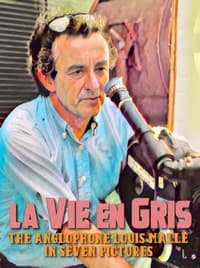
La Vie en Gris: The Anglophone Louis Malle in Seven Pictures (2022)
Filmmaker Louis Malle worked adjacent to the French Nouvelle Vague, but was admittedly never fully part of it, cementing his reputation instead with films like Elevator to the Gallows (1958), Zazie dans le Metro (1960), and Murmur of the Heart (1971), among others. In 1978, he made his first English-language picture, the highly controversial Pretty Baby, produced by Paramount Pictures. For the next decade and a half, he continued working in the English language, mostly in the United States, with films as varied as Atlantic City (1980), My Dinner With Andre (1981), Crackers (1983), Alamo Bay (1985), Damage (1992), and Vanya on 42nd Street (1992). What distinguishes these seven Anglophone films from Malle's previous Francophone films? And when Louis Malle arrived to make pictures in America, what did he see? What did America mean to Louis Malle?
poster
?

Paralyzed Segments: Suzanne Pleshette Tangled Up in Codes (2022)
A video essay about fifties and early sixties social and sexual mores, in life and in cinema, and how these "codes" (in partnership with a production Code, capital C, which was almost antediluvian in terms of sexual politics) molded and then trapped the female performers who came up in the shadow of it all. Suzanne Pleshette is a perfect case in point.
poster
?

David Cronenberg Presents Wireless Internet (2006)
David Cronenberg (the well-known Canadian director's American film-student counterpart) is making an ambitious "neorealist video feature" entitled "Wireless Internet", a didactic horror film about a contagious mind virus. The project gradually morphs into something well beyond the realm of fiction.
poster
?

Xenolith Atlas (2022)
An imagined plague diary
poster
?

Arid Cut (2019)
Sky-high housing costs, rents no one can pay, urban development, and street crime make life difficult for RV dwellers in Berkeley, California. City bureaucrats collaborate with real estate agents to gentrify neighborhoods forcing out already marginalized people living in cars, trucks, and RVs. With no more West to escape to, they contemplate turning back East.


mdblist.com © 2020 | Contact | Reddit | Discord | API | Privacy Policy