mdblist.com logo The Best James Broughton Directed Movies


Ratings
Between
and
Between
and
Between
and
With at least
votes
Between
and
With at least
votes
Between
and
With at least
votes
Between
and
With at least
votes
Between
and
With at least
votes
Between
and
With at least
votes
Between
and
With at least
votes
Between
and
With at least
votes
Additional filters
m
Lists, Streaming Services, Cast and more
Create List (23 items)

Login to create a dynamic list


poster
57
9
6.4
/231/
48
/9/
46
/14/
3.5
/294/

The Bed (1967)
James Broughton's counterculture masterpiece about nudity and a bed.
poster
Kanopy
57
9
5.7
/200/
52
/11/
58
/12/
3.2
/291/

Four in the Afternoon (1951)
Poems narrate four afternoon vignettes; each protagonist is older than the one in the previous sketch.
poster
56
9
5.7
/217/
51
/6/
51
/12/
3.3
/330/

The Potted Psalm (1946)
A soundless mix of story fragments and images. Initially, images of death, a man with a guitar, a soirée. Some images are surreal: an older woman eats a leaf; a headless man pours a cocktail into his body.
poster
?
10
/1/

Shaman Psalm (1981)
The love shaman calls for a sexual revolution of the body politic urging mankind into a new love age.
poster
?
6.3
/40/
50
/3/

Hermes Bird (1979)
This 11 minute homage to the male member shows its subject in the various stages of erection. The voice-over poem by James Broughton includes the line "This is the secret that will not stay hidden."
poster
?
6.8
/57/
10
/1/
35
/2/

Devotions (1983)
Men in pairs, mostly naked, perform various sensual tasks together.
poster
?
6.7
/18/

Together (1976)
A single-frame portrait of Broughton's disembodied heads coming slowly together in wiggle, wobble and wonderment.
poster
?
6.2
/82/
35
/2/
50
/3/

The Gardener of Eden (1981)
An old man (artist and landscape architect Bevis Bawa) contemplates the Garden of Eden.
poster
?
6.1
/76/
40
/1/
48
/10/

Erogeny (1976)
The film travels in close-up over the mysterious terrains of nude human bodies as they touch and explore one another.
poster
?
7.3
/33/
70
/1/

Song of the Godbody (1977)
Mapping extreme close-ups of Broughton's body, the camera slowly becomes a tool to reveal the erotic beauty of the body and the sensual pleasure in loving oneself. The ecstasy and power of sexual gratification are celebrated by the camera, as it probes, reveals, and visually caresses. Broughton's song is a praise of his body as divine androgyne, and an acceptance of this higher, sexual power.
poster
?
6.4
/49/
10
/1/
50
/1/

Scattered Remains (1988)
Broughton reads his poetry over various images.
poster
53
?
5.8
/117/
35
/2/
70
/5/

Adventures of Jimmy (1951)
'Adventures of Jimmy' resolves its immature hero’s quest for “playmates” through a tongue-in-cheek narration that juxtaposes ironically with the images. We are told his family left him their whole estate, as we see a shack in the woods. The happy resolution is a joke on monogamy. It’s a straightforward story, the work of someone who wants to entertain with elegance and quiet subversion.
poster
47
?
5.9
/124/
32
/5/
50
/9/

The Golden Positions (1970)
A lovely, poetic, humorous and crystal investigation of mankind standing, sitting and lying down.
poster
44
?
5.3
/117/
37
/5/
44
/12/

Loony Tom the Happy Lover (1951)
A short black and white film from James Broughton with Kermit Sheets in a Chaplinesque role.
poster
51
?
5.3
/178/
46
/12/
53
/17/

High Kukus (1973)
In this homage to Zen poet Basho, the subtle changes of a pond are chronicled on film over a period of time. Broughton recites his cuckoo haikus in the background.
poster
?
6.4
/96/
50
/6/
52
/8/

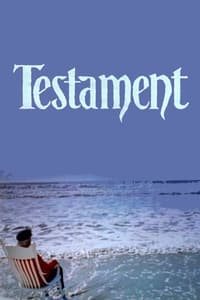
Testament (1974)
"TESTAMENT is James Broughton's exquisite self-portrait. A major figure in avant-garde filmmaking and poetry since the 1940s, Broughton views his life and life's work with irony, charm, humor, and a combination of joyous self-love and gentle self-depreciation. Scenes from his earlier films mix the elements of humor, magic, slapstick, melodrama, and romance which mark his aesthetic. A plethora of rich personal symbols is woven throughout the film, tied together by verbal games, Zen poems, anecdotes, songs, a child's prayer, dreams, and visions." - Karen Cooper "James Broughton's TESTAMENT is one of the most remarkable films ever produced within the American independent cinema. It is the most moving and most sublimely detached of the recent trend of filmic autobiographies - by Jerome Hill, Jonas Mekas, and Stan Brakhage, to name only the masters, and Broughton's peers." - P. Adams Sitney "A beautiful, important, mysterious work." - Amos Vogel
poster
?
6.3
/50/
47
/4/
49
/8/

The Water Circle (1975)
Celebrating the circulation of the waters of the world, this homage to James Broughton's favorite sage Lao-tsu is illustrated by the dance of sunlight on the sea. Accompanying poem (read and written by James Broughton) was composed to the music of Corelli, from his Concerto Grosso No. 9 in A, performed on the harp by Joel Andrews.
poster
54
?
5.7
/139/
45
/4/
60
/12/

Mother's Day (1948)
Accepting the potentialities of the medium to manipulate both time and space, Broughton brings past and present head-on as he regards with adult feelings his childhood family and friends. Grown-ups romp like children, and by their magnified infantilism playfully underscore such basic traits as sadism, sensuality, arid egocentricity. (Melbourne International Film Festival)
poster
47
?
5.2
/218/
43
/13/
49
/14/

This is It (1971)
James Broughton's creation myth, THIS IS IT, places a 2-year-old Adam and a bright apple-red balloon in a backyard garden of Eden, and works a small miracle of the ordinary. And since that miracle is what his film is about, he achieves a kind of casual perfection in matching means and ends.
poster
?
5.6
/59/
37
/5/
46
/8/

Nuptiae (1969)
This film celebrates weddings and being wed, and the union of opposites in everything everywhere.
poster
58
?
6.3
/193/
53
/8/
60
/9/

The Pleasure Garden (1953)
People quietly or mischievously pass the time in an overgrown garden full of statues, while a puritanical, funereal gentleman posts bills prohibiting all leisure activities.
poster
42
?
5.6
/173/
27
/7/
42
/11/

Dreamwood (1972)
Dreamwood narrates the oniric quest of a modern argonaut in a mysterious island located somewhere on the borders of the unconscious.
poster
?

Windowmobile (1977)
Images, Joel Singer; Sounds, James Broughton. "The film is shot both through and at a window, superimposing and conjoining, thereby elaborating events on both sides of the glass. Broughton's accompanying poem sings the same song as the images, sounding from an Eden of the golden passing of days: "They were seeing the light every day then ... / They were looking and they were seeing / They were living there in the light at that time." - Robert Lipman, On the Films of Joel Singer


mdblist.com © 2020 | Contact | Reddit | Discord | API | Privacy Policy