mdblist.com logo The Best Nurith Aviv Directed Movies


Ratings
Between
and
Between
and
Between
and
With at least
votes
Between
and
With at least
votes
Between
and
With at least
votes
Between
and
With at least
votes
Between
and
With at least
votes
Between
and
With at least
votes
Between
and
With at least
votes
Between
and
With at least
votes
Additional filters
m
Lists, Streaming Services, Cast and more
Create List (13 items)

Login to create a dynamic list


poster
The Roku Channel
?
7.3
/8/
50
/1/

Signing (2018)
By taking an interest in sign languages, Nurith Aviv invites us to expand our perception of the human langage. Three generations of deaf and hearing persons, as well as researchers from a specialised laboratory from the university of Haifa make us discover the languages, complex and diverse, that exist today in Israel.
poster
?
6.5
/12/

Announcements (2013)
The film Announcements paints the portraits of seven women reflecting on the same theme. Their starting point is the announcement to Hagar, Sarah and Mary as in the Old Testament, the New Testament and the Koran. Their thoughts spread out and weave a new web, drawing strands from their associations and interpretations of these texts. And by talking about their own history, their personal myths, they work up to subjects such as the birth of image in the Christian world or that of poetry in ancient Greece. Announcements is a film about the movement of thought, the power of words, the secret of the voice, and the seduction of the image.
poster
?
45
/1/

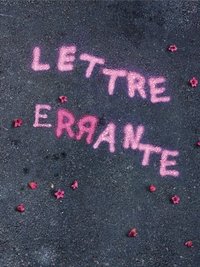
Wandering Letter
The film Wandering Letter hangs by a thread: the tiny thread of a single letter of the alphabet, the letter R and its many pronunciations. Through the childhood memories of six people with different mother tongues (Norwegian, Japanese, Russian, Persian, Arabic and Creole), a whole world unfolds, from the intimate to the political. The film raises questions about life and death, filiation, migration, exile, resistance, and gender.
poster
?
4.8
/8/

Work, Place (1998)
Directed by Nurith Aviv.
poster
?
6.6
/11/
60
/2/

Poétique du cerveau (2015)
A documentary about brain, his capacities and his poetical aspect using testimonials from researchers around the world.
poster
?
70
/1/

Vaters Land (2002)
N/A
poster
?
6.3
/15/

Traduire (2011)
N/A
poster
?
70
/3/

Des mots qui restent (2022)
Six people recall the languages that cradled their childhoods: Judeo-Spanish or Judeo Arabic, or Judeo-Persian. Today, the languages themselves are dying but they left traces that still work on those who heard them as children.
poster
?
5.9
/24/

From Language to Language (2004)
For centuries, Hebrew was a sacred language, a written language of prayer and scripture. But today it is also the language of everyday life in Israel. Nurith Aviv, Israeli writers, musicians, actors and a Rabbi/philosopher from varying countries and ethnic backgrounds discuss the relationship between their mother tongues and Hebrew. Featuring: Aharon Appelfeld, acclaimed for his literary explorations of the Holocaust; actress Jenya (Evgenya) Dodina; Rabbi and philosopher Daniel Epstein; poet Salma-n Musa-lahah; poet and translator Agi Mishol; singer Amal Murkus; poet and Professor of Jewish Thought Haviva Pedaya; and Meir Wieseltier, a member of the early Sixties "Tel Aviv Poets" group.
poster
Hoopla
?
7.2
/19/
90
/1/
68
/2/

Yiddish (2020)
Seven young people tell their personal stories with the Yiddish language while discussing the life and work of avant-garde Yiddish poets.
poster
?

Bruly Bouabré's Alphabet (2005)
The story of Ivory Coast artist, Frédéric Bruly Bouabré, who created four hundred pictograms, based on one-syllable words in his language, Bété, to help people in the Bété community learn to read more quickly.
poster
?

L'alphabet de Bruly Bouabré (2004)
N/A
poster
?

Sacred Tongue, Profane Language (2008)
The film, the second in a trilogy, containing "Misafa Lesafa" (2004) and "Traduire" (2011), deals with what became of Hebrew, the sacred language of the Jews for two millennia, that became a living language on the creation of the State of Israel in 1948. The film continues the reflection begun in the director's previous film, Misafa Lesafa (2004), which films writers and artists recounting the conflicting relationship that they themselves experienced between their parents' language and the Hebrew language.


mdblist.com © 2020 | Contact | Reddit | Discord | API | Privacy Policy