mdblist.com logo The Best Harun Farocki Directed Movies


Ratings
Between
and
Between
and
Between
and
With at least
votes
Between
and
With at least
votes
Between
and
With at least
votes
Between
and
With at least
votes
Between
and
With at least
votes
Between
and
With at least
votes
Between
and
With at least
votes
Between
and
With at least
votes
Additional filters
m
Lists, Streaming Services, Cast and more
Create List (90 items)

Login to create a dynamic list


poster
79
43
8.0
/731/
72
/18/
78
/16/
4.1
/1731/
86
/158/

Videograms of a Revolution (1992)
A minute-by-minute chronology of the Romanian revolution in December 1989 in Bucharest. This cinematic montage of live footage from the state television company TVR and video taken by numerous amateurs becomes a new media-based form of historiography.
poster
67
26
6.7
/370/
63
/8/
62
/14/
3.9
/1743/

The Inextinguishable Fire (1969)
An austere treatise on the military-industrial complex that produces napalm.
poster
69
24
7.5
/362/
58
/9/
65
/10/
4.0
/1614/

Images of the World and the Inscription of War (1991)
Farocki’s intriguing and troubling film explores the processes of visual perception and how they affect our understanding of history and society. In a work reminiscent of the writings of Paul Virilio and Michel Foucault, Farocki examines a range of phenomena including aerial reconnaissance photos of the Auschwitz concentration camp.
poster
63
16
7.2
/233/
47
/4/
58
/6/
3.8
/1109/

Workers Leaving the Factory (1995)
Using one of the Lumière Brothers' first films of workers leaving the Factory as his starting point, Farocki provides an insight to changes in industrial production, workers' strikes and motion pictures-- via images of workers leaving factories throughout the years.
poster
?
10
/1/

Remember Tomorrow is the First Day of the Rest of Your Life (2025)
“Farocki’s ten-minute short film is composed of shots of an AFN DJ at work…and of a car ride, whereby the camera points out of the car (through the windscreen or the side windows) or it captures and tracks a passing car.” –Gero Günther
poster
?
10
/1/

Make Up (2025)
“The make-up artist Serge Lutens is shown covering a model’s face with powder then working it into her face over several minutes. The face becomes a canvas, primed for painting. Flesh is turned into something different, looking like marble. It seems as though life has to be frozen in order to achieve beauty.” –Harun Farocki
poster
?
70
/1/

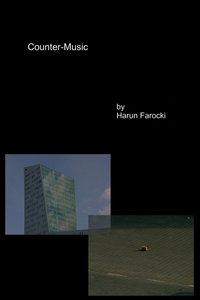
Counter-Music (2004)
The city today is as rationalised and regulated as a production process. The images which today determine the day of the city are operative images, control images. Representations of traffic regulation, by car, train or metro, representations determining the height at which mobile phone network transmitters are fixed, and where the holes in the networks are. Images from thermo-cameras to discover heat loss from buildings. And digital models of the city, portrayed with fewer shapes of buildings or roofs than were used in the 19th century when planned industrial cities arose, amongst them the Lille agglomeration. Despite their boulevards, promenades, market places, arcades and churches, these cities are already machines for living and working. I too want to "remake" the city films, but with different images. Limited time and means themselves demand concentration on just a few, archetypal chapters. Fragments, or preliminary studies.
poster
?
10
/1/

Filmbooks (1986)
A review of film books old and new.
poster
?
7.1
/33/

Serious Games 4 – A Sun With No Shadow (2010)
An exploration of how the U.S. military employs video game technology to train troops for war. In A Sun With No Shadow, Farocki calls attention to the subtle differences between the simulations for combat training and PTSD. With the former, the sun can be programmed to cast shadows in the virtual combat zones, while the latter, less expensive technology does not offer this feature.
poster
?
7.2
/31/

Serious Games 3 – Immersion (2010)
An exploration of how the U.S. military employs video game technology to train troops for war. In Immersion, Farocki presents footage of a role-playing exercise in which military psychologists demonstrate how to use the PTSD program on their colleagues, who describe traumatic wartime experiences. On a second channel, their descriptions play out as virtual renderings.
poster
?
6.7
/32/

Serious Games 2 – Three Dead (2010)
An exploration of how the U.S. military employs video game technology to train troops for war. Three Dead depicts a military exercise within a mock Iraqi town built on the outskirts of Twentynine Palms, California, blurring the line between computer simulation and reality.
poster
?
6.7
/35/

Serious Games 1 – "Watson Is Down" (2010)
An exploration of how the U.S. military employs video game technology to train troops for war. Filmed at the United States Marine Corps Air Ground Combat Center, Watson is Down pairs footage of soldiers at computers engaging in combat-simulation training with scenes from the video games.
poster
?
10
/1/

Filmtip: Der Tod des Empedokles (1987)
Harun Farocki Interviews Andreas von Rauch, lead actor in Straub-Huillet's "The Death of Empedocles.
poster
?
6.9
/19/
20
/1/

Documenta X - Die Filme (1997)
poster
?
5.1
/9/
10
/1/

The Campaign Volunteer (1967)
Der Wahlhelfer deals with the development of a young trainee lawyer and FDP (Free Democrat Party) supporter who becomes a revolutionary.
poster
?
10
/1/

Straub/Huillet: Work on "Class Relations" (1983)
A behind the scenes film of Class Relations.
poster
?
10
/1/

Filme von Peter Weiss (1982)
An introduction to films by Peter Weiss: "Study II" (1952) "Study IV" (1954)" According to the Law" (1957) "Shaded Faces" (1956 ) "What should we do now? "(1958).
poster
?
10
/1/

Single. A Record is Being Produced (1980)
Single is not a theoretical treatise; it just uses clips to show how a single is produced. The song is Time to Love, the singers call themselves Witchcraft. Also involved are the composer, arranger, producer, the studio musicians and later on the strings. At the beginning the off camera narrator points out a scandalous discrepancy. The film crew spent two days in the recording studio observing a three minute piece of music being produced. The film itself condenses the duration of production: 15 minutes into the film, the narrator announces that the producers are satisfied with the basic backing-track, after a four hour test. After 24 minutes we learn that the crew has left the studio after nine hours filming, whilst work on the guitar tracks continued for some hours.
poster
?
7.2
/37/
46
/3/
58
/4/

The Appearance (1996)
An advertising agency has to pitch a marketing concept to an optician's consortium, represented by the manager who is the first to see the campaign. The logo submitted is examined from every angle: it must simultaneously express both the company's dynamism and its reliability. A fascinating, dispassionate glimpse behind closed doors, where every detail is dramatized to win that lucrative contract.
poster
?
7.4
/20/
10
/1/

Re-education (1994)
Farocki revisits the executive trainer from his earlier "Die Schulung" (Indoctrination, 1987), this time holding a seminar with ex-GDR employees of a West German construction company.
poster
63
?
7.3
/98/
43
/3/
66
/5/
3.6
/315/

As You See (1986)
In 'As You See', Farocki searches for those instances and facts in the history of technology that have been overlooked or ignored, also exploring the ambivalent relationship between technologies developed for civil use and those designed for military purposes. Thus the film for instance describes how in the 1970s workers at the British arms factory Lucas Aerospace attempted to develop socially useful products to replace the company's military output. Rather than following a linear argument, this essay-film juxtaposes disparate images and weaves them into a mosaic-like structure which makes it possible for the viewers to make their own connections between the different images as well as between the images and the commentary.
poster
?
10
/1/

What’s Up? (1991)
How a look can be turned toward its goal by grasping and measuring its covetousness is shown in an exemplary fashion in What's Up? in a motif depicting a postcard of a painting by Titian in an eye-mark recorder.
poster
57
?
5.9
/54/
47
/4/
53
/3/
3.5
/285/

Interface (1995)
Harun Farocki was commissioned by the Lille Museum of Modern Art to produce a video 'about his work'. His creation was an installation for two screens that was presented within the scope for the 1995 exhibition The World of Photography. The work Schnittstelle developed out of that installation. Reflecting on Farocki's own documentary work, it examines the question of what it means to work with existing images rather than producing one's own, new images. The title plays on the double meaning of 'Schnitt', referring both to Farocki's workplace, the editing table, as well as the 'human-machine interface', where a person operates a computer using a keyboard and a mouse.
poster
?
6.7
/23/
35
/2/
56
/4/

Schlagworte – Schlagbilder. Ein Gespräch mit Vilém Flusser (1986)
Harun Farocki sits down with Vilém Flusser to discuss the front page of the German tabloid newspaper Bild Zeitung.
poster
?
6.0
/23/

Sauerbruch Hutton Architects (2013)
“The GSW Highrise in the Kreuzberg area of Berlin made the architects Sauerbruch and Hutton well known. The concave slab highrise of 18 floors has hundreds of windows, each with a blind colored slightly different from the next, producing a monumental composition that changes daily or even within the hour as the users of the building raise or lower them, partially or completely, as shade from the sunlight. The structures of these two architects appeal to me. They are bent on ecological efficiency, and they are lavish with their ideas. They are playful without being arbitrary. They are bound to the formal language of modernity without being dogmatic.”—Harun Farocki
poster
?
5.2
/32/
66
/6/
45
/2/

White Christmas (1968)
One of the many films drawing a connection between Christmas and war. It is unclear whether the longing for a white Christmas is being taken seriously, or whether it is intended as a denunciation. In either event, America's war in Vietnam is denounced. (Harun Farocki)
poster
?
7.4
/19/

Industry and Photography (1979)
Farocki frequently chooses a single news photo as his pretext. In his film he explains convincingly that 'learning from images' is not so much a question of having power over the image or a consistent subject-position towards the image, which would allow the filmmaker access to complete knowledge. Instead he insists on pursuing photography's separation of reference and discourse, by proving this to be a separation of the subject as well as a separation within the subject itself. [...] - Thomas Elsaesser
poster
?
10
/1/

Three Shots at Rudi (1968)
On Easter 1968 an assassination attempt on Rudi Dutschke was carried out. Shortly afterwards street battles resulted throughout West Germany. Farocki's short film Drei Schüsse auf Rudi is presumably lost.
poster
?
10
/1/

Instructions on how to Pull off Police Helmets (1969)
According to Fritz J. Raddatz, Rosa Luxemburg cried when she read Marx's concept of value. I was just as disappointed by the Cine-Tracts made in May 1968 in Paris and shown shortly afterwards in Berlin.
poster
?
6.3
/16/
10
/1/
60
/1/

Their Newspapers (1968)
Ihre Zeitungen is a political film rooted in the 1968 student campaign against the Springer press group, which controlled popular dailies such as the Berliner Zeitung and the Bild Zeitung. Claiming the latter were manipulating public opinion, the students laid siege to the publisher's offices. These events made a strong impression on the German collective conscience, and it's in this context that Farocki made this "agit-prop" film.
poster
?
10
/1/

Untitled or: Nixon comes to Berlin (1969)
N/A
poster
?
10
/1/

Untitled or: The Wandering Cinema for Engineering Students (1968)
The film Wanderkino für Ingenieurstudenten was part of the extra-parliamentary opposition's (APO) so-called 'technology campaign' aimed at politicizing the students at the technical universities and schools of engineering.
poster
?
5.7
/22/
10
/1/

Everybody a Berliner Kindl (1966)
Advertising posters for the Berliner Kindl brewery in the stands of Berlin’s sports arena show beer drinkers through the ages, from an organ-grinder at the turn of the 20th century to a fashionable "Beatle wannabe". A critical analysis of the images leads to the parody motto "Berliner Kindl is a swindle".
poster
?
6.8
/8/
10
/1/

Betrayed (1985)
A “film-noir” on double identity and role reversal. A man is looking for a woman to love. He finds her in a seedy bar and persuades her to marry him. The day she decides to flee… he kills her. To ward off suspicion, he moves in with the sister of the deceased.
poster
?
10
/1/

Kinostadt Paris (1990)
Short documentary vignettes and interviews revolving around cinephile life in Paris.
poster
?
6.6
/52/
46
/3/
57
/3/

The Interview (1997)
In the summer of 1996, Farocki filmed application training courses in which one learns how to apply for a job. School drop-outs, university graduates, people who have been re-trained, the long-term unemployed, recovered drug addicts, and mid-level managers - all of them are supposed to learn how to market and sell themselves, a skill to which the term "self management" is applied.
poster
?
6.8
/36/

Before Your Eyes - Vietnam (1982)
In "Before your Eyes - Vietnam", a voice-over talks about war as basically an experiment, not unlike film itself.
poster
?
6.5
/9/
10
/1/

The Leading Role (1994)
1989, the fall of the Berlin wall. Television crews trying, for days on end, to get an emblematic image which would crystallise the event: to no avail. Five years later, Farocki delivers a montage film of this footage, trying to define this ‚absent image'. "Today, 5 years later, this material shows the extent to which the collective conscience was affected by the event, as well as all the efforts made to repress the trauma" declares the filmmaker.
poster
?
7.2
/55/
40
/1/
60
/5/

Between Two Wars (1978)
A film about the time of the blast furnaces – 1917–1933 – about the development of an industry, about perfect machinery which had to run itself to the point of its own destruction.
poster
?
7.1
/31/
65
/4/

A New Product (2012)
A New Product is a corporate documentary, or, that is, a document of corporate qualities; specifically about what seems to be a small company whose purpose is to consult and design working spaces for larger corporations, exemplified by Vodafone and Unilever.
poster
?
7.2
/86/
50
/3/
63
/3/

The Creators of the Shopping Worlds (2001)
A look at how mall producers design malls in order to maximise traffic and sales.
poster
63
?
6.4
/84/
56
/3/
60
/4/
3.6
/251/

War at a Distance (2003)
In 1991, when images of the Gulf War flooded the international media, it was virtually impossible to distinguish between real pictures and those generated on computer. This loss of bearings was to change forever our way of deciphering what we see. The image is no longer used only as testimony, but also as an indispensable link in a process of production and destruction. This is the central premise of "War at a Distance", which continues the deconstruction of claims to visual objectivity Harun Farocki developed in his earlier work. With the help of archival and original material, Farocki sets out in effect to define the relationship between military strategy and industrial production and sheds light on how the technology of war finds applications in everyday life.
poster
?
5.2
/14/
100
/1/

Aufstellung (2005)
The diagrams used to help represent consumer shopping baskets, the pensions deficit or migration are anachronistic, Farocki posits; Whether pictographs or simple bar or pie charts, their abstractions all display an impotence of information. "Examples of diagrams gleaned from newspapers, school text books and official publications are [...] the history of migration in the Federal Republic of Germany. What we are seeking, therefore, is a conceptual critique of the ways in which migration is presented, pursuing the icons and symbols back to their origins and examining them with regard to content they themselves are unaware of." -HF
poster
70
?
7.8
/103/
67
/4/
63
/7/
3.7
/364/

Respite (2007)
Respite consists of silent black-and-white film shot at Westerbork, a Dutch refugee camp established in 1939 for Jews fleeing Germany. In 1942, after the occupation of Holland, its function was reversed by the Nazis and it became a 'transit camp.' In 1944, the camp commander commissioned a film, shot by a photographer, Rudolph Breslauer. “By exhuming the scattered fragments and traces of the phantom film (intertitle cards, ideas for the scenario, graphic elements), Harun Farocki inscribes the Dutch footage within the genre of the corporate film.
poster
?
7.0
/19/

About Narration (1975)
Interdisciplinary studies put into practice is a plane on which HaF's interests and mine coincide. Ideas of fictional research projects in films emerge very early on, or of film as research device, allowing people from different disciplines to come together and discover something, to pursue a line of thought, or just be adventurous. These ideas correspond to a tendency we both have of accumulating knowledge from different sciences, for example so as to bring exact sciences like medicine together with subjects which aren't directly aimed at application, such as religious studies or anthropology.
poster
?
10
/1/

The Trouble with Images. A Critique of Television (1973)
Refreshingly, Farocki lays his cards on the table at the very beginning of the film, “I want to demonstrate that most feature films are of the sort that make people lose their interest and appetite for the real world”.
poster
?
6.8
/17/
10
/1/
57
/3/

Georg K. Glaser – Writer and Smith (1988)
Portrait of Georg Glaser, who is a writer in the mornings and a blacksmith in the afternoons.
poster
?
7.9
/16/

Eye / Machine III (2003)
The third part of the Eye/Machine cycle structures the material around the concept of the operational image. These are images which do not portray a process but are themselves part of a process. As early as the Eighties, cruise missiles used a stored image of a real landscape then took an actual image during flight, the software compared the two images. A comparison between idea and reality, a confrontation between pure war and the impurity of the actual. This confrontation is also a montage and montage is always about similarity and difference. Many operational images show coloured guidance lines, intended to portray the work of recognition. The lines tell us emphatically what is all important in these images, and just as emphatically what is of no importance at all. Superfluous reality is denied – a constant denial provoking opposition.


mdblist.com © 2020 | Contact | Reddit | Discord | API | Privacy Policy