mdblist.com logo The Best Stan Brakhage Directed Movies


Ratings
Between
and
Between
and
Between
and
With at least
votes
Between
and
With at least
votes
Between
and
With at least
votes
Between
and
With at least
votes
Between
and
With at least
votes
Between
and
With at least
votes
Between
and
With at least
votes
Between
and
With at least
votes
Additional filters
m
Lists, Streaming Services, Cast and more
Create List (363 items)

Login to create Trakt list


poster
74
58
7.5
/2567/
65
/47/
68
/72/
4.0
/7537/
81
/282/

Window Water Baby Moving (1959)
On a winter's day, a woman stretches near a window then sits in a bathtub of water. She's happy. Her lover is nearby; there are close ups of her face, her pregnant belly, and his hands caressing her. She gives birth: we see the crowning of the baby's head, then the birth itself; we watch a pair of hands tie off and cut the umbilical cord. With the help of the attending hands, the mother expels the placenta. The infant, a baby girl, nurses. We return from time to time to the bath scene. By the end, dad's excited; mother and daughter rest. Preserved by the Academy Film Archive in 2013.
poster
71
53
6.8
/1287/
53
/44/
63
/57/
3.9
/5195/
95
/141/

The Dante Quartet (1987)
A visual representation, in four parts, of one man's internalization of "The Divine Comedy." Hell is a series of multicolored brush strokes against a white background; the speed of the changing images varies. "Hell Spit Flexion," or springing out of Hell, is on smaller film stock, taking the center of the frame. Montages of color move rapidly with a star and the edge of a lighted moon briefly visible. Purgation is back to full frame; blurs of color occasionally slow down then freeze. From time to time, an image, such as a window or a face, is distinguishable for a moment. In "existence is song," colors swirl then flash in and out of view. Behind the vivid colors are momentary glimpses of volcanic activity.
poster
61
47
6.2
/3011/
55
/79/
57
/97/
3.6
/11351/

Mothlight (1963)
Seemingly at random, the wings and other bits of moths and insects move rapidly across the screen. Most are brown or sepia; up close, we can see patterns within wings, similar to the veins in a leaf. Sometimes the images look like paper cutouts, like Matisse. Green objects occasionally appear. Most wings are translucent. The technique makes them appear to be stuck directly to the film.
poster
73
47
6.2
/1475/
57
/39/
65
/43/
4.0
/7115/
100
/9/
78
/3/

Dog Star Man (1965)
Experimental film following a cycle of seasons as well as the stretch of a single day as a man and his dog slowly ascend a mountain.
poster
70
46
6.9
/1762/
61
/46/
63
/59/
3.9
/5573/
83
/18/

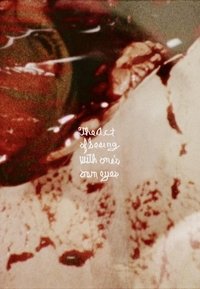
The Act of Seeing with One's Own Eyes (1972)
At a morgue, forensic pathologists conduct autopsies of the corpses assigned. "S. Brakhage, entering, WITH HIS CAMERA, one of the forbidden, terrific locations of our culture, the autopsy room. It is a place wherein, inversely, life is cherished, for it exists to affirm that no one of us may die without our knowing exactly why. All of us, in the person of the coroner, must see that, for ourselves, with our own eyes. It is a room full of appalling particular intimacies, the last ditch of individuation. Here our vague nightmare of mortality acquires the names and faces of OTHERS. This last is a process that requires a WITNESS; and what 'idea' may finally have inserted itself into the sensible world we can still scarcely guess, for the CAMERA would seem the perfect Eidetic Witness, staring with perfect compassion where we can scarcely bear to glance." – Hollis Frampton
poster
71
45
6.3
/1536/
56
/37/
61
/50/
3.6
/1905/
100
/9/
78
/3/

Prelude: Dog Star Man (1962)
A creation myth realized in light, patterns, images superimposed, rapid cutting, and silence. A black screen, then streaks of light, then an explosion of color and squiggles and happenstance. Next, images of small circles emerge then of the Sun. Images of our Earth appear, woods, a part of a body, a nude woman perhaps giving birth. Imagery evokes movement across time. Part of the Dog Star Man series of experimental films.
poster
70
43
6.0
/1613/
50
/50/
62
/48/
3.5
/1523/
100
/9/
78
/3/

Dog Star Man: Part I (1963)
From a murky landscape, a wooded mountain emerges. We watch the sun. We see a bearded man climbing up the mountain through the snow. He carries an ax, and he's accompanied by a dog. His labors continue. There is no soundtrack. Images rush past - water, trees, and surfaces too close up to distinguish. He struggles. A fire burns. Nature, in long shots and magnified, is formidable and silent. It's tough going; he carries on. In a capillary, blood flows.
poster
71
41
6.3
/1231/
52
/31/
65
/42/
3.6
/1231/
100
/9/
78
/3/

Dog Star Man: Part II (1963)
A man, accompanied by a dog, struggles through snow on a mountain side. We see film stock blister; drawn square shapes appear. Then, we see an infant's face. The images of struggling climber, baby, blurred film stock, large snow flakes, and what may be microscopic details of matter are superimposed on each other, one dominating the frame briefly to be replaced by another. As the man falls in the snow and tries to regain his feet, the baby continues to appear, first with eyes closed. Alternately, images rush by - montages of paper cutouts and life under a microscope.
poster
64
41
6.4
/1015/
56
/52/
64
/59/
3.7
/5481/

Stellar (1993)
This is a hand-painted film which has been photographically step-printed to achieve various effects of brief fades and fluidity-of-motion, and makes partial use of painted frames in repetition (for "close-up" of textures). The tone of the film is primarily dark blue, and the paint is composed (and rephotographed microscopically) to suggest galactic forms in a space of stars.
poster
61
40
6.4
/1147/
50
/45/
60
/53/
3.6
/3590/

Black Ice (1994)
Inspired by a bad fall on a patch of black ice (that ultimately resulted in Brakhage's need for eye surgery), the filmmaker gives us something of a dreamlike descent through the fear and refractions of closed-eye vision regarding such an event.
poster
70
40
6.3
/1215/
50
/30/
61
/40/
3.6
/1300/
100
/9/
78
/3/

Dog Star Man: Part IV (1964)
A man is supine on a mountain side. Images rush past of nature and a stained glass saint. An infant is born. We see a lactating nipple. Images include a mountain peak, farm buildings, a tree stump, a fire, a crawling baby, and the sun. The man falls and rolls. Then, later, he swings his ax.
poster
70
40
6.3
/1196/
46
/30/
61
/41/
3.6
/1184/
100
/9/
78
/3/

Dog Star Man: Part III (1964)
Sexual intimacy. Three kinds of images race past, superimposed on each other sometimes: two bodies, a man and a woman's, close up, nude - patches of skin, wisps of hair, glimpses of a face and genitalia; strips of celluloid with lines and squiggles scratched on them; and, close-up shots of what appear to be the insides of living bodies - a heart beating, muscle and sinew and tissue wet with fluids. The exterior and interior of desire.
poster
64
40
6.5
/916/
52
/29/
63
/44/
3.8
/3485/

Comingled Containers (1996)
Comingled Containers is an experimental short film by Stan Brakhage. "This 'return to photography' (after several years of only painting film) was made on the eve of cancer surgery - a kind of 'last testament,' if you will… an envisionment of the fleeting complexity of worldly phenomenon."
poster
61
38
6.4
/921/
50
/37/
60
/41/
3.6
/3093/

The Garden of Earthly Delights (1981)
A collage of two-dimensional images of vegetation, each appearing only for a moment, sometimes as a single image, more often with other bits of stem, leaf, bud, or petal. Often we see only the outline of objects against a black background. Black and green are occasionally joined by fragments of orange or of white and blue. The objects in the frame don't move but they are quickly replaced by another collage, giving the feel of rapid motion. Each collage is crisp, its lines etched against the background of black and later of white. Whitman anyone, or Hieronymus Bosch? Although there is no soundtrack, the rapidity of changing images and colors suggests a riot.
poster
67
36
6.3
/500/
60
/16/
64
/30/
4.1
/2706/

Anticipation of the Night (1958)
First person view of a man, seen only in shadow, attempting to connect with the world around him. Preserved by the Academy Film Archive in 2013.
poster
58
36
6.0
/995/
50
/37/
54
/55/
3.5
/4565/

Night Music (1986)
Part of Three Hand-Painted Films, Night Music (originally painted on IMAX) attempts to capture the beauty of sadness, as the eyes have it when closed in meditation on sorrow.
poster
60
36
5.9
/1042/
54
/33/
58
/37/
3.5
/2769/

Cat's Cradle (1959)
Images of two women, two men, and a gray cat form a montage of rapid bits of movement. A woman is in a bedroom, another wears an apron: they work with their hands, occasionally looking up. A man enters a room, a woman smiles. He sits, another man sits and smokes. The cat stretches. There are close-ups of each. The light is dim; a filter accentuates red. A bare foot stands on a satin sheet. A woman disrobes. She pets the cat. Preserved by the Academy Film Archive in 2006.
poster
60
35
6.0
/768/
50
/28/
60
/36/
3.5
/3411/

The Wonder Ring (1955)
An important early film by Stan Brakhage, which Joseph Cornell commissioned as a record of New York's Third Avenue elevated train before it was torn down. Curiously lacking in people, the film focuses on the rhythms of the ride and reflections in train windows, finding a real-world version of the superimpositions Brakhage would later create in the lab. Preserved by the Academy Film Archive in 2005.
poster
56
35
5.8
/838/
48
/42/
52
/48/
3.4
/2422/

Rage Net (1988)
Another of Brakhage’s works of “moving visual thinking,” Rage Net reminds one of the vibrant pioneering experiments of European animators of the 1920s.
poster
55
34
5.8
/1040/
45
/34/
55
/39/
3.2
/2422/

Desistfilm (1954)
Four young men and a young woman sit in boredom. She smokes while one strums a lute, one looks at a magazine, and two fiddle with string. The door opens and in comes a young man, cigarette between his lips, a swagger on his face. The young woman laughs. As the four young men continue disconnected activities, the other two become a couple. When the four realize something has changed, first they stare at the couple who have kissed and now are dancing slowly. The four run from the house in a kind of frenzy and return to stare. The power of sex has unnerved them.
poster
55
34
5.8
/789/
40
/36/
53
/42/
3.5
/1996/

Glaze of Cathexis (1990)
This hand-painted work is easily the most minutely detailed ever given to me to do, for it traces (as best I'm able) the hypnagogic after-effect of psychological cathexis as designed by Freud in his first (and unfinished) book on the subject - "Toward a Scientific Psychology." (SB)
poster
61
32
6.4
/581/
47
/21/
58
/26/
3.9
/1894/

Untitled (For Marilyn) (1992)
The film is officially untitled, but is referred to by the dedication that appears in place of a title card. It is dedicated to Marilyn Brakhage, the filmmaker's wife. Out of all the 350+ films that Stan Brakhage made, this was his personal favorite.
poster
57
31
5.7
/753/
46
/31/
57
/36/
3.4
/1624/

The Dark Tower (1999)
This hand-painted, step-printed film begins with streaks of light and vibrantly colored forms. There appears, frame center, the tapered shape of a tower-- An imposing silhouette against the backdrop of the flaring sky.
poster
54
31
5.5
/824/
42
/26/
53
/39/
3.3
/1785/

The Wold-Shadow (1972)
A stand of birches. Sunlight brightens and dims, revealing more or less of the woods. A little grass is on the forest floor. Is there a shape in the shadows? Something green is out of focus. The light flashes, and the screen goes dark from time to time. We look up close at the bark of trees. Is the god of the forest to be seen?
poster
63
30
5.9
/1183/
52
/45/
54
/63/
3.4
/4820/
82
/1/

Eye Myth (1967)
After the title, a white screen gives way to a series of frames suggestive of abstract art, usually with one or two colors dominating and rapid change in the images. Two figures emerge from this jungle of color: the first, a shirtless man, appears twice, coming into focus, then disappearing behind the bursts and patterns of color, then reappearing; the second figure appears later, in the right foreground. This figure suggests someone older, someone of substance. The myth? Preserved by the Academy Film Archive in 2012.
poster
57
30
5.9
/701/
46
/26/
56
/34/
3.5
/1451/

I... Dreaming (1988)
Phrases of Stephen Foster, set to music by Joel Heartling, are set to film in this autobiographical piece: a solitary female voice, occasionally joined by a chorus, sings phrases of sorrow as we watch a solitary man in shadows in an unadorned house: he stretches out, he picks his feet, he walks across a room, he rocks in a chair. Occasionally he watches two young children at play; the film sometimes speeds up. Handwritten words, like "dark void" and "waiting longing," cross the screen. Film and phrases often come in short bursts. Outdoor it looks gray and cold.
poster
58
29
6.2
/833/
45
/25/
54
/26/
3.5
/1671/

Wedlock House: An Intercourse (1959)
We see a film negative of a nude couple embracing in bed. Then, back in regular black and white images, we see them alone and together, clothed, at home. It's night, she sees his reflection in the window, she closes the drapes. After sex, again in a black and white negative, they sit, smoke, have coffee. They kiss, she smiles. They light candles. The images are often quick, the camera angles occasionally are off kilter; the room is sometimes dark and sometimes lit, as if lit by the rotating of a searchlight. The images again appear in negative when they return to bed.
poster
56
27
6.0
/704/
39
/27/
52
/29/
3.7
/1286/

Delicacies of Molten Horror Synapse (1991)
Four superimposed rolls of hand-painted and bi-packed television negative imagery are edited so as to approximate the hypnagogic process whereby the optic nerves resist grotesque infusions of luminescent light.
poster
52
27
5.4
/709/
42
/28/
51
/34/
3.2
/1482/

Kindering (1987)
Refracted images, not unlike those in a funhouse mirror, display two children playing in a backyard, a boy and a girl. There's a dog, a swing, a picket fence, a Big Wheels trike. The grass is green and lush. A soundtrack mixes a chorus, swelling strings, and a child vocalizing. The effect is to idealize the images.
poster
60
26
6.1
/245/
48
/7/
59
/23/
3.8
/677/
57
/108/

The Text of Light (1974)
Time-lapse photography of books, paintings, reflections, and light falling on textures, shot entirely through a glass ashtray. "'All that is is light.' – Dun Scotus Erigena. 'To see the world in a grain of sand.' – William Blake. These are the primary impulses while working on this film. It is dedicated to Jim Davis who showed me the first spark of refracted film light." - S.B.
poster
58
26
6.2
/590/
46
/23/
52
/32/
3.6
/1197/

Lovesong (2001)
This lush, sensuous film is based on paintings of unusual variety and intricacy. Brakhage's desire to include all the complexities of living in his work is evident in this "love song."
poster
52
24
5.4
/595/
38
/24/
55
/24/
3.2
/1282/

Crack Glass Eulogy (1991)
A nostalgic envisionment of city living - the potential shards of memory seen as if always on the verge of cutting the mind to pieces.
poster
53
23
5.0
/507/
43
/23/
51
/30/
3.4
/1082/

Chinese Series (2003)
Stan Brakhage's final film, made shortly before his death by wetting a filmstrip with saliva and using his fingernail to scratch marks into the emulsion. Preserved by the Academy Film Archive in 2009.
poster
49
22
4.9
/635/
42
/28/
48
/28/
3.0
/1204/

Study in Color and Black and White (1993)
A hand-painted and photographically step-printed film, which exhibits variably shaped small areas of color (in a dark field) that explode into full frames of textured color interwoven with white scratch patterns that create a sense of interior depth and three-dimensional movement.
poster
Kanopy
73
22
7.7
/169/
73
/3/
65
/14/
3.9
/1273/

Seasons... (2002)
Brakhage's frame-by-frame hand carvings and etchings directly into the film emulsion, sometimes photographically combined with paint, are illuminated by Solomon's optical printing; this footage was then edited by Solomon into a four part 'seasonal cycle'. This film can be considered to be part of a larger, 'umbrella' work by Brakhage entitled «...» . Seasons... is inspired by the colors and textures found in the woodcuts of Hokusai and Hiroshige, and the playful sense of forms dancing in space from the film works of Robert Breer and Len Lye.
poster
52
21
6.3
/35/
10
/1/
55
/2/
83
/202/

Eyes (1970)
“After wishing for years to be given the opportunity of filming some of the more “mystical” occupations of our Times – which the average imagination turns into “bogeyman”… viz: Policemen, Doctors, Soldiers, Politicians, etc. – I was at last permitted to ride in a Pittsburgh police car, camera in hand” - Stan Brakhage. Preserved by the Academy Film Archive in partnership with The Film Foundation in 2011.
poster
54
21
5.7
/329/
38
/17/
50
/20/
3.6
/1136/

Burial Path (1978)
The film begins with the image of a dead bird. The mind moves to forget, as well as to remember: this film graphs the process of forgetfulness against all oddities of remembered bird-shape.
poster
56
21
5.9
/417/
41
/17/
57
/22/
3.5
/992/

Persian Series #2 (1999)
Multiple thrusts and then retractions of oranges, reds, blues, and the flickering, almost black, textural dissolves suggesting an amalgam approaching script. Preserved by the Academy Film Archive in 2013.
poster
51
20
5.4
/471/
36
/25/
47
/24/
3.4
/963/

The Dead (1960)
"The Dead became my first work in which things that might very easily be taken as symbols were so photographed as to destroy all their symbolic potential. The action of making The Dead kept me alive." Preserved by the Academy Film Archive in partnership with The Film Foundation in 2013.
poster
54
20
5.5
/557/
47
/16/
50
/22/
3.3
/994/

The Stars Are Beautiful (1974)
We move back and forth between scenes of a family at home and thoughts about the stars and creation. Children hold chickens while an adult clips their wings; we see a forest; a narrator talks about stars and light and eternity. A dog joins the hens and the family, while the narrator explains the heavens. We see a bee up close. The narrator suggests metaphors for heavenly bodies. Scenes fade into a black screen or dim purple; close-ups of family life may be blurry. The words about the heavens, such as "The stars are a flock of hummingbirds," contrast with images and sounds of real children.
poster
56
20
5.7
/418/
43
/18/
55
/22/
3.5
/927/

Persian Series #3 (1999)
Dark, fast-paced symmetry in mixed weave of tones moving from oranges & yellows to blue-greens, then retreating (dissolves of zooming away) to both rounded and soft-edged shapes shot with black. Preserved by the Academy Film Archive in 2013.
poster
53
20
5.3
/435/
43
/19/
52
/23/
3.3
/975/

Persian Series #1 (1999)
This hand-painted and elaborately step-printed work begins with a flourish of reds and yellows and purples in palpable fruit-like shapes interspersed by darkness, then becomes lit lightning-like by sharp multiply-colored twigs-of shape, all resolving into shapes of decay. Preserved by the Academy Film Archive in 2013.
poster
57
19
5.8
/273/
41
/16/
57
/18/
3.7
/925/

Star Garden (1974)
The "star", as it is singular, is the sun; and it is metaphored, at the beginning of this film, by the projector anyone uses to show forth. Then the imaginary sun begins its course throughout whatever darkened room this film is seen within. At "high noon" (of the narrative) it can be imagined as if in back of the screen, and then to shift its imagined light-source gradually back thru aftertones and imaginings of the "stars" of the film till it achieves a one-to-one relationship with the moon again. This "sun" of the mind's eye of every viewer does not necessarily correspond with the off-screen "pictured sun" of the film; but anyone who plays this game of illumination will surely see the film in its most completely conscious light.
poster
52
18
5.2
/362/
38
/25/
50
/24/
3.4
/761/

From: First Hymn to the Night – Novalis (1994)
“This is a hand-painted film whose emotionally referential shapes and colors are interwoven with words (in English) from the first Hymn to the Night by the late 18th century mystic poet Friedrich Philipp von Hardenberg, whose pen name was Novalis. The pieces of text which I've used are as follows: ‘the universally gladdening light … As inmost soul … it is breathed by stars … by stone … by suckling plant … multiform beast … and by (you). I turn aside to Holy Night … I seek to blend with ashes. Night opens in us … infinite eyes … blessed love.’” -SB
poster
56
18
5.9
/357/
43
/20/
54
/19/
3.5
/827/

The Machine of Eden (1970)
"'Mis-takes' give birth to 'shape' (which, in this work, is 'matter,' subject and otherwise) amidst a weave of thought: ... the 'dream' of Eden will speak for itself." The second part of the of The Weir-Falcon Saga trilogy.
poster
57
17
6.2
/330/
38
/14/
61
/18/
3.5
/732/

Murder Psalm (1980)
Inspired in part by a dream he had of murdering his mother, Brakhage here gives us one of his profoundest meditations on human aggression.
poster
55
16
5.4
/248/
50
/18/
55
/17/
3.1
/818/

"..." Reel 5 (1998)
Reel #5 of (...) is composed of scratch-imagery edited to music by James Tenney. The music starts accompanied only by black leader: then there is a sudden flare of pure white which begins to flicker with negative-colored ephemeral shapes, until finally the music and a fulsome mass of scratched images are accompanying each other. At times a distinctly different quality of colored image appears and continues for awhile (non-orange negative photography of painted film as well as picture images).
poster
53
16
5.8
/369/
37
/15/
46
/17/
3.6
/751/

Scenes from Under Childhood, Section One (1968)
A visualization of the inner world of foetal beginnings, the infant, the baby, the child - a shattering of the "myths of childhood" through revelation of the extremes of violent terror and overwhelming joy of that world darkened to most adults by their sentimental remembering of it ... a "tone poem" for the eye - very inspired by the music of Oliver Messiaen.


mdblist.com © 2020 | Contact | Reddit | Discord | API