mdblist.com logo Movie Search


Ratings
Between
and
Between
and
Between
and
With at least
votes
Between
and
With at least
votes
Between
and
With at least
votes
Between
and
With at least
votes
Between
and
With at least
votes
Between
and
With at least
votes
Between
and
With at least
votes
Between
and
With at least
votes
Additional filters
m
Lists, Streaming Services, Cast and more
Create List (42 items)

Login to create a dynamic list


poster
?
10
/1/
100
/1/

Black Magic (1988)
Although about top Aboriginal sportsmen, BLACK MAGIC is more than a film about sport. It is an account of the creative use of sport made by the Noongar people of Western Australia's south-west to advance their people's standing. Denied access to other areas of social life like most Aboriginal communities at the time, the Noongars, from as early as 1920, channelled the natural talent of their young people into the arena of competitive sport, notably running, boxing and football. Competitive sport, as filmmaker Paul Roberts notes, is 'an open gate, a universal rite of passage, an opportunity to achieve recognition and acceptance.'
poster
Kanopy
?
4.7
/8/

Land Mines: A Love Story (2005)
Habiba and Shah who, because of the wars fought in Afghanistan over the past 25 years, have experienced immense suffering, but who have survived to show how it is possible to be brave and moral in this world of sanctioned violence and lies. Shah, a former Mujaheddin soldier and land mine victim, works as a cobbler on the pavements of the ruined city of Kabul. One day, he noticed a pretty Tajik girl who had only one leg, and he began to court her. Amidst the chaos and violence, and despite all the obstacles of tradition and religion, Shah and Habiba were able to marry.
poster
Kanopy
?
20
/1/
10
/1/

Pyongyang Diaries (1998)
This documentary records Hoaas' personal encounter with the closed society of North Korea. As with her earlier work, Hoaas approaches her film as a cumulation of fragments encompassing different perspectives that together offer a point of entry into a complex society. Her diary-style narration signals her limited personal perspective into this culture, especially given the brief filming period and her difficulty in breaking through the facade of the showcase version of Korea insisted upon by her official guides. Hoaas' restricted visual access, and her reluctance to present over-familiar images of the hardship and depravation informed her decision to use this narrative device to frame her film within the context of the famine crisis that began in 1997 following the failure of crops caused by two consecutive years of heavy flooding.
poster
?
20
/1/

Poles Apart: The Blue Poles Controversy (2001)
The year is 1973. A reforming Labor government swept into power determined to change the direction of the country. In an act of unpredendented daring the Whitlam government paid the highest price ever for an American painting for it's planned National Gallery. The painting was Jackson Pollock's "Blue Poles". 'Drunks did it' screamed the tabloid press. Journalists, politicians and cartoonists had a field day, while everybody, but everybody, across the nation had an opinion. Today painter Jackson Pollock's masterpiece is unquestionably the most famous painting in Australia. It has become a symbol of our independence, signaling the departure from our British roots and entry into a brave new world.
poster
Kanopy
?
50
/2/

My Colour, Your Kind (1998)
A portrait of an albino Aboriginal teenager, her feelings of alienation while at a convent boarding school, and her dreams of escape.
poster
Kanopy
?
10
/1/

Handmaidens and Battleaxes (1990)
Throughout history, the perception of nurses has ranged from wise women to witches, sots to ministering angels, handmaidens to battleaxes. The professional role of the nurse has changed dramatically. Originally the nurse held an independent, curative position in healing the sick. Most of this responsibility has since been lost. In its place, a profession has developed which, while demanding altruism and dedication, is locked into a supportive and secondary role to that of the medical profession.
poster
?
10
/1/

The Sleep of Reason (1993)
A film about the end of the world: the myth that has been with us since the beginning of civilization, and the possibility made real at Hiroshima in 1945. The journey takes us from medieval paintings to 50s sci fi movies and leaves us better able to understand and deal with our destructive urges.
poster
?
70
/1/

Message from Mungo (2014)
Lake Mungo is an ancient Pleistocene lake-bed in south-western New South Wales, and is one of the world’s richest archaeological sites. Message from Mungo focuses on the interface over the last 40 years between the scientists on one hand, and, on the other, the Indigenous communities who identify with the land and with the human remains revealed at the site. This interface has often been deeply troubled and contentious, but within the conflict and its gradual resolution lies a moving story of the progressive empowerment of the traditional custodians of the area.
poster
Kanopy
?
5.4
/7/
25
/2/

Terra Nullius (1992)
Loosely based on the filmmaker's personal experience, "Terra Nullius" is an impressionistic account of an eight year old Koori girl, Alice, growing up in a white adoptive family which denies her Aboriginality. The film examines how unacknowledged shame and fear passes from one generation to the next, from one culture to another. The last scene depicts a silent meeting between the young Alice and the adult Alice. In order to reclaim her life, Alice decides she must confront the pain and confusion of her childhood.
poster
?
70
/1/

The Bride Flights (2022)
Around 700 Spanish women arrive in Australia in the early 1960s due to an informal agreement between the government and the regime of Francisco Franco.
poster
?
8.1
/15/

The Prodigal Son (2006)
THE PRODIGAL SON is the emotional story of a gay man in his forties who is reunited with his traditional Macedonian family after being estranged from his father for 15 years. The documentary explores how first-generation migrant parents have struggled to come to terms with their son's sexuality. When Ted came out as gay, his mother Ljubica insisted it was a passing phase and his father Alex refused to speak to him. Fifteen years passed with no communication between father and son - until Alex discovered he was suffering from a serious illness.
poster
Kanopy
?
7.1
/36/
50
/1/

Crocodile Dreaming (2006)
Crocodile Dreaming is a modern day supernatural myth about two estranged brothers, played by iconic Indigenous actors David Gulpill and Tom E. Lewis. Separated at birth, they have different fathers. One is readily accepted as a full-fledged member of the tribe and is looked on to fulfill the duties of jungaiy, an important ceremonial role which obliges him to be caretaker for his mother's dreaming, the crocodile totem. The other, whose father was white, is younger and has had to struggle to fit into the tribe who see him only as a yella fella.
poster
?
7.0
/31/
10
/1/
62
/4/

Breathing Under Water (1993)
BREATHING UNDER WATER is the story of a woman's journey into an imaginary underworld city. The birth of her daughter into an increasingly perilous world has unsettled everything in Beatrice's (Anne Louise Lambert) life. Her growing unease prompts Beatrice to undertake a journey - an investigation into human nature, a confrontation with the fears of our time, and a search for clues that will ultimately give her an answer to the central riddle of the film: why has humankind set the stage for its own extinction? The director’s preoccupation with humankind’s tendency to self-destruct was one factor that lead to the creation of this complex film.
poster
Kanopy
74
?
5.9
/19/
75
/15/
90
/1/
3.6
/205/

Bluey (2015)
Bluey, an angry young woman trapped in a life of violence, meets a mystery mentor who could change everything. Bluey is a story of courage, heart and the fight for survival.
poster
Kanopy
?
7.1
/8/
40
/2/

The Coolbaroo Club (1996)
Documentary about "The Coolbaroo Club",  which was the only Aboriginal-run dance club in a city which practiced unofficial apartheid. During its lifetime, the Club attracted Black musicians and celebrities from all over Australia and occasionally from overseas. Although best-remembered for the hugely popular Coolbaroo dances attended by hundreds of Aborigines and their white supporters, the "Coolbaroo League", founded by Club members, ran a newspaper and became an effective political organization, speaking out on issues of the day affecting Aboriginal people.
poster
?
8.4
/14/

The Chifleys of Busby Street (2008)
Ben Chifley (1885 – 1951) was a railway engine-driver who became Australia's best-loved Prime Minister in 1945. He was a politician from an Irish-Australian working class background who lived by principles of compassion and concern for his fellow Australians. His philosophy and example have never been more relevant than in the political arena of today. As Prime Minister and Treasurer, he had a profound effect on the path of Australian history following World War Two, and many advantages enjoyed in our society that we take for granted today are the product of his vision.
poster
?
6.4
/9/
10
/1/

Celso and Cora (1983)
A documentary of a young couple and their two children living in a squatter settlement in the Philippine capital, Manila. Rather than just a report on poverty, this is a universal story of people experiencing everyday events with a mixture of humor, irritation, weariness, and courage. Cora and Celso make a living selling cigarettes at night outside a downtown hotel in defiance of City regulations. The film follows their lives over a three-month period, beginning with Cora's attempt to find a new room for the family after they have been evicted from their previous home. Later, Celso and Cora face a crisis in their own relationship aggravated by the stresses of their daily life.
poster
?
10
/1/

Cambodia: The Prince And The Prophecy (1986)
CAMBODIA: THE PRINCE AND THE PROPHECY explores the years of Prince Norodom Sihanouk’s rule, his juggling for peace, his charisma and contradictions. Following the Prince’s overthrow in 1970, the film traces Cambodia’s destruction during the five years of war before Pol Pot’s Khmer Rouge came to power and launched their revolution… As a central theme, the film and its sequel CAMBODIA/KAMPUCHEA feature exclusive interviews with Prince Sihanouk, and focus on his pivotal role in shaping Cambodia’s fate.
poster
54
?
6.6
/204/
43
/3/
53
/3/

Road to Nhill (1997)
Four women bowlers on their way home to Pyramid Hill (population 550) from a tournament roll their car on a deserted road in rural Victoria. They are coping fairly well until the local men and emergency services start trying to help.
poster
Kanopy
?
7.4
/90/
30
/2/
66
/5/

Gulpilil: One Red Blood (2002)
An hour-long documentary on the life and career of actor David Gulpilil.
poster
?
5.9
/25/
37
/4/
50
/1/

Tukana - Who Is Responsible? (1984)
Tells the story of a university drop out who returns to his village in Buka Passage, Bougainville. He drifts into rootlessness among bad companions, becoming progressively alienated from his parents and village life, with tragic results.
poster
fuboTV
40
?
4.6
/178/
56
/3/
40
/3/
20
/5/

Scavenger (2019)
In a future devastated by economic crisis, corruption, social inequality, and diseases, Tisha, an organ trafficker and hitwoman, will have to face her own demons.
poster
?
6.9
/17/

I want to make a film about women (2019)
'I want to make a film about women' is a speculative documentary love letter to Russian constructivist women. The new Soviet Union of the 1920s championed equality for women and great innovation in the creative arts. Until it didn't. Looking back at that time, history remembers the men who were celebrated and then shut down. But women were there, too, and they were influential, powerful and brilliant. 'I want to make a film about women' gazes in to a creative communal kitchen and watches these women transform it into a workshop, then a stage set, then a film, all the while juggling noisy men and the wolves of history. It imagines what the revolutionary women artists of the 1920s said, what they did, and what they might have created had it not been for Stalin's suppression.
poster
?

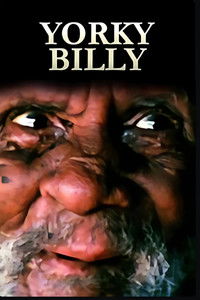
Yorky Billy (1980)
YORKY BILLY is set in Ngurgdu (Spring Peak) in the Northern Territory, an area irrevocably disturbed by uranium mining. There, 80-year-old William Alderson (known as "Yorky Billy") reflects on his life in the outback. Yorky's mother was an Aboriginal woman who died when he was three, and his father was an Englishman who spent 45 years in Australia and "tried everything" as a prospector, railwayman, drover and buffalo hunter, often with his young son working with him. After the WWII, Yorky married an Aboriginal woman and worked in various jobs. He and his wife had a large family, and in 1977, Yorky Billy recorded his story and died soon thereafter, and was buried near his father at Ngurgdu. Filmed simply with minimal editing, this is a poignant, elegiac reflection on a disappearing way of life, capturing Yorky's slow and quiet rhythm of speech, his wry humour, and with his weather-beaten face only just emerging from the deep shadows inside his corrugated iron shack.
poster
?

Crook Hat and Camphoo (2005)
Alyawarr elders from central Australia, who worry about the survival of traditional skills and culture, pass on the skills and knowledge for making spears and woomera (spear-throwers).
poster
?

A Frontier Conversation (2006)
This film documents a unique collaboration between Indigenous and white historians from Australia and North America. In September 2004, a diverse group travelled through the Top End of Australia meeting representatives of the traditional landowners, and engaging in a dialogue about Indigenous history. The themes that emerged raised more questions than answers - from cultural appropriation and copyright, to land rights, the role of language and art, and what history means to Indigenous communities in the current climate of cultural reclamation and survival.
poster
?

Japarta (2025)
The story of a Japanese scholar, Minoru Hokari, who, before his death in 2004 at the age of 32, achieved work which today commands an ever-widening audience. It is a story of cross-cultural understanding, how Gurindji Elders in the Northern Territory tasked Minoru to relay stories from their culture to a wider world.
poster
?

Milli Milli
In MILLI MILLI, director Wayne Barker takes the viewer on a cultural travelogue through the three regions of the Kimberleys: the coast, the rivers and tablelands, and the desert. Storytellers talk of past and present events and offer different visions of an Aboriginal future. The film celebrates the diversity of their historical and cultural experiences as well as a commonality of views and interests which emerges from their stories.
poster
?

Waste Not (2011)
Waste Not is a film about where your garbage goes, who sorts it for you, and what it is worth if it isn't just tossed into landfill. It's easier and cheaper to retrieve gold from old computers for instance, than to dig it up. Organics can be used to create fertiliser and green electricity and yet each Australian sends half a tonne of food waste to landfill each year where it is contaminated with chemicals and e-waste. We recycle only 50% of all our waste. There is an alternative to environmental apocalypse and we don't have to wait for the politicians to make it happen. All we really need to do is be creative and use our imaginations to turn this waste into wealth again. Waste Not talks to scientists, workers at waste depots, environment campaigners, gardeners and even a famous chef about how easy it is to save the planet by simply recycling properly.
poster
?

Big Bad Love
With young women 18-24 being most at risk of abuse, Australian comedian Becky Lucas sets out to understand what an abusive relationship looks like, how it begins and why it's so hard to intervene.
poster
Kanopy
?

Taking Pictures (1996)
Before the 1970s, the Commonwealth Film Unit represented the people of PNG in a paternalistic way, as curiosities. The unit used pompous voice-overs telling viewers what they should believe. Les McLaren and Annie Stiven are two of a group of Australian filmmakers who have lived and worked in PNG during the past 25 years and who see their roles rather differently. Through their films, they have endeavoured to reflect Papua New Guineans' complexity of thought, language and culture, using a wide variety of filmic styles and techniques. The film features interviews with a variety of Australian filmmakers who have worked extensively in PNG, including Bob Connolly and Robin Anderson, Chris Owen, Dennis O'Rourke and Gary Kildea. This documentary is a fascinating tracing of PNG culture and history from the 1930s until today.
poster
?

Big Boss (2012)
The story of 95-year-old Aboriginal elder Laurie Baymarrwangga and her work to maintain the language and cultural traditions of the Yan-nhangu people of Murrungga.
poster
?

Etched in Bone (2018)
Drawing on original footage from National Geographic, Etched in Bone explores the impact of one notorious bone theft by a member of the 1948 American-Australian Scientific Expedition to Arnhem Land. Hundred of bones were stolen and deposited in the Smithsonian Institution in Washington DC, until it became known to Arnhem elders in the late 1990s. The return of the sacred artefacts was called for, resulting in a tense standoff between indigenous tribespeople and the Department of Anthropology at the Smithsonian.
poster
Kanopy
?

Intervention: Stories From the Inside (2009)
On June 21 2007, the Howard Federal Government launched an intervention into Aboriginal communities in the Northern Territory. It was one of the most dramatic policy shifts in the history of Aboriginal affairs. Relentless media attention focuses on ideological arguments for and against the Intervention, while the voices of those affected by the policy are rarely heard. For this film more than 40 Alice Springs town camp residents were interviewed in depth over the course of eight months to find out the answer to the question - is it working?
poster
Kanopy
?

Animating Aeroplane Jelly (2020)
A documentary about Australian animation pioneer Eric Porter’s work on the iconic Aeroplane Jelly animated promos of the 1940s and 1950s.
poster
?

Profanía
Argentina, 2001. The country is in the middle of a state of siege. Bruno leads a rural military patrol of five soldiers into the countryside. They come upon an old farmhouse and inside they find several corpses and two survivors. Unwittingly, they awaken a diabolical entity living in the forest that revives the dead in the house and will torment them all night long. They will have to resist until dawn, or become part of a bloody sacrifice made centuries ago.
poster
?

Arnav at Six (2014)
Follow Arnav, a six year old Southern Indian boy, as he explores his environment.
poster
?

Three Boys Dreaming (2010)
THREE BOYS DREAMING follows three Indigenous boys over four years as they chase the dream of becoming professional AFL footballers.
poster
?

Ways of Thinking
A docu-drama made with support and assistance from a Warlpiri Community in Central Australia, to highlight the community's effort to control the fate of their heritage and future. Alan Jungarrayi wants to move with his family to the nearest town in the hope of finding work. His wife, Jean Napanangka, wants to remain in the community to fulfil her tribal obligations and to bring up their children in their culture. She fears that if they leave the children will lose their language and grow up 'with too much Western ways and thoughts', and thus lose their Warlpiri identity and their place within the world.
poster
?

Random 8 (2013)
A blend of fiction and historical evidence, RANDOM 8 explores issues raised by several famous psychological experiments, including the work of Stanley Milgram at Yale University in the 1960s who studied human obedience to orders, even when the orders were "immoral" or caused pain to others.
poster
?

5 Seasons (2005)
In these fast and modern times, the Numurindi people are still guided by the seasons and stories of the Dreamtime. This observational documentary focuses on Moses Numamurdirdi and his family's fight to hold onto their culture and ways in an ever-changing world.
poster
Kanopy
?

The Panther Within (2016)
MARNI is a mesmerising marathon of colour and dot work is intercut with the majestic landscapes of the Pilbara to a journeying soundtrack. As she paints the audience will experience Allery telling them about herself and her art practice in Yindjibarndi language.


mdblist.com © 2020 | Contact | Reddit | Discord | API | Privacy Policy