mdblist.com logo Movie Search


Ratings
Between
and
Between
and
Between
and
With at least
votes
Between
and
With at least
votes
Between
and
With at least
votes
Between
and
With at least
votes
Between
and
With at least
votes
Between
and
With at least
votes
Between
and
With at least
votes
Between
and
With at least
votes
Additional filters
m
Lists, Streaming Services, Cast and more
Create List (135 items)

Login to create a dynamic list


poster
72
28
7.6
/1583/
69
/19/
72
/25/
3.6
/491/

La traviata (1982)
This “Traviata” became one of the most succesful of all opera films, especially in France, where 800,000 Parisian cinemagoers flocked to it in the first six week. It was nominated for two Oscars (for production and costume design) and won BAFTAs in those two categories, as well as receiving BAFTA and Golden Globe nominations as 1983’s Best Foreign-Language Film.
poster
65
18
8.8
/154/
84
/52/
91
/11/
3.9
/291/
5
/110/
44
/3922/

John Williams - Live in Vienna (2020)
DG presents John Williams in Vienna, the live recordings of the Hollywood legend's Vienna Philharmonic 2020 debut. Saying it's "one of the greatest honors of my life," he received a standing ovation before a single note was played. Sharing the stage with the famous orchestra and violinist Anne-Sophie Mutter, he performs iconic themes from Star Wars, Harry Potter, Indiana Jones, Jurassic Park and other cinematic landmarks that have earned countless awards: 5 Oscars, 5 Emmys, 25 Grammys & more.
poster
79
12
8.5
/98/
84
/42/
72
/12/
3.8
/207/

John Williams & the Berlin Philharmonic - The Berlin Concert (2022)
John Williams has made cinematic history with his film scores and transported entire generations into his musical worlds. He has composed the soundtracks for cinema blockbusters such as "Star Wars", "Jurassic Park", "E.T." and "Harry Potter". In this concert, he conducts some of his most famous film classics. At the same time, this is his debut on the podium of the Berliner Philharmoniker. May the Force be with him ...
poster
?
70
/3/
48
/3/

Ocean HD Lounge (2011)
Relaxing video capturing some of the worlds most beautiful ocean scenery. Featuring various musical artists. 1 Tierra Negra: The Green Fields And The Blue Sky 2 Spanish Paradise 3 Blue Knights: Straight From The Heart 4 Brendan O#Neil: Three Day Weekend 5 I Chill Music Factory: Ghost Written 6 Discreet Lounger: Sueno De Playa 7 Tierra Negra: Clouds In The Sky 8 I Chill Music Factory: Django 9 Emily Shreve: Now And Always 10 Jorge Soley & Lee Ben: Permanent Vacation 11 I Chill Music Factory: Ready Rubbed 12 Bernward Koch: June #62 13 Paco Alondo: La Isla Del Sol 14 Blue Knights: Blue Summer Night 15 Brendan O#Neil: Sunset Dreams 16 Frank Fischer: Byron Bay
poster
?
7.3
/24/
10
/1/
70
/1/

Andrea Chenier (1981)
Although Domingo was younger and Banackova looked more like the sweet and innocent young Madalena than the one played by Tomowa-Sintow in the ROH production, this production was not as good. It was not as tight and neat. The tempo set was far too slow for the time-period of the story. The stage setting was distracting. The lighting was too dark. Except Domingo, a natural actor who was always into his role and sings and acts with passion, none of the other performers came up with a convincing portrayal of the role he/she played.
poster
?
70
/1/

Die Kameliendame (2007)
"Lady of the Camellias" (Kameliendame) was premiered in Jan 1978 at the Stuttgart ballet. Choreographer and text writer was John Neumeier who had been requested in 1972 by ballerina Marcia Haydee to write a full length ballet. He suggested "Lady of the Camellias" , the Dumas fils autobiographical novel. The idea of using Chopin music was suggested by ballet conductor Gehart Markson. The ballet was a success and this version was also presented in 1979 at the Kennedy Center in Washington DC. Neumeier revised it for the Hamburg Ballet now directed by Brazilian ballerina Marcia Haydee after the death of famous director John Kranko. The revised version with sets and costumes by Jugen Rose and conducted by Heribert Beissel was recorded as a movie in 1987.
poster
?
6.9
/17/
10
/1/
60
/1/

Eine Nacht in Venedig (1974)
Eine Nacht in Venedig (A Night in Venice) is an operetta in three acts by Johann Strauss II. Its libretto was by F. Zell and Richard Genée based on Le Château Trompette by Eugène Cormon and Richard Genée. The farcical, romantic story involves several cases of mistaken identity. The piece premiered in 1883 in Berlin and then Vienna. It became one of Strauss's three most famous stage works and has been seen in New York, London and elsewhere, and has been adapted for film.
poster
?
10
/1/

Emil Gilels Recital (1971)
Emil Gilels is well known as a Beethoven interpreter. His approach is characterized by a full bodied sound throughout a wide dynamic range, complete virtuosity and a structural sense that gives clarity to both local and global musical events. His tempo choices make sense within a complete movement or entire sonata (he doesn't need to slow down dramatically for the second subject in Op.53's first movement) and he will mostly maintain a tempo with only slight fluctuations.
poster
?
100
/1/

Karajan: New Year's Eve Concert (1978)
Karajan had been appointed music director for life of the Berlin Philharmonic in 1955, and soon the orchestra mastered the entire palette of Karajan's subtly defined phrasings, moods and orchestral colors. At home in the majesty of Bruckner or the raw power of Beethoven, the orchestra was also able to "let go" with Suppé or a Lisztian Hungarian Rhapsody, as the recording illustrates. For the 1978 New Year's Eve concert with the Berlin Philharmonic, Karajan put together a program of exclusively popular classical works, pieces that would guarantee a bubbly good time. Following Verdi's Overture to "La forza del destino" are the two major works of the program, Bizet's Arlésienne Suite No. 2 and Liszt's Hungarian Rhapsody No. 2. The Hungarian March, or "Rákóczy March," from Berlioz's "La damnation de Faust" never fails to rouse listeners with its instrumentation. The program closes with the Intermezzo from Mascagni's "L'amico Fritz" and the popular Overture to "Leichte Kavallerie" by Suppé.
poster
?
10
/1/

Vespro Della Beata Vergine (1989)
This large-scale live recording (Gardiner's second) was made in Venice's St Mark's Basilica. It captures the drama as well as the ceremonial aspect of the work, despite sometimes cloudy recorded sound.” Gramophone Classical Music Guide. “Gardiner's second [recording of the Vespers], spectacularly recorded live in St Mark's, has a punchy choral sound, near-operatic solo singing (Bryn Terfel and Alistair Miles are among the basses), emphatic enunciation, big contrasts and deliberate exploitation of the building's spaces. Its outright theatricality sets it apart from other performances.
poster
?
10
/1/

Bach Brandenburg Concertos & Coffee Cantata (1983)
Deutsche Grammophon celebrates Nikolaus Harnoncourt's 80th birthday with this 2-DVD release of rare, vintage, period Bach performances for the first time. Never released on DVD and, to the dismay of fans, long unavailable--these glorious Bach pieces are conducted by period instrument pioneer, Nikolaus Harnoncourt, as only he can. Harnoncourt, a notable cellist, performs in two concertos and on gamba in one. Harnoncourt warns, "If we lose contact with the great works of Bach, we lose our contact with humanity." Vocalists Janet Perry, Robert Holl, and Peter Schreier sing with distinction in the Coffee Cantata. The Surround Sound makes clear that they revel in the acoustics of the visually magnificent Baroque library of Wiblingen Monastery.
poster
?
8.4
/8/
63
/3/

Chopin-Pletnev: Cello (1997)
This short film is made for the "Chopin-Pletnev" disc which marked Mikhail Pletnev's debut as a pianist on Deutsche Grammophon. In the film, we witness Mr. Pletnev's journey, starting from him on his way to studio, through his performance of Chopin's Etude Op. 25 No. 7 in C sharp minor "The Cello" and the process afterwards. One is struck repeatedly by Pletnev's crystalline arpeggiations, the velocity of his passage work, his singing tone, his rhythmic suppleness, and, above all, the grandeur of his sound.
poster
?
80
/1/

Roberto Alagna : Sicilien Live (2009)
N/A
poster
?
70
/1/

Werther (2005)
Alain Guingal conducts the Orchestre du Teatro Regio di Torino in this production of Massenet's opera based on the novel 'The Sorrows of Young Werther' by Goethe. Roberto Alagna stars as the titular character, a lovelorn poet whose heart is set on a beautiful young woman of his acquaintance. Unfortunately, the girl in question has already pledged herself to another. How will Werther deal with the thwarting of his romantic ambitions?
poster
?
9.2
/13/

So What?! Friedrich Gulda (2007)
The portrait of austrian pianist and composer Friedrich Gulda based on archive material.
poster
?
10
/1/

La Clemenza di Tito (1980)
"La Clemenza di Tito" was Mozart's last stage work. It was commissioned for an Imperial coronation ceremony while Mozart was at work on "Die Zauberflöte" and was composed in great haste. Indeed, time was so short that composition of the secco recitatives was assigned to Mozart's pupil Süssmayr. As in the earlier "Idomeneo", Mozart sought to produce an opera seria that was dramatically viable. He enlisted the poet Mazzolà to substantially revise the Metastasio libretto, which had already been set some fifty times. The number of arias was reduced from 25 to 11, and ensembles and choruses were added to enliven the proceedings. Though perhaps not the very top-drawer Mozart, the music is wonderful.
poster
?
7.7
/40/
68
/5/
10
/2/

Così fan tutte (1992)
Mozart and Da Ponte use the theme of "fiancée swapping", which dates back to the 13th century; notable earlier versions are found in Boccaccio's Decameron and Shakespeare's play Cymbeline. Elements from Shakespeare's The Taming of the Shrew are also present. Furthermore, it incorporates elements of the myth of Procris as found in Ovid's Metamorphoses, vii.[10] Place: Naples Time: the 18th century
poster
?
6.1
/25/
50
/2/

The Gypsy Baron (1975)
In the Temesvar Province, a landowner returned from exile marries a gypsy girl who is revealed to be the daughter of a Turkish Pasha and the rightful owner of a hidden treasure. Next to "Die Fledermaus", DER ZIGEUNERBARON is Johann Strauss’s most popular operetta. The libretto gave Strauss the chance to revel in such contrasting musical forms as the Csárdás and the Viennese waltz. The style of the lied forms and ensembles is so original and finely balanced that the "Gypsy Baron" can truly be called a comic opera. Among the leading names of the stellar cast in this exuberant 1975 film of the operetta are Wolfgang Brendel, Ivan Rebroff, Janet Perry, Ellen Shade, Martha Mödl and, in the role that launched his career, Siegfried Jerusalem as Sándor Barinkay.
poster
75
?
8.2
/134/
71
/6/
72
/5/

Il Barbiere di Siviglia (1973)
Count Almaviva is in love with Rosina. However, she is currently staying with Dr. Bartolo – who desires to marry her. By using a series of disguises, Almaviva manages to pass letters to Rosina and serenade her with his beautiful voice. Dr. Bartolo does his best to stop Almaviva but is constantly thwarted. In the end, Count Almaviva marries Rosina and Dr. Bartolo comes to terms with his defeat.
poster
74
?
9.1
/136/
60
/3/
73
/7/

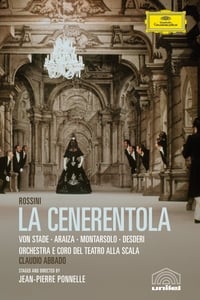
La Cenerentola (1981)
The Prince, Don Ramiro (who has changed places with his valet, Dandini), meets Cenerentola and they are instantly attracted to each other. When the Philosopher, Alidoro, later takes Cenerentola (dressed in magnificent clothing) to the palace, Dandini (still posing as the prince) tries to talk of love to her, but Cenerentola rejects him, saying that she is in love with his 'valet'. Ramiro, who has overheard this comment, is overjoyed, and immediately proposes to her, but Cenerentola says that he must first seek her out and then, if he still felt the same way, she would marry him. She gives him one of a matching pairs of bracelets, telling him to look for its companion on her right arm (she then leaves the palace). Ramiro ends the masquerade, and he and Dandini resume their true identities. The Prince then sets out on his quest - little realising that destiny, in the form of a violent thunderstorm, is about to take a hand in the affair.
poster
?
8.5
/33/
80
/1/
80
/1/

Tannhäuser and the Singers' Contest at Wartburg Castle (1978)
TANNHÄUSER UND DER SÄNGERKRIEG AUF WARTBURG is a grand opera by Richard Wagner in three acts. After experiencing boundless sensuality and freedom with the fun-loving Venus (soprano), the singer Tannhäuser (Tenor) finds it impossible to conform to the cultured setting of his betrothed Elizabeth (soprano), who loves him. During a singing contest, Tannhäuser describes the affair with Venus as the ultimate love experience and because of that, he is cast out from the established society. Thanks to Elizabeth's intervention, he is allowed to undertake a pilgrimage to the Pope to ask for the Holy Father's pardon. If the Pope accepts to forgive him, he would be allowed to take back his place in society. Tannhäuser accepts. But fate will not allow him to meet with his beloved Elizabeth again in this life. This is a recording of the legendary staging by Götz Friedrich for the 1978 Bayreuth Festival conducted by Sir Colin Davis.
poster
?
8.2
/16/

Saariaho: L'Amour de Loin (2004)
This is the 2004 version of Kaija Saariaho's opera performed by the Finnish National Opera and conducted by Esa-Pekka Salonen.
poster
?
8.5
/15/
10
/1/
80
/2/

The Little Drummer Boy: An Essay on Mahler by Leonard Bernstein (1985)
This television essay from 1985 was written by Leonard Bernstein to commemorate the 125th anniversary of Gustav Mahler's birth. Recorded in Israel, Vienna and later in London, it is punctuated by biographical interludes and illustrated by musical examples drawn from the cycle of Mahler's works recorded by Bernstein. Bernstein talks, plays and conducts various orchestras (Israel Philharmonic Orchestra, London Philharmonic Orchestra, Wiener Philharmoniker) and soloists (Janet Baker, Christa Ludwig, Edith Mathis, Lucia Popp, Walton Groenroos) in performances spanning 17 years. Leonard Bernstein also examines the roots of Gustav Mahler's inspiration. The programme also features music from the nine symphonies, 'The Song of the Earth' and the 'Wunderhorn Cycle'.
poster
?
80
/1/

Anna Netrebko: The Woman, the Voice (2003)
Since her thrilling, 1995 debut at the San Francisco Opera, soprano Anna Netrebko has starred with opera companies and orchestras worldwide. This video gathers some of her best moments in excerpts from Giacomo Puccini's "La Boheme"; Charles Francois Gounod's "Faust"; Wolfgang Amadeus Mozart's "Don Giovanni"; Vincenzo Bellini's "La Sonnambula"; and Antonin Dvorak's "Rusalka." Also included are interviews with Netrebko and her colleagues.
poster
?
70
/1/
40
/1/

Donizetti: L'Elisir d'Amore (2014)
Rolando Villazon's Baden Baden version of the Donizetti's opera set as an early Hollywood shoot of a western.
poster
?
8.5
/25/
70
/1/

Der Rosenkavalier (1979)
This performance of Richard Strauss' opera Der Rosenkavalier (1979) features the vocal talents of Gwyneth Jones in the lead role; recorded at the National Theatre Munich.
poster
?
90
/1/

Lohengrin (2019)
After Tristan und Isolde (2016), Parsifal (2017) and Die Meistersinger von Nürnberg (2018) this is the fourth installment of the exclusive, multiyear partnership between Deutsche Grammophon and the Bayreuth Festival, in which the Yellow Label is the exclusive audiovisual partner of the mythical Wagner festival, releasing each edition's new production on Blu-ray. This year, we are proud to release on Blu-ray the celebrated production of Lohengrin which was premiered on 25 July 2018, featuring an illustrious cast including Piotr Beczala and Anja Harteros in their house debuts, as well as the acclaimed return of Waltraud Meier to the Bayreuth Festival. The New York Times praised Piotr Beczala’s Lohengrin as “outstanding”, Anja Harteros [making] her impressive Bayreuth debut” as Elsa, and Ortrud “played with dominant presence by the incomparable Waltraud Meier”.
poster
?
90
/1/

I Puritani (2007)
It's hard to imagine a video opera collection without this superbly sung MET production of Bellini's I Puritani. Not that it's perfect by any means, but its excellences--most especially Anna Netrebko's electrifying singing and acting of Elvira--banish carping about other aspects of this memorable night at the opera. Netrebko is fragile from the start, her facial expressions and hand movements immediately conveying the girl's vulnerability. She has a mad scene in each act; the first when she realizes her fiancé has disappeared with another woman, the third, in the final act, a brief relapse when her returned fiancé is taken by the army to be executed. But it's in the second act that the real fireworks occur, with a Mad Scene that rivals Donizetti's Lucia for bel canto primacy. Here, Elvira is first heard off-stage, after the chorus has informed us that she's deranged. She enters wearing her wedding gown and begins Qui la voce in a voice as frail as her psyche.
poster
66
?
8.3
/200/
62
/4/
54
/5/

The Marriage of Figaro (1975)
Mozart's Marriage of Figaro is a comedy whose dark undertones explore the blurred boundaries between dying feudalism and emerging Enlightenment. Herman Prey's Figaro is admirably sung in a firm baritone and aptly characterized. So too, is his antagonist, Dietrich Fischer-Dieskau as the Count perpetually frustrated by the scheming wiles of Figaro and Susanna, here the perky Mirella Freni, who sings and acts like a dream. The Countess is creamy-voiced Kiri Te Kanawa, and the Cherubino, Maria Ewing, looks just like the horny, teenaged page she's supposed to be. The all-star leads are complemented by worthy supporting singers, the Vienna Philharmonic at the top of its form, and the experienced Mozartian, Karl Böhm conducting a stylishly fleet performance.
poster
?
90
/1/
75
/1/

Mozart Requiem (2005)
Requiem in D minor, K 626 by Mozart, Wolfgang Amadeus Performer: Walter Berry Gundula Janowitz Christa Ludwig Peter Schreier Orchestra/Ensemble: Wienere Symphoniker Orchestra Conductor: Bohm Karl Chor der Wiener Staatsoper Period: Classical Written: 1971 ; UNITEL
poster
?
10
/1/
60
/1/

Manon Lescaut (1983)
The sets and costumes by Ponnelle are truly reflective of the 'grand style'. Plus the fact that the two lead characters are portrayed by top singers in their absolute prime - both Gruberova and Araiza weren't even 35 years old at the time of this performance, makes this production the most convincing both dramatically and musically. The conducting of Fischer is good - he makes the music come alive, much more so than the MET version.
poster
?
8.4
/105/
40
/2/
30
/1/

Salome (1974)
This filmed version of Strauss' shocker features Teresa Stratas as opera's most depraved teenager, and she's as perfect a Salome as one would ever hope to see or hear. Stratas inhabits the role, exploring the character's sensuousness as she vainly woos Jochanaan, her venomous hatred when she's rejected, the crazed look in her eyes when she demands his head--on a silver platter, no less. Such complete identification with a role, especially of a character so malignant helps make this 1974 Salome stand out among the many fine DVDs of the opera.
poster
?
75
/2/

Bach: St. John Passion (2014)
Johann Sebastian Bach’s St John Passion with the Berliner Philharmoniker and Sir Simon Rattle was one of the outstanding events of the past season. As before with the St Matthew Passion, star director Peter Sellars succeeded in creating a staging which made the spiritual and dramatic content of the Passion story even more intensive. The New York Times also praised the “brilliant and energetic” playing of the orchestra, the Frankfurter Allgemeine Zeitung the “haunting, almost unsurpassable singing of all those involved.”
poster
?
8.3
/76/
58
/5/
75
/2/

Siegfried (1990)
Siegfried is the third of the four operas that constitute Der Ring des Nibelungen (The Ring of the Nibelung), by Richard Wagner.
poster
?
53
/3/

Strauss: Elektra (1980)
It's hard to imagine confirmed Straussians not wanting this starry Metropolitan Opera performance of Elektra. Strauss and his librettist, Hugo von Hofmannstahl, transformed Sophocles' take on Homer's tale into a harrowing opera noir. Elektra lives for one reason, to kill her mother, Klytämnestra, and her stepfather, Aegisth, the murderers of her father, Agamemnon. In contrast to Elektra's vengeful obsession, her sister Chrysothemis desires to get on with life. When their long-missing brother, Orestes, returns to do the deed, Elektra celebrates with a dance of death and, her sole purpose in life fulfilled, dies. Strauss joined the hermetic plot to music of the utmost opulence, violent and yearning by turns, evoking the cardinal principles of Greek tragedy - pity and terror.
poster
?
63
/3/
100
/1/

Beethoven: Fidelio (2000)
When Act 2 of Fidelio is being poured out in the most glorious tones imaginable from Mattila, Heppner and Pape - who can possibly complain? Who would honestly want to replace any of them? Who can fail to be overwhelmed with gratitude to own this disc? If I continue to count our blessings, I might mention the splendid Robert Lloyd drawing us to a thrilling finale as Don Fernando; and Falk Struckmann a convincingly evil Pizarro. So it is certainly not complaining, but fulfilling a reviewer's obligation to tell all, when I admit that Jennifer Welch-Babidge is little more than adequate as Marzelline. One might wish for a purer vocal line in this role - like a Bonney or an Isokoski.
poster
?
20
/1/

Metropolitan Opera Gala James Levine's 25th Anniversary (1996)
This tribute to James Levine, first shown on PBS, was only part of that glorious evening. Here we have the whole performance, up to three hours. I could not stop watching these discs. Let me say this much; Levine has done for the Met, making it the premier opera house in the world, what Karajan did with the Berlin, making it one of the finest orchestras ever. So sit back and enjoy.
poster
?
10
/1/
80
/1/

Don Carlo (1983)
Ghiaurov, Freni, and Bumbry were great voices in their time, and they are still effective here -- good enough musicians to put over the quite heavy vocal and expressive demands of their roles. Louis Quilico was never quite in that league, and he sounds a bit spread and woofy in places here, but he works hard and effectively to bring Rodrigo to life. Placido Domingo recorded his first Don Carlo, for EMI with Giulini, about 15 years before this production, but he looks and sounds fine here -- in the early 1980's he was doing very good Otellos and Lohengrins too, and Furlanetto, still in his 30's, brings a rich, young voice to an old part and succeeds in making the Grand Inquisitor vocally as well as expressively formidable. Levine brings both weight and energy to the score, and that reading fits well with the overall "traditional" design and production -- the Met's wardrobe budget must have been severely taxed, but everybody looks splendid.
poster
?
60
/3/
85
/2/

Cavalleria rusticana / Pagliacci (1970)
Opera's most popular double bill, fondly known as Cav and Pag, conducted by Herbert von Karajan. In 'Cavalleria rusticana', Turiddu returns from military service to find that his fiancée Lola had married the carter Alfio while he was away. In revenge, Turiddu seduces Santuzza, a young woman in the village. In 'Pagliacci', the drama unfolds as Canio (Pagliaccio) struggles with rage, despair, and desire on learning of his wife Nedda's intended infidelity with Silvio. Canio's tragic conflict increasingly mirrors the comedy of Pagliaccio.
poster
?
70
/1/

Rostropovich Life & Art (2007)
Released as a memorial for the great Russian cellist Mstislav Rostropovich, who passed away on 27 April 2007, this DVD contains one bonafide cello concerto, the Schumann Cello Concerto in A minor, and two tone poems with prominent cello parts, Ernest Bloch's Schelomo and Richard Strauss' Don Quixote. Rostropovich mastered the Schumann in several famous recordings. Here, conducted by Leonard Bernstein, he provides a splendid performance. Featuring his trademark powerful technique, smooth legato and crisp vibrato, the Romantic roots of the concerto are never hidden for long, despite the relatively cool playing of the Orchestre National de France.
poster
?
90
/1/

Karajan Brahms Ein Deutsches Requiem (1978)
This unique document from the 1978 Salzburg Festival has fortunately been released on DVD and is a magical interpretation, prodigiously realized with a sublime fusion of timbres, a cohesion and ultimately, a simplicity that are truly unequalled. Listen as this great conductor produces musical nuisances that are unique to his art and how he accompanies the soloists with understanding and rapport. I have no hesitation in claiming this is one of the great recordings of the century.
poster
?
82
/2/

Mozart Symphonies Vol. II - Nos. 1,25,31,36,38 and "Eine Kleine Nachtmusik" (1978)
In the 1960s Karl Böhm (1894–1981) had made his mark as interpreter of Mozart with the the Berlin Philharmonic. Yet his recordings with the Vienna Symphony demonstrate a mutual sympathy and deep love for this timeless music. The musicians are razor-sharp in attack, harmony, and release. Böhm's style is minimalist: a firm downbeat, a ruffled hand here and there, a slight sway, no mugging. Occasionally, when quite excited, he gives a little hop but immediately pulls himself on a tight leash.
poster
?
10
/1/

Brahms The Piano Concertos (1984)
Between 1981 and 1984 Leonard Bernstein recorded nearly all of Brahmss orchestral works with the Wiener Philharmoniker to honor the 150th anniversary of the composer's birth in 1983. For the concertos, Bernstein enlisted the services of some of the finest Brahms interpreters of the time: the violoninst Gidon Kremer, the cellist Mischa Maisky and the pianist Krystian Zimerman. Leonard Bernstein, Krystian Zimerman, and the Wiener Philharmoniker, it's very hard to get a better group of musicians for these masterpieces. Mr. Zimerman and Mr. Wolfgang Herzer's piano cello duets in the third movement of Brahms' second is simply tearful.
poster
?
70
/1/

Mozart Symphonies Vol. I - Nos. 29,34,35,40,41 and Minuet K.409 (1978)
There are only a couple of DVD recordings of Mozart's Symphony No. 40. Fortunately, this one by Karl Bohm, recorded live in Vienna's Musikvereinssaal, is excellent, as are the other Mozart symphonies on this DVD. Since this disc offers three of the big six last symphonies of Mozart, Nos. 35 (Haffner), 40, and 41 (Jupiter), plus two more, it is an outstanding value. Despite the age of the recordings (1973-74), both the sound and the video are quite good.
poster
?
10
/1/

Bernstein Brahms Symphonies (1984)
Here is the most convincing presentation of Brahms' symphonies that I personally have ever experienced. There is no explaining a gift like Leonard Bernstein, a true legend and one of the truly great ones of the 20th century (and a great Brahms conductor!). I have followed his career and recordings both at the NY Philharmonic and at Vienna (other places too). His brilliance and incandescence are revelatory in these Brahms performances. His view of a thorough-going romantic Brahms expressing his passionate control of an inner rage in classical form is convincing. He and this great Vienna orchestra give a consistent statement of it. And, of course, Bernstein's introductory comments are without peer.
poster
?
8.0
/96/
10
/1/
90
/1/

Verdi – Messa da Requiem (1967)
Herbert von Karajan conducts La Scala Orchestra and Chorus with soloists Leontyne Price, Fiorenza Cossotto, Luciano Pavarotti, and Nicolai Ghiaurov.
poster
?
10
/1/
100
/1/

Mahler - Symphonies Nos. 1, 2 & 3 (1973)
Beginning with the First Symphony, Bernstein reveals Mahler's position at the hinge of modernism, while emphasizing his emotional extremism. The uplifting Second "Resurrection" Symphony, with which Bernstein had an especially long and close association, is recorded here in a historic performance from 1973, set in the Romanesque splendor of Ely Cathedral. In the Third, Bernstein encompasses the symphony's spiritual panorama like no other conductor, with the Vienna Philharmonic players alive to every nuance.
poster
?
10
/1/
90
/1/

Brahms: The Symphonies (1980)
Karajan conducts these symphonies with eyes closed, often intently enraptured by the music, smiling occasionally when a passage or solo sounds just right to his ear. He conducts Brahms with a greater sense of urgency than does Bernstein: the First symphony is 11 minutes shorter as conducted by Karajan! Nothing is rushed but there is what can only be described as emotional compression, an intensity of expression that sounds quicker than Bernstein's performances.


mdblist.com © 2020 | Contact | Reddit | Discord | API | Privacy Policy