mdblist.com logo Movie Search


Ratings
Between
and
Between
and
Between
and
With at least
votes
Between
and
With at least
votes
Between
and
With at least
votes
Between
and
With at least
votes
Between
and
With at least
votes
Between
and
With at least
votes
Between
and
With at least
votes
Between
and
With at least
votes
Additional filters
m
Lists, Streaming Services, Cast and more
Create List (29 items)

Login to create a dynamic list


poster
?
8.8
/6/
60
/1/

Juris Jurjāns. Seven Days of Painting, Talking, Silence (2024)
In the documentary, director Dzintra Geka has created an engaging portrait of Latvian painter Juris Jurjāns. The film delves into his world, embodying a visually rich narrative of freedom in art, life energy, and virtuosity. As always, Juris Jurjāns chooses beauty as the leading theme of his artist and refuses to conform to the rules dictated by old age. He continues to indulge in fine drinks, puffs cigars, and paints. Every day he travels to his studio, where he finds solace in his canvases.
poster
?
7.4
/7/

Amats Nr.1. Valsts Prezidents (2004)
J. Čakste, G. Zemgals, A. Kviesis, K. Ulmanis. What were they like? How much did each of them manage to unite the nation, how much did they manage to oppose the oppression, greed and brutality of the giant empires surrounding our small republic as a legal entity? Did they all have personal lives? The institution of the presidency in action through the daily agenda of President Vaira Vīķe-Freiberga.
poster
?
5.0
/6/

Signe un... (2003)
Portrait of Signe Baumane. About creative people, obsession and fixation with their work, huge egos without which nothing gets done, but alongside them are others whose lives are willingly or unwillingly subordinated... The train of alienation is picking up speed, and it seems that it is impossible to jump off without painful injuries.
poster
?
90
/3/

The Sixties (2013)
The 1960s brought hope for the huge Soviet empire - a hope that the regime will become more humane. The optimism and youthful energy of the decade became the prevailing mood. Renewal of life vibrated in Latvia. The newly built Riga Film Studio was a strong impulse to the development of national cinematic art. A new generation full of energy came into the Latvian film industry; they created a style of documentary cinema that we now call Riga poetic documentary cinema (or Riga style).
poster
?

Haralds Sīmanis. Dziesminieks un jumiķis (2025)
The film follows the last years of songwriter Harald Sīmanis' life, showing the true values of life – love, friendship, and the ability to be creative until your last breath. The film uses unique photo and video material from the 80s and 90s.
poster
?

Train Station Latvians 1937 (2011)
Latvians have left their land for all corners of the earth over the last centuries – either driven out for disobeying the powers at large, or due to wars and revolutions, or with visions of a better life. And not always to an easier life. But there was only one place where an anti-Latvian campaign was waged, where every Latvian was treated as a spy, a traitor, and the enemy, and therefore deserved to be tortured and shot. This was during the 1937 repression in Russia, where the horror and pathologies, made Latvians into betrayers and murderers of their own kind.
poster
?

Dzimuši Sibīrijā. Mārtiņš Vilsons (2025)
The years 1941 and 1949 became a fateful turning point for thousands of Latvians who were taken away without warning to an unknown destination. In a foreign land and harsh conditions, they tried to preserve their humanity, create a new life, and raise their children. These children grew up far from their homeland, in a foreign environment where they felt like outsiders. They learned a foreign language, lived among strangers, and asked questions that even adults were afraid to answer. One of these children is actor Mārtiņš Vilsons, who was born in exile in the Magadan region of Russia to the family of Zenta Vilsone and Rolands Čehovičs. In this documentary, director Dzintra Geka portrays his life story as a personal testimony to the fate of the exiled Latvians, their search for identity, and their return to a contradictory reality.
poster
?

Lisments Who Changed Roja (2013)
A documentary about Miķelis Lisments - a controversial director of fishermen kolkhoz "Banga" in Roja, a village in North-West Latvia.
poster
?

Tālā zeme Sibīrija. Kāpēc mēs braucām? (2023)
Why did we travel to Siberia for 20 years? Why did we make this film? How did we see Siberia? People who were deported as children in 1949 and 1941 searched for the places where their loved ones were buried. After 2014, we were watched more closely, we were not allowed into museums, we were followed, and the people we had met were interrogated. When we found graves, we were not allowed to take out our cameras and film. And yet... we would never have believed that Russia would attack Ukraine, threaten the Baltic states and the Western world.
poster
?

The Distant Land of Siberia. Born There (2022)
Igarka – a town beyond the Arctic Circle, where Roberts, Andrejs, Nadežda, Anatolijs, and Inta were born in the 1950s. Their parents had been exiled there as children in 1941. Some managed to return to Latvia in 1956, others later. Nadja returned to Latvia with her little daughter only in 1993; her mother remained in the eternal frost. Anatolijs Taurenis did not return; Nadežda went to Igarka and found him. Inta's son went to his grandmother's place of exile because he wants to publish a book. The stories of the children of Igarka are varied. They do not want to talk about their childhood; the memories of their parents and grandparents are painful. They survived, and that is the main thing. Nadja calls her classmates in Russia every day. Others do not speak, some hang up because there is a war going on. Putin and television have convinced them.
poster
?

Atcerēties vai aizmirst? (2006)
Residents of the Cēsis district – Vizma Rass, Zigrīda Perevalova, and Andris Eglītis – recount their suffering during their school years, the deportations of 1941, and their memories of Siberia. The emotional narrative is supplemented by excerpts from other films shot by Dz.Geka: "The Occupation of Latvia," "Children of Siberia," and "Greetings from Siberia."
poster
?

Igarka, Hope and Butterfly (2008)
In 1941 almost 4,000 children under the age of 16 were deported from Latvia to Siberia. Some returned to Latvia, many perished, and many were left in exile, where they had their own children. Nadežda Āriņa and Anatolijs Taurenis were born in the 1950s in permanently frozen Igarka in Siberia. Their mothers had been childhood friends in Latvia before their deportation. Nadja returned to Latvia where she now sells souvenirs, but for Taurenis Latvia is still a dream. In 2007, Nadežda heads to Igarka to visit Taurenis.
poster
?

Reiz bija Sibīrija (2005)
In 1941, 15,420 Latvian residents were deported to Siberia, including 4,000 children. More than 400 of them survived and currently live in Latvia. Five of them—Ilmārs Knaģis, Biruta Kazaka, Ivars Ross, Gaida Šmite, and Juris Vidiņš—talk about how their experiences have affected their lives.
poster
?

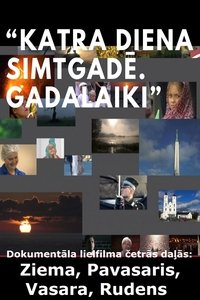
Katra diena simtgadē. Gadalaiki. (2019)
The film is a reflection of the Latvian people in the year of the country's centenary – viewers will easily recognize themselves and their personal stories in its scenes. Starting on New Year's Eve, January 1, when the first centenary baby, little Jete, arrives in the world to the sound of fireworks, and ending with piano music playing over a snow-covered and sunlit panorama of Latvia, the film captures the lives of hundreds of people. In addition, by filming each of the 365 days, sometimes with several cameras, and observing the processes of nature, in the countryside and in urban environments, in the lives of individuals, families and society, the cameramen have vividly captured the different facets of this story through the lens of the camera: the beautiful, the bitter, the grand, the meaningless, the comical and the absurd.
poster
?

1949. The Route from Ķekava to the Omsk District (2012)
The 1949 deportations were one of the most tragic aspects of contemporary Latvian history. 43,000 people were deported to Siberia for life, with 10,000 infants and children, elderly people, and even people raised from their deathbed among them. 4,941 persons perished. Every fourth deportee was a child. Every sixth deportee was 60 or older.
poster
?

The Children of Siberia. We Remember (2020)
Every year on June 14, the Siberian Children Foundation goes on a trip to Siberia to remember their loved ones who stayed there. Along with the trips, they've made documentaries and held conferences. This year marks the 20th anniversary of the foundation's activities. Due to the Covid-19 pandemic, no in-person activities were planned this year, but a documentary film entitled "Children of Siberia. We Remember," which depicts the gatherings of those deported to Siberia in 1941, reflects archival material from previously filmed movies, and reveals the most vivid moments from legendary expeditions over the course of 20 years.
poster
?

600 Stories That Have to Be Told (2007)
Interviews were conducted over a seven year period with 670 people who were deported to Siberia as children in 1941. Fragments of their memories form a mosaic revealing their past experiences of losing fathers, mothers, brothers and sisters. Time heals, but nothing is forgotten and the stories must be told.
poster
?

Sibīrijas dienasgrāmatas (2003)
A documentary historical account of the fate of four thousand children deported in 1941. Only one in ten survived and can bear witness. We have filmed 180 interviews, and the work continues.
poster
?

The Distant Land of Siberia. Why March 25, 1949? (2021)
On this date, more than 42,129 people were deported from Latvia to Siberia. In great secrecy, 31 trains with cattle cars were sent out in a single day. The deportations of 1949 were, in a sense, even more cruel than those of 1941, as one in four of those deported for life was a child, and one in six was over 60 years old. The film "The Distant Land of Siberia. Why March 25, 1949?" will tell about the reasons for the deportations and show the places of exile in Siberia. People who were deported as children will share their memories.
poster
?

Where Did The Fathers Go? (2014)
The children who were sent to Siberia in 1941 have not seen their fathers – in their memories they recollect: “My father was arrested, he was sent to Vyatlag camp. He died there in March, 1942. He was not convicted. Father was tried in the autumn of 1942, when he was already dead, Moscow Troika verdict: 10 years in prison and confiscation of property...”The railcar moves along overgrown rails. For 70 years, the twelve participants of the journey have wanted to go to the places from where their fathers did not return. Among the harsh nature the tension on their faces shows.
poster
?

The Balance Sheet of Siberia (2011)
The year 2011 marked the 70th anniversary of the deportations of June 14 1941, when 15 425 residents of Latvia (Latvians, Jews, Russians, Poles) were deported to Siberia. Among them there were 3 751 children aged up to 16. During the process men were separated from their families and sent to gulags, where many were sentenced to death, while others were imprisoned in labour camps. The facts of history and dry and few, but many of the victims and their children and grandchildren are still among us. During the summer of 2010, people who were deported to Siberia in 1941 as children joined their own children and a video production crew to travel back to the far North of Russia.
poster
?

John Dored's Island (2007)
John Dored was the first Latvian cinematographer to train with the famous Pathé, actively film on the front lines of WWI, and the only foreigner who filmed Lenin’s funeral, illegally. After emigrating to the U.S.A. he worked as a correspondent for Paramount News for 25 years and continued reporting from war zones. The film is based on the correspondence and journals of Dored and his wife Elizabeth – a portrait of a stellar career and of fate, love, life and death.
poster
?

Greetings From Siberia (2005)
People who were forcefully deported from Latvia to Siberia by the Soviet Union in 1941 and 1949 when they were kids. They haven't come back. Many years have passed, the dream of motherland has ended.
poster
?

The Fathers Over There (2016)
Andris Caune, Ojārs Grensbergs, Imants Grāvītis and Jānis Zemtautis spent many years in the Gulag camps. They survived. In 1954, a riot broke out in Jezkazan, Kazakhstan. The men’s camp and women’s camp joined together and held on for 40 days. Then came the tanks that killed more than 1,000 of them. Austra Vērpe met her future husband there. They were lucky to stay alive. The dream of the musician Zigfrīds Muktupāvels was to find the grave of his paternal uncle in far-off Kazakhstan. He was named after his uncle, who never came home. Zigfrīds and a cousin headed off into the steppes to look for a monument reading “Zigfrīds Muktupāvels.” The next round of deportations occurred in 1949, and whole families were sent to Siberia. Fathers were tried in court, a great many ended up in punitive camps in Vorkuta and Inta. Skaidrīte Jostmane and Māris Landers travelled to Vorkuta to find their father’s gravesite.
poster
?

Remember Siberia I (2010)
An emotional, figurative and historical study of the memories of people who were deported to Siberia as children on June 14, 1941. The suffering of these victims is presented in contrast to the beautiful landscapes of Siberia. On June 14, 2009, the film crew, some of the deported children who survived and returned to Latvia, and their children, go on a pilgrimage to Siberia to install memorial plaques in memory of the mothers and children who were deported between 1941 and 1949.
poster
?

Seeking Tisse (2017)
The story of the world-renowned Liepāja-born cinematographer Eduard Tisse, whose wife was convinced it was he who created all the famous films of Sergei Eisenstein. The creators of the film develop the story and cross the lines drawn by biography, trying to understand the magic interaction between a cinematographer and a director, between the cinematographer and the object in front of his camera.
poster
?

God's Lost Sparrows (2015)
Near the end of the Second World War, when it became clear that Latvia would be re-invaded by the Soviet Army, some 150,000 of its citizens fled to Germany as refugees. Among them were farmers, businessmen, government officials, intellectuals and ordinary folks who had already experienced the dreadful Year of Terror. Almost one million people from Eastern Europe sought escape from the Soviet regime. The Latvians, who became DPs (displaced persons), tried to create a “little Latvia” within the confines of the refugee camps. This film follows the fates of their children.
poster
?

Ilmārs Blumbergs (2019)
The story of the secret of self-creativity, the loneliness of the soul, the meridians of con-sciousness and the scope of man. Ilmārs Blumbergs (1943-2016) is a concept in life than can be classically proven if we analyze his work in set design, poster art, painting and multimedia work. The personality of Blumbergs, however is a shifting and intangible material which ensures superior value, wonderfulness and intimacy to all that he created. Those who analyze his art and world perceptions, recognize the work as seeming to come from antiquity, but it can never be catalogued or recorded in bookkeeping. How fortunate that it also cannot be consumed.
poster
?

Kurts Fridrihsons (2018)
The significance of Kurts Fridrihsons reaches beyond the importance of his art, because during the Soviet period there were not many personalities refusing to comply with the regime while at the same time being outstanding artists. The charm and lightness that Fridrihsons preserved from pre-war civilized Europe and the free, lost Latvia was a harsh contrast to the realities of Soviet life. He was a model and inspiration for many people whose spiritual world refused to accept the existing system. The greater the distance between Fridrihsons’ lifetime and the present day, the more diversely and clearly we see the aloof and exceptional power of his personality. Unlike thousands of people who excuse themselves today for collaborating with the system with phrases like “Such were the times!”, justifying their non-resistance and compliance and their role as little bolts in the system, Fridrihsons – the loner and the example for a different option – is existentially important.


mdblist.com © 2020 | Contact | Reddit | Discord | API | Privacy Policy