mdblist.com logo Movie Search


Ratings
Between
and
Between
and
Between
and
With at least
votes
Between
and
With at least
votes
Between
and
With at least
votes
Between
and
With at least
votes
Between
and
With at least
votes
Between
and
With at least
votes
Between
and
With at least
votes
Between
and
With at least
votes
Additional filters
m
Lists, Streaming Services, Cast and more
Create List (48 items)

Login to create a dynamic list


poster
Kanopy
71
46
6.8
/832/
68
/28/
66
/34/
3.6
/1165/
87
/15/
65
/76/

Moana (1926)
Robert J. Flaherty’s follow-up to Nanook of the North shifts from the Arctic to the South Seas, portraying Samoan village life with a painterly eye. Blending ethnographic detail with a romanticized “Gauguin idyll,” the film celebrates daily rituals, communal traditions, and the passage into adulthood, suffused with what Flaherty called “pride of beauty, pride of strength.”
poster
Kanopy
68
28
7.0
/344/
63
/12/
65
/11/
3.6
/865/
71
/55/

Forest of Bliss (1986)
Forest of Bliss is an unsparing yet redemptive account of the inevitable griefs, religious passions and frequent happinesses that punctuate daily life in Benares, India's most holy city. The film unfolds from one sunrise to the next without commentary, subtitles or dialogue. It is an attempt to give the viewer a wholly authentic, though greatly magnified and concentrated, sense of participation in the experiences examined by the film.
poster
Kanopy
69
26
7.2
/168/
82
/7/
83
/6/
50
/30/
61
/144/

Ghostland: The View of the Ju'Hoansi (2017)
Remember the culture clash in THE GODS MUST BE CRAZY? This time it's real. One of the most ancient cultures on our planet is undergoing a major change. The Ju/Hoansi Bushmen in Namibia are not allowed to hunt anymore and need to converge with our so called “civilized” lifestyle. For the first time the Ju/Hoansi Bushmen travel through the Kalahari and then right into the heart of Europe. What starts as a look at their fascinating culture becomes an even more fascinating look at our Western lifestyle. A warm and humorous reflection of our habits through the eyes of people who are about to give up their million year old traditions.
poster
64
24
6.6
/541/
60
/15/
62
/17/
3.4
/1354/

Divine Horsemen: The Living Gods of Haiti (1993)
This intimate ethnographic study of Voudoun dances and rituals was shot by Maya Deren during her years in Haiti (1947-1951); she never edited the footage, so this “finished” version was made by Teiji Ito and Cherel Ito after Deren’s death.
poster
?
100
/1/

Behind the Shadows (2025)
The Greek shadow puppetry began 130 years ago. A student of Greek shadow puppetry travels to China, where shadow puppetry began over 2000 years ago. There he follows Chinese shadow puppeteer master He Shihong in Wushan of China. Watching his performances and listening to him talk about his art and his career in it, many parallels are drawn and he expresses them by including his Greek shadow puppetry teacher in the film. This documentary is a cultural bridge between Greece and China through the art of shadow puppetry.
poster
Kanopy
?
8.3
/15/
10
/1/
55
/2/

The Nuer (1970)
Portrays the Nuer, Nilotic herdsmen of the Nile basin. Shows how their daily lives revolve about their cattle, and depicts the psychological bonds between them. Includes extensive use of Nuer music and poetry.
poster
?
10
/1/

Hombres de barro (1988)
A group of filmmakers travel to a Kolla community in Salta to film their folkways. We see all aspects of their life: farming, herding, cooking, football, and making music during a Pachamama festival. In the course of filming, the leader of the Kolla community changes the filmmakers' view of what the documentary should be, and at the end of their visit they are changed. "La vida se puede ir amasando, como el barro": As life goes along, it becomes more pliant, like clay. An announcement at the beginning of the film states that this is neither fiction nor documentary, but I'd say it's closer to documentary.
poster
?
7.0
/15/
70
/1/

Ainu Puri (2024)
Shigeki, one of the Ainu people of northern Japan, follows the traditions of his ancestors and teaches his son Motoki about their heritage. But how can old customs be revived after centuries of suppression?
poster
?
10
/1/

Dogon Drums, Elements of a Study in Rhythm (1966)
The young goat herders from the cliff of Bandiagara practice on the stone drums of their ancestors. An ethnomusicological film experiment describing the subtle plays of the right and left hand of Dogon drummers.
poster
?
10
/1/

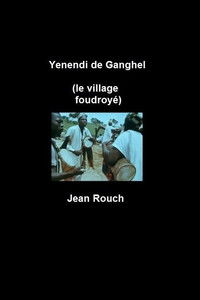
Yenendi de Ganghel (Rain Dance at Ganghel) (1968)
Lightning struck the hut of a Fulani shepherd near a village of settled fishermen, Ganghel, in Niger. A yenendi, a purification ceremony to obtain "water from the sky but not fire from the sky", is organized, with Sorko priests, ritual musicians and dancers, and the faithful from Niamey. The musicians call on Dongo, god of storms, and his brother Kirey, god of lightning. To the rhythm of the orchestra, a man goes into a trance, becoming Dongo's horse and at the same time the riding genie. Then a woman is possessed by Kirey. When the riding gods have mastered their horses, the gods visit the men. Dongo purifies the lightning-struck land and the oldest fisherman prepares the purification vessel, addressing Dongo.
poster
?
10
/1/

Hampi (1962)
A ritual vase, the hampi, is placed in the center of the Musée de plein air de la République du Niger in Niamey, during a ritual ceremony featuring possession dances. With this film, Jean Rouch continues his ethnological and cinematographic study of Songhay ritual objects. He demonstrates that, in a particular context, the transfer of a hampi vase to a museum requires the organization of a ritual ceremony to obtain the gods' approval. At the time, however, reservations about filming a possession dance for the opening of a shrine in a museum made the move "questionable from a museological point of view".
poster
?
4.3
/9/

Amin (2010)
AMIN portrays Qashqai musician Amin Aghaie, a young modern nomad and his family who despite facing steep financial, cultural and political obstacles are dedicated to their art and culture. Amin travels to remote towns and villages to record the music of the surviving masters whose numbers decline each year. His nomadic family are selling their meager belongings to help support their son's education in performance and ethnomusicology at Tchaikovsky's Conservatory in Kyiv, Ukraine, but it is not enough. Amin, desperate to finish his academic education, sells his violins one at a time just to pay for his tuition.
poster
?
8.0
/11/
35
/2/
70
/3/

Baka (1995)
For months filmmaker Thierry Knauff lived with the Cameroonian tribe, the Baka. This is his document of that time.
poster
?
90
/1/

Im Reich Des Squatters (2020)
N/A
poster
?
5.6
/9/
10
/1/

Mi hijo Ceferino Namuncurá (1972)
Biopic of Ceferino Namuncurá (1886-1905), son of a Mapuche cacique and a white woman, and the first Indian of South America to be beatified. The film starts out as a war movie, showing his father Manuel battling the Spanish and taking a white woman as his captive bride. But little of interest happens after Ceferino is born. His beatification relies partly on his "miraculous" survival after falling in a stream as a baby, but the film does not present this with any great drama, and plods through the rest of the boy's life with similar tepor. Ceferino does well in school, attracts the interest of a priest, attends a Catholic school in Buenos Aires, and studies for the priesthood in Italy, where he dies of tuberculosis after a few unconvincing coughs.
poster
?
10
/1/

Mangbetu (1954)
An ethnographic documentary about the Mangbetu tribe of the Belgian Congo (now the Democratic Republic of the Congo). The film features a discussion of various rites including the Mangbetu practice of head binding, as well as various examples of traditional music and dance.
poster
?
4.8
/6/
10
/1/

Pam Kuso Kar (Breaking Pam's Vases) (1974)
In February 1974, Pam Sambo Zima, the oldest of the priests of possession in Niamey, Niger, died at the age of seventy-plus years. In his backyard, the followers from the possession cult symbolically break the dead priest's ritual vases and cry for the deceased while dividing up the clothes of the divinities.
poster
?
10
/2/

Snowflakes (2020)
Rye, a photographer, and Chris, a political science student, are in their final year of college, and have lived together in the same house for three years. While their bond has grown increasingly stale since first moving in together, they’re tethered by a common history and lingering grief; they know the house and its traumas in ways none of its few rotating tenants ever can. Set in the politically charged recent past at Hampshire College - an alternative school without grades or majors - the film's protagonists struggle with the demands of communal living and the concentrated emotions that come with it, against a backdrop of mass protests, long winters, creative passions, and armchair philosophy.
poster
?
6.2
/52/
65
/4/
70
/1/

Journey Through Setomaa (1913)
Estonia's first ethnographic film. Made by Johannes Pääsuke in 1913 on his expedition to Setomaa, the South-Eastern region in Estonia.
poster
Kanopy
?
10
/1/

An Afghan Village (1974)
A collage of daily life in Aq Kupruk builds from the single voice that calls the townspeople to prayer, the brisk exchange of the baazar, communal labor in the fields, and the uninhibited sports and entertainment of rural Afghans. The theme of the film focuses on rural society. The film and accompaning instructor notes explore concepts of development, modernization, environmental equilibrium, and especially change, identifying change agents, and analyzing barries and stimulants to change.
poster
Kanopy
?
10
/1/

Afghan Nomads (The Maldar) (1974)
At dawn a nomad caravan descends on Aq Kupruk from the foothills of the Hindu Kush. In their camp, and in commerce with the townspeople, the Maldar reveal the mixture of faith and distrust that has kept nomads and sedentary people separate and interdependent over the centuries. The theme of the film focuses on political and religious beliefs. The film and accompanying instructor notes in this series embrace five different and complex units of analysis concerning how political change occurs; individual attitudes, ethnic identity, national loyalties, institutional affiliations, and ideological beliefs.
poster
?
6.8
/12/
80
/2/

Ainu Neno An Ainu (2021)
This documentary started as part of a photography project about the indigenous Ainu population in northern Japan, portraying people from tightly knit communities. They feel deeply connected by their culture and tradition. With gorgeous pictures, the directors explore how different generations of Ainu reflect on their identity after centuries of oppression.
poster
?
6.8
/7/
10
/1/
60
/1/

A Wife Among Wives (1981)
David and Judith MacDougall are exploring the marriage rituals and roles of Turkana women in this ethnographic documentary. The film's biggest part is taken up by talks between the Turkana people. As one of the first ethnographic documentaries "A Wife Among Wives" subtitles these talks so that the viewer can get a better and probably more personal understanding of the life of the Turkana.
poster
?
6.7
/24/
30
/2/
88
/4/

Horendi (1972)
The title of this film translates literally as 'to put on a hori,' a hori being the Songhay term for ceremony of festival. Here it is used to refer to a ganandi, literally 'to make dance' This film concerns two women whom the zima [priest] had diagnosed some months before as being ill through possession by spirits. In the meantime, their families have gathered together the resources to pay for the musicians, dancers, and the priest himself to put on an initiation dance lasting seven days This is a film of documentation, simply recording various moments in the progress of the ceremony, without any form of explanation, neither in intertitle cards nor in voice-over. (Paul Henley, The Adventure of the Real)
poster
?
6.6
/80/
48
/7/
50
/6/

Come Back, Sebastiana (1953)
The story of a poor girl who leaves her starving family and sheep for a more prosperous village. Her grandfather finds her and tries to convince her to return to her home.
poster
?
10
/1/

The Bapst Brothers, Carriers (1988)
The Bapst Brothers: Romain, Maurice and Jacques – whom we will also meet in The Gruyere Chronicle (produced in 1990) – are peasants and carriers and work with their father. In autumn and winter, they bid for the community’s wood, cut down the pine trees and bring down the logs through the snowy woods by horse-drawn sleigh.
poster
GuideDoc
?
6.3
/19/
40
/1/

Color-Blind (2019)
A synaesthetic portrait made between French Polynesia and Brittany, Color-blind follows the restless ghost of Gauguin in excavating the colonial legacy of a post-postcolonial present.
poster
?
5.9
/12/
40
/1/

Las Hurdes, país de leyenda (1922)
An account of the journey that King Alfonso XIII of Spain made to the impoverished shire of Las Hurdes, in the province of Cáceres, in the region of Extremadura, in 1922.
poster
?
7.1
/8/
10
/1/

Attiuk (1963)
The people of Unamenshipu (La Romaine), an Innu community in the Côte-Nord region of Quebec, are seen but not heard in this richly detailed documentary about the rituals surrounding an Innu caribou hunt. Released in 1960, it’s one of 13 titles in Au Pays de Neufve-France, a series of poetic documentary shorts about life along the St. Lawrence River. Off-camera narration, written by Pierre Perrault, frames the Innu participants through an ethnographic lens. Co-directed by René Bonnière and Perrault, a founding figure of Quebec’s direct cinema movement.
poster
Amazon Prime Video
?
7.0
/23/
70
/2/

Savage Memory (2011)
Founding father of Anthropology, Bronislaw Malinowski's work raises powerful and disturbing questions today. This is a look at his legacy and the imprints it has made on the generations that followed.
poster
?
7.5
/15/
10
/1/

Horizontes de piedra (1956)
In Cerro Bayo, a mountainous region of Patagonia on the Chilean border, a Kolla Indian falls in love with a girl from another village. His mother disapproves the relationship and hates the woman. When the girl becomes pregnant with his baby, he must travel to find better work, leaving her alone with the mother's wrath.
poster
?

Kehre wieder, Afrika! (1929)
Report on an expedition through South and Southeast Africa.
poster
?

Yirrkala: Conversations with Dundiwuy Wanambi (1995)
Yirrkala is an Aboriginal township on the Gove Peninsula in Northeast Arnhem Land. It was established as a Methodist mission in 1935 and over the years Yolngu from many different clans moved there. Conversations With Dundiwuy Wanambi is a personal film which reveals something of the struggles and thoughts of one elder in the face of enormous change. In the early years Dundiwuy was a heavy drinker. In a disturbing interview in a pub, Dundiwuy explains his reasons for drinking. Then, through a dream, Dundiwuy realizes he must begin to protect his family and clan. He establishes his Marrakulu clan homeland center at Gurka'wuy, south of Yirrkala. He will hold a great ceremony there. Years later Dundiwuy returns to Yirrkala. His clan is small and he did not receive the necessary support from his sons. But Dundiwuy endures, continues his struggle, and we learn in the post-script of how he has become a successful and sought-after artist.
poster
?

Gathering Firewood (2024)
The film follows a group of Nenets women gathering firewood in a snow-covered tundra. This film is part of a larger Yamal Nenets Series, which explores the daily life of nomadic reindeer pastoralists on the Yamal peninsula in Western Siberia during the calving period in the spring. The footage for the series was captured during a three-month period of ethnographic fieldwork in 1999.
poster
?

Pileni paualala. Dried giant clams in the Reef Islands (2022)
The Reef Islands Ethnographic Film Project was started in 1994 by the two anthropologists, Jens Pinholt and Peter I. Crawford, and village communities in Bekapoa, Ngasinue/Fenualoa and Vaiakau. Field and film visits took place in 1994, 1995-1998, 2005, 2010, 2015 and 2017. This film is based on one such visit in June 2015, by Peter I. Crawford and Birgitte Hansen, a nutrition expert. The focus was on a diachronic study of nutrition, collecting information in three villages and comparing it with material from the 1970s and the 1990s. Pileni was one of the villages.
poster
?

Tuo Dolphins (2000)
On the night of 3 August 1996 a school of striped dolphins ran ashore near the village of Tuo on Ngasinue/Fenualoa Island in the Reef Islands (Solomon Islands). Dolphins have a special kinship-related link to the Aiwoo-speaking people in Tuo. Moffat Bonunga tells the legend or so-called local kastom story that explains why. Moffat's explanations are linked with those of another local expert, Commins Veio, who tells his version of the story to Nathaniel Meningi inside the men's house (sapolau) in Tuo. The night the dolphins run ashore, Moffat immediately contacts the film crew - the villagers want the crew to film this peculiar phenomenon. Although the film focuses on the kastom story and the villagers' re-enactment of the hunt, it also documents the villagers' joy that the sea once again has proved an important source of food.
poster
?

Creature Catalogue (2023)
N/A
poster
?

Pylon
A young woman achieves cone consciousness.
poster
?

Germaine et ses copains (1996)
In Sangha, through the window of her house, Germaine greets Djamgouno, her main informant. He then translates for her a conversation she has with a half-blind old man. She recounts her memories of a past party at which Amadigné worked with her as an informant. Later, in front of the cliff, Germaine, Djamgouno and Pangalé are sitting on rocks, and Germaine talks about the many caves that can be visited by climbing small spelunking ladders. Rouch intervenes during the interview, asking the protagonists about the settlement of the cliff by the Dogon, who learned from the Tellem how to climb the cliff. Rouch then asks about the Tellem's predecessors who lived there 2,400 years ago. Germaine admits the ignorance of researchers on the subject, and Rouch concludes by joking about the new task that now falls to Germaine Dieterlen.
poster
?

Hommage à Marcel Mauss. Germaine Dieterlen (1977)
Germaine Dierterlen talks about Dogon mythology at a conference on the Bandiagara cliffs. The Songo canopy is a sacred site in Bandiagara. Its walls are covered with paintings depicting the different phases of creation. A little further on, in a cave near the village of Bongo, symposium participants are discussing the Tellem, the people who lived in the houses built into the cliffs before the arrival of the Dogon. The archaeological remains and migratory movements of these two peoples are discussed.
poster
?

Germaine chez elle (1994)
In front of Jean Rouch's camera, Germaine Dieterlen recalls her ethnographic itinerary, at the Musée de l'Homme, in Mali and in the Paris of the 1930s.
poster
?

The Lyrical Rongdanis (2021)
A musical documentary woven around the endangered musical culture of the Rangdani Rabhas from Manikganj, Meghalaya, North East India.
poster
?

A vodou memory (2008)
Marianne Lehmann, born in Switzerland in 1936, married a Haitian and moved to Port-au-Prince in 1957. Fascinated by voodoo cult objects, she began with buying them to avoid their scattering abroad. Over the years it became the largest collection in the world to be donated to Haiti. The film shows the beauty of these objects, their significance and importance to the world's cultural heritage and highlights the link between voodoo (Haitian vodou), the slave insurgency and the creation of the first black nation.
poster
?

Saynatakuna: Masks and Transfigurations in Paukartambo (2015)
An ethnographic film that tells the story of the mask makers and dancers during the festival of the Virgen del Carmen in Paukartambo, Cuzco. The dancers reinterpret their history and socio-political forces that drive them to perform their rituals of magic and resistance. The 18 dance troupes reenact and satirize the different ethnic groups that passed through Paukartambo since the beginning of time. They connect and tell a story of the past, the present, and the future wearing hand-made colorful masks and intricate beaded costumes.
poster
?

Harlem School 1970 (2018)
A unique 'direct cinema' feature length documentary (no narration or interviews) originally filmed in the Spring of 1970 and concluded during the Summer of 2017 (footage added, restored, and re-edited). A day in the life of an inner-city Harlem elementary school. In 2018 filmmaker Phil Gries reunited with seven of his former Harlem elementary students whom he hadn't seen in 50 years.
poster
?

Days after (2020)
In Isère, in the mountainous region of Trièves, is the Tournesol farm, an experiential farm totally autonomous in energy, a veritable laboratory for renewable energies. Jean-Philippe and his family live there from sheep farming and organic market gardening. But in September 2017, a violent fire destroyed the farm and its facilities. While the family has lost everything, a surge of solidarity is taking place so that the Tournesol farm is reborn from its ashes.
poster
?

The River in Me
Traversing 700,000 square kilometers over 700 days, the filmmakers bring the stories of five people who crisscross the Yellow River to perform their art. At the center of the web is Su Yang, a contemporary artist and musician and his exchange with traditional practitioners of Qin Opera, Shadow Puppetry, Hua’er, and Shaanbei Storytelling.​
poster
?

Cooking Milk with Hot Stones (1932)
An ethnographic film by Milovan Gavazzi, the founder of Croatian ethnology. The films displays a practice that was already a rarity at the time.


mdblist.com © 2020 | Contact | Reddit | Discord | API | Privacy Policy