mdblist.com logo Movie Search


Ratings
Between
and
Between
and
Between
and
With at least
votes
Between
and
With at least
votes
Between
and
With at least
votes
Between
and
With at least
votes
Between
and
With at least
votes
Between
and
With at least
votes
Between
and
With at least
votes
Between
and
With at least
votes
Additional filters
m
Lists, Streaming Services, Cast and more
Create List (17 items)

Login to create a dynamic list


poster
78
71
7.3
/6609/
68
/144/
70
/164/
3.6
/10165/
100
/5/
84
/61/

Land Without Bread (1933)
An exploration —manipulated and staged— of life in Las Hurdes, in the province of Cáceres, in Extremadura, Spain, as it was in 1932. Insalubrity, misery and lack of opportunities provoke the emigration of young people and the solitude of those who remain in the desolation of one of the poorest and least developed Spanish regions at that time.
poster
?
10
/1/

Pomo Shaman (1954)
A female Pomo shaman conducting a ritual healing ceremony over a man with body pains.
poster
Kanopy
?
8.3
/15/
10
/1/
55
/2/

The Nuer (1970)
Portrays the Nuer, Nilotic herdsmen of the Nile basin. Shows how their daily lives revolve about their cattle, and depicts the psychological bonds between them. Includes extensive use of Nuer music and poetry.
poster
Kanopy
?
10
/1/

The Feast (1970)
Yanomamo feasts are ceremonial, social, economic, and political events. They are occasions for men to adorn their bodies with paint and feathers, to display their strength in dance and ritualized aggression; for trading partnerships to be established or affirmed; and for the creation or testing of alliances. In the feast filmed in 1968, the Patanowa-teri had invited the Mahekodo-teri to their village. The two groups had been allies until a few years before this event, when they had fought over the abduction of a woman. They now hoped to renew their broken alliance, which they did successfully. Soon after the filmed feast, the two villages together raided a common enemy. A detailed discussion of this feast, and of the significance of feasting among the Yanomamo, is found in chapter 4 of Chagnon's Yanomamo: The Fierce People. The film's graphic representation of reciprocity and exchange may enrich (and be enriched by) a reading of Marcel Mauss' The Gift.
poster
?
8.4
/10/
60
/1/

Birds' Way (2009)
The daily routine of an Old Believer community struggling to survive and maintain their traditions in spite of the overwhelming intrusion of modernity.
poster
?
7.4
/7/
20
/1/

Artaud and the Tarahumaras (1996)
This film is a confrontation between the texts Antonin Artaud wrote about the Tarahumaras and the films Raymonde Carasco made with the Tarahumaras (from 1977 to 1994) on the track of Antonin Artaud, in Norogachic, the only place explicitly mentioned by Antonin Artaud.
poster
?
6.2
/52/
65
/4/
70
/1/

Journey Through Setomaa (1913)
Estonia's first ethnographic film. Made by Johannes Pääsuke in 1913 on his expedition to Setomaa, the South-Eastern region in Estonia.
poster
?
6.3
/13/
10
/1/

Tutuguri: Tarahumaras 79 (1980)
This film was shot in summer 1979. The repeated ritual of Tutuguri that Tranquilino the saweame sang and danced six times in a short, strictly accurate duration. Secret words from which only emerge vowels, dance that builds a sacred space between the four cardinal points of a cross, a black and pagan sign. A native solar rite, prior to the Spanish conquest. The assembly here builds in a single plane the two poles of real time and an expanded space-time, from dual material: Tutuguri and Carreras.
poster
?
7.1
/35/
42
/4/
60
/2/

Path of Cessation (1974)
In PATH OF CESSATION the image that is communicated to us by Fulton is a highly mystifying one. Rather than analyze, or enter into a dialogue with the Tibetan culture that he photographs, Fulton has succumbed to it, and through the process has presented us a work of great surface, as well as formal, beauty.
poster
?
7.1
/32/
10
/1/

Before the Leaves Fall... (1964)
The first Polish documentary about the life of Romani people. The film crew accompanied a tabor of the small Roma community during their journey from place to place. Their customs, relationships and cultural elements were captured on film. The individual scenes are not overcolored or enriched with any kind of romanticism, which was often presented in Polish literature concerning this community.
poster
?
7.4
/14/

Pelota II (2017)
The mysteries of the balls in Basque Pelota: each ball is a unique creation with which the players have a special relationship.
poster
?
6.4
/9/
10
/1/

Celso and Cora (1983)
A documentary of a young couple and their two children living in a squatter settlement in the Philippine capital, Manila. Rather than just a report on poverty, this is a universal story of people experiencing everyday events with a mixture of humor, irritation, weariness, and courage. Cora and Celso make a living selling cigarettes at night outside a downtown hotel in defiance of City regulations. The film follows their lives over a three-month period, beginning with Cora's attempt to find a new room for the family after they have been evicted from their previous home. Later, Celso and Cora face a crisis in their own relationship aggravated by the stresses of their daily life.
poster
?
7.6
/65/
10
/1/
57
/3/

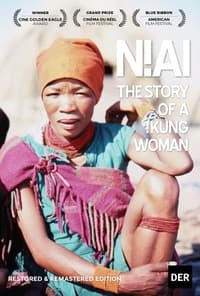
N!ai, The Story of a !Kung Woman (1981)
This film provides a broad overview of Ju/'hoan life, both past and present, and an intimate portrait of N!ai, a Ju/'hoan woman who in 1978 was in her mid-thirties. N!ai tells her own story, and in so doing, the story of Ju/'hoan life over a thirty year period. "Before the white people came we did what we wanted," N!ai recalls, describing the life she remembers as a child: following her mother to pick berries, roots, and nuts as the season changed; the division of giraffe meat; the kinds of rain; her resistance to her marriage to /Gunda at the age of eight; and her changing feelings about her husband when he becomes a healer. As N!ai speaks, the film presents scenes from the 1950's that show her as a young girl and a young wife. The uniqueness of N!ai may lie in its tight integration of ethnography and history. While it portrays the changes in Ju/'hoan society over thirty years, it never loses sight of the individual, N!ai.
poster
?
7.4
/23/
60
/1/

Cosas de mi vida (1976)
Strand spent over twenty years documenting her friend Anselmo Aguascalientes’ life, eventually creating a stunning trilogy of films—Anselmo, Cosas de mi vida, and Anselmo and the Women—tender portraits that are also glimpses into poverty, resourcefulness, perseverance and patriarchy.
poster
?
6.3
/19/
40
/1/

Color-Blind (2019)
A synaesthetic portrait made between French Polynesia and Brittany, Color-blind follows the restless ghost of Gauguin in excavating the colonial legacy of a post-postcolonial present.
poster
?
5.7
/32/
45
/5/
52
/6/

Three Lives (1971)
Photographed by an all-female crew and directed by the author of Sexual Politics, these are autobiographical interiews with three very different women who talk frankly about their lives, conflicts, and contrasting life styles.
poster
?

Theory of Happiness (2014)
Deep in the Ukrainian countryside, the filmmaker becomes a participant of a radical group trying to discover happiness through mathematical formulas. Can they succeed, or do dreams of utopia turn into a veritable nightmare?


mdblist.com © 2020 | Contact | Reddit | Discord | API | Privacy Policy