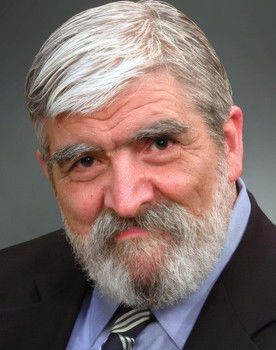
Daniel Nicholas Robinson
Director
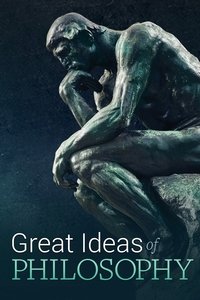
The Great Ideas of Philosophy, 2nd Edition (2004)
Lectures
These lectures offer a coherent and beautifully articulated introduction to the great philosophic conversation of the ages. They cover an enormous range of seminal thinkers and perspectives, but always from the vantage point of the enduring questions: What can we know? How ought we to act? How should we order our life together?
Released Jan. 1, 2004
Episode 30 min
None+
Genres: Documentary, Talk, Talk Show
Keywords: tmdb.philosophy
Watch Providers: The Great Courses Amazon Channel
Production Companies: The Teaching Company
Network: The Great Courses
Country: United States
Languages:
English
S1E1 - From the Upanishads to Homer
Before ancient Greek civilization, the world hosted deep insights into the human condition but offered little critical reflection. Homer planted the seeds of this reflection.
Jan. 1, 2004, midnight

S1E2 - Philosophy—Did the Greeks Invent It?
The ancient Greeks were the first to objectify the products of their own thought and feeling and be willing to subject both to critical scrutiny. Why?
Jan. 1, 2004, midnight
S1E3 - Pythagoras and the Divinity of Number
How can we comprehend the very integrity of the universe and our place within it, if not by way of the most abstract relations?
Jan. 1, 2004, midnight
S1E4 - What Is There?
How many kinds of stuff make up the cosmos? Might everything, in fact, be reducible to one kind of thing?
Jan. 1, 2004, midnight
S1E5 - The Greek Tragedians on Man’s Fate
The ancient philosophers were only part of the rich community of thought and wonder that surrounded the world's first great dramatists and their landmark depth psychologies.
Jan. 1, 2004, midnight
S1E6 - Herodotus and the Lamp of History
Can history actually teach us? Herodotus looked at what he took to be certain universal human aspirations and deficiencies and concluded that indeed history could.
Jan. 1, 2004, midnight
S1E7 - Socrates on the Examined Life
Rhetoric wins arguments, but it is philosophy that shows us the way to our humanity.
Jan. 1, 2004, midnight
S1E8 - Plato's Search For Truth
If one knows what one is looking for, why is a search necessary? And if one doesn't know, how is that search even possible? Socrates versus the Sophists.
Jan. 1, 2004, midnight
S1E9 - Can Virtue Be Taught?
If virtue can be taught, whose virtue will it be? A look at the Socratic recognition of multiculturalism and moral relativism.
Jan. 1, 2004, midnight
S1E10 - Plato's Republic—Man Writ Large
This most famous of Plato's dialogues begins with the metaphor—or perhaps the reality—of the polis (community) as the expanded version of the person, with the fate of each inextricably bound to that of the other.
Jan. 1, 2004, midnight
S1E11 - Hippocrates and the Science of Life
Hippocratic medicine did much to demystify the human condition and the natural factors that affect it.
Jan. 1, 2004, midnight
S1E12 - Aristotle on the Knowable
Smith knows that a particular triangle contains 180 degrees because he has measured it, while Jones knows it by definition. But do they know the same thing?
Jan. 1, 2004, midnight
S1E13 - Aristotle on Friendship
If true friendship is possible only between equals, how equal must they be—and with respect to what?
Jan. 1, 2004, midnight
S1E14 - Aristotle on the Perfect Life
What sort of life is right for humankind, and what is it about us that makes this so?
Jan. 1, 2004, midnight
S1E15 - Rome, the Stoics, and the Rule of Law
The Stoics found in language something that would separate humanity from the animate realm, and that gave Rome a philosophy to civilize the world.
Jan. 1, 2004, midnight
S1E16 - The Stoic Bridge to Christianity
The Jewish Christians, Hellenized or Orthodox, defended a monotheistic source of law.
Jan. 1, 2004, midnight
S1E17 - Roman Law—Making a City of the Once-Wide World
Roman development of law based on a conception of nature, and of human nature, is one of the signal achievements in the history of civilization.
Jan. 1, 2004, midnight
S1E18 - The Light Within—Augustine on Human Nature
Thoughts and ideas from the fathers of the early Christian Church culminated in St. Augustine, who explores humanity's capacity for good and evil.
Jan. 1, 2004, midnight
S1E19 - Islam
What did the Prophet teach that so moved the masses? And how did the Western world come to understand the threat embodied in these Eastern "heresies"?
Jan. 1, 2004, midnight
S1E20 - Secular Knowledge—The Idea of University
Apart from trade schools devoted to medicine and law, the university as we know it did not come into being until 12th-century Paris.
Jan. 1, 2004, midnight
S1E21 - The Reappearance of Experimental Science
There were really two great renaissances. The first occurred at Oxford in the 13th century: the recovery of experimental inquiry by Roger Bacon and others.
Jan. 1, 2004, midnight
S1E22 - Scholasticism and the Theory of Natural Law
Thomas Aquinas's treatises on law would stand for centuries as the foundation of critical inquiry in jurisprudence.
Jan. 1, 2004, midnight
S1E23 - The Renaissance—Was There One?
From Petrarch in the south to Erasmus in the north, Humanistic thought collided with those seeking to defend faith.
Jan. 1, 2004, midnight
S1E24 - Let Us Burn the Witches to Save Them
Even in the time we honor with the title of Renaissance ran an undercurrent of a heady and ominous mixture of natural magic, natural science, and cruel superstition.
Jan. 1, 2004, midnight
S1E25 - Francis Bacon and the Authority of Experience
Francis Bacon would come to be regarded as the prophet of Newton and originator of modern experimental science.
Jan. 1, 2004, midnight
S1E26 - Descartes and the Authority of Reason
Descartes is remembered for "I think, therefore I am." With his work, the authority of revelation, history, and title was replaced by the weight of reason itself.
Jan. 1, 2004, midnight
S1E27 - Newton—The Saint of Science
In the century after Newton's death, the Enlightenment's major architects of reform and revolution defended their ideas in terms of Newtonian science and its implications.
Jan. 1, 2004, midnight
S1E28 - Hobbes and the Social Machine
As the idea of social science gained force, Hobbes's controversial treatise helped to naturalize the civil realm, readying it for scientific explanation.
Jan. 1, 2004, midnight
S1E29 - Locke’s Newtonian Science of the Mind
If all of physical reality can be reduced to elementary corpuscular entities, is the mind nothing more than comparable elements held together by something akin to gravity?
Jan. 1, 2004, midnight
S1E30 - No matter? The Challenge of Materialism
When Berkeley reacted to Locke with an extravagant critique of materialism, he unwittingly reinforced claims of skeptics he meant to defeat.
Jan. 1, 2004, midnight
S1E31 - Hume and the Pursuit of Happiness
David Hume was perhaps the most influential philosopher to write in English, carrying empiricism to its logical end and thus grounding morality, truth, causation, and governance in experience.
Jan. 1, 2004, midnight
S1E32 - Thomas Reid and the Scottish School
Thomas Reid was Hume's most successful and influential critic, with a common sense psychology that was both naturalistic and compatible with religious teaching and which reached America's founders.
Jan. 1, 2004, midnight
S1E33 - France and the Philosophes
The leading French thinkers of the 18th century—Voltaire, Rousseau, Condorcet, and Diderot—appealed directly to the ordinary citizen, encouraging skepticism toward traditional authority.
Jan. 1, 2004, midnight
S1E34 - The Federalist Papers and the Great Experiment
The extraordinary documents written in support of the proposed constitution represent a profound legacy in political philosophy.
Jan. 1, 2004, midnight
S1E35 - What Is Enlightenment? Kant on Freedom
Here the limits of reason and the very framework of thought complete—and in another respect undermine—the very project of the Enlightenment.
Jan. 1, 2004, midnight
S1E36 - Moral Science and the Natural World
Kant traced the implications of a human life as lived in both the natural world of causality and the intelligible world of reason (where morality arises).
Jan. 1, 2004, midnight
S1E37 - Phrenology—A Science of the Mind
In founding the now-discredited theory of phrenology, Franz Gall nevertheless helped define today's brain sciences.
Jan. 1, 2004, midnight
S1E38 - The Idea of Freedom
The idea of freedom developed by Goethe, Schiller, and other romantic idealists forms a central chapter in the Long Debate over whether or not science has overstepped its bounds.
Jan. 1, 2004, midnight
S1E39 - The Hegelians and History
Hegel's Reason in History and other works inspired a transcendentalist movement that spanned Europe, Great Britain, and the United States.
Jan. 1, 2004, midnight
S1E40 - The Aesthetic Movement—Genius
By the second half of the 19th century, the House of Intellect was divided between two competing perspectives: the growing aesthetic concept of reality and the narrowing scientific view.
Jan. 1, 2004, midnight
S1E41 - Nietzsche at the Twilight
A student of the classics, Nietzsche came to regard the human condition as fatally tied to needs and motives that operate at the most powerful levels of existence.
Jan. 1, 2004, midnight
S1E42 - The Liberal Tradition—J. S. Mill
When can the state or the majority legitimately exercise power over the actions of individuals? The modern liberal answer is set forth in the work of Mill, an almost unchallenged authority for more than a century.
Jan. 1, 2004, midnight
S1E43 - Darwin and Nature’s “Purposes”
From social Darwinism to sociobiology, the evolutionary science of the late 18th and 19th centuries dominates social thought and political initiatives.
Jan. 1, 2004, midnight
S1E44 - Marxism—Dead But Not Forgotten
After years of influence, the Marxist critique of society is now more a subtext than a guiding bible of reform.
Jan. 1, 2004, midnight
S1E45 - The Freudian World
Marx, Darwin, and Freud are the chief 19th-century architects of modern thought about society and self—each was nominally "scientific" in approach and believed their theories to be grounded in the realm of observable facts.
Jan. 1, 2004, midnight
S1E46 - The Radical William James
Mortally opposed to all "block universes" of certainty and theoretical hubris, James offered a quintessentially home-grown psychology of experience.
Jan. 1, 2004, midnight
S1E47 - William James's Pragmatism
Working in the realm of common sense, James directed the attention of philosophy and science to that ultimate arena of confirmation in which our deepest and most enduring interests are found.
Jan. 1, 2004, midnight
S1E48 - Wittgenstein and the Discursive Turn
Meaning arises from conventions that presuppose not only a social world but a world in which we share the interests and aspirations of others.
Jan. 1, 2004, midnight
S1E49 - Alan Turing in the Forest of Wisdom
Turing is famous for breaking Germany's famed World War II Enigma code, but, as a founder of modern computational science, he also wrote influentially about the possibilities of breaking the mind's code.
Jan. 1, 2004, midnight
S1E50 - Four Theories of the Good Life
The contemplative. The active. The fatalistic. The hedonistic. There are good but limited arguments for each of these.
Jan. 1, 2004, midnight
S1E51 - Ontology—What There "Really" Is
From the Greek ontos, there is a branch of metaphysics referred to as ontology, devoted to the question of "real being." Ontological controversies have broad ethical and social implications.
Jan. 1, 2004, midnight
S1E52 - Philosophy of Science—The Last Word?
Should fundamental questions, if they are to be answered with precision and objectivity, be answered by science? We consider Thomas Kuhn's influential treatise on scientific revolutions.
Jan. 1, 2004, midnight
S1E53 - Philosophy of Psychology and Related Confusions
Psychology is a subject of many and varied interests but narrow modes of inquiry. Today cognitive neuroscience is the dominant approach, but other schools have reappeared.
Jan. 1, 2004, midnight
S1E54 - Philosophy of Mind, If There Is One
The principal grounds of disagreement within the wide-ranging subject of philosophy of mind center on whether the right framework for considering issues is provided by developed sciences or humanistic frameworks.
Jan. 1, 2004, midnight
S1E55 - What makes a Problem “Moral”
Is there a “moral reality”? We examine especially David Hume’s rejection of the idea that there is anything “moral” in the external world.
Jan. 1, 2004, midnight
S1E56 - Medicine and the Value of Life
What guidance does moral philosophy provide in the domain of medicine, where life-and-death decisions are made daily?
Jan. 1, 2004, midnight
S1E57 - On the Nature of Law
Philosophy of law is an ancient subject, developed by Aristotle and elaborated by Cicero. We see how natural law theory has evolved through the Enlightenment and the writings of Jeremy Bentham and John Austin.
Jan. 1, 2004, midnight
S1E58 - Justice and Just Wars
Theories of the “just war,” beginning with St. Augustine and including St. Thomas Aquinas, Francisco de Vittoria, and Francisco Suarez, set forth principles by which engaging in and conducting war are justified.
Jan. 1, 2004, midnight
S1E59 - Aesthetics—Beauty Without Observers
The subject of beauty is among the oldest in philosophy, treated at length in several of the dialogues of Plato and in his Symposium, and redefined through history. What is beauty? Is there anything “rational” about it?
Jan. 1, 2004, midnight
S1E60 - God—Really?
We consider various theological arguments for and against belief in God, including those of Thomas Aquinas, Thomas Reid, and William James.
Jan. 1, 2004, midnight
Network: The Great Courses
Episode Runtime: 30 min.
Season Runtime: 30 min.
Released: Jan. 1, 2004
Last Air Date: Jan. 1, 2004, midnight
Status: Ended
Certification: NR
Rate this show
Add {Movie} to static lists