
Lucie Green
The Sky at Night (1957)
1972
Your monthly journey through the fascinating world of space and astronomy with the latest thinking on what's out there in space and what you can see in the night sky.
Released April 24, 1957
Episode 30 min
2+
Genres: Documentary, News
Keywords: tmdb.universe, mdblist.has-trailer, imdb.observation, imdb.discussion, imdb.space-exploration, imdb.science, imdb.interview
Network: BBC Four
Country: United Kingdom
Languages:
English



S16E1 - The Great Bear
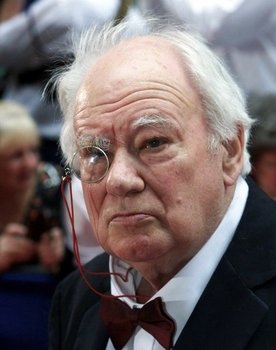
The Great Bear is the most familiar and conspicuous star-pattern in the night sky all the year round: but it is not exactly what it seems. Patrick Moore explains that, although its seven stars look close together, some are further from each other than they are from Earth.
Jan. 5, 1972, midnight
S16E2 - X-Ray Stars
The first X-ray source far out in space was detected nine years ago. Since then, 100 more have been found. But what are they? Patrick Moore talks to Professor Peter Willmore and Dr Kenneth Pounds about a recent successful British experiment to track down one of these mysterious sources by using rockets.
Feb. 2, 1972, midnight
S16E3 - Mars - A Dynamic World
Mars could have water and life. This is the astonishing information now coming back from the Mariner 9 orbiting probe.
Patrick Moore discusses the evidence in the latest photographs with a geologist, Dr Peter Cattermole, and explains the significance of these revelations.
Have you a question about astronomy you would like to ask Patrick Moore? In the next Sky at Night on 27 March he will answer as many as he can in the time available. Send your questions - on a postcard - to: The Sky at Night, [Address removed]. Sorry, Patrick Moore cannot reply to questions not included in the programme.
March 1, 1972, midnight
S16E4 - What Do You Want to Know?
What is a neutron star? a quasar? a pulsar? a black hole in space? Patrick Moore answers your questions.
March 27, 1972, midnight
S16E5 - Fifteenth Anniversary
The Sky at Night with Patrick Moore started on 24 April 1957. In tonight's special edition, Patrick Moore looks back, with Commander Henry Hatfield, at the astonishing changes and advances in astronomical knowledge since 1957. He discusses recent developments in 'invisible astronomy' with Professor Anthony Hewish, whose team discovered the first pulsar, and with infra-red astronomer Professor Jim Ring. Finally, he looks forward to the discoveries we can expect in the next 15 years.
April 12, 1972, midnight
S16E6 - The Tenth Planet?
Patrick Moore explains why Planet X has been so difficult to detect, and what kind of place this dim, cold world at the limits of our solar system would be.
May 24, 1972, midnight
S16E7 - Midsummer and Megaliths
How much did our prehistoric ancestors know about the movements of the sun and moon? Patrick Moore is at Stonehenge to watch the midsummer sun rise over the Heel Stone, and to discuss with Professor Gerald Hawkins the evidence that ancient monuments were built as observatories or eclipse computers.
June 21, 1972, midnight
S16E8 - Jupiter - The Colossal Planet
An unmanned spacecraft, Pioneer F, is on its way to Jupiter, the largest planet in our system and one of the most mysterious. Patrick Moore explains why Jupiter puzzles astronomers, and what sort of picture of the giant planet we expect Pioneer F to send back.
July 19, 1972, midnight
S16E9 - The Andromeda Galaxy
The Great Spiral in Andromeda is one of the most spectacular objects known to astronomers. Patrick Moore describes our nearest galactic neighbour and other galaxies in our 'local group.'
Aug. 16, 1972, midnight
S16E10 - An Exploded Planet?
There may once have been in the solar system an extra planet, destroyed in the remote past and producing the fragments we now know as asteroids. Patrick Moore talks about the 'missing' planet and its possible connection with the numerical relationship known as Bode's Law, which has puzzled astronomers for generations.
Sept. 18, 1972, midnight
S16E11 - Mars
New information about Mars is being received from the American space-probe Mariner 9. Patrick Moore and Arthur Cross talk about what this means, and show some of the new charts of the crater-scarred Martian surface.
Oct. 2, 1972, midnight
S16E12 - Collapsing Stars
Are there such things as 'black holes in space' - old stars which have collapsed in on themselves and lost their light? Patrick Moore discusses with Professor Samuel Tolansky, FRS, the possible existence of 'collapsars,' and the problems it would help to solve.
Oct. 30, 1972, midnight
S16E13 - Tycho's Star
Four hundred years ago this month, the famous astronomer Tycho Brahe saw a brilliant new star blaze overhead near the 'W' of Cassiopeia. This was a supernova, one of only three in recorded history. Patrick Moore talks about these dramatic stellar explosions.
Dec. 4, 1972, midnight
Watch Trailer
BBC Four
30 min/ep
25752 min
April 24, 1957
Nov. 10, 2025, midnight
Returning Series
TV-G / 2+
Rate this show
Add {Movie} to static lists