
Lucie Green
The Sky at Night (1957)
1974
Your monthly journey through the fascinating world of space and astronomy with the latest thinking on what's out there in space and what you can see in the night sky.
Released April 24, 1957
Episode 30 min
2+
Genres: Documentary, News
Keywords: tmdb.universe, mdblist.has-trailer, imdb.observation, imdb.discussion, imdb.space-exploration, imdb.science, imdb.interview
Network: BBC Four
Country: United Kingdom
Languages:
English



S18E1 - Positional Astronomy
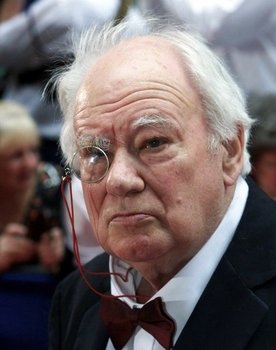
Patrick Moore talks about what is on view in the night sky now, and discusses with Gilbert Satter thwaite the important subject of positional astronomy - the exact measurements and movements of celestial objects.
Jan. 27, 1974, midnight
S18E2 - Saturn - The Ringed Planet
Saturn is now very well placed in the evening sky, and a small telescope will show its ring system as well as some of the moons. Patrick Moore and Dr Garry Hunt examine the recent results showing that its largest satellite, Titan, has a thick atmosphere, and discuss the Saturn space-probe now being planned.
Feb. 17, 1974, midnight
S18E3 - The Milky Way
The Milky Way, made up of countless faint stars, can easily be seen in the evening sky this month. Tonight Patrick Moore describes this luminous band which stretches from one horizon to the other, and explains how it forms part of the huge Galaxy of stars in which we live.
The latest news will also be given of Mariner 10, the space probe now nearing Mercury, which on 29 March should send back the first close-range pictures of the planet's surface.
March 20, 1974, midnight
S18E4 - Life in the Universe
How strong is the possibility of life existing in other worlds in our galaxy and elsewhere in the universe, and if it does, where is the nearest life likely to be and how could we communicate with it? Patrick Moore discusses this with Professor Carl Sagan , director of planetary studies at Cornell University in New York.
May 15, 1974, midnight
S18E5 - The Daylight Star
The Sun is the only star near enough for us to study in detail. Patrick Moore discusses with Dr Ron Maddison the mysterious cycles of activity which cause spots and vast looped prominences to appear on the sun's surface.
June 12, 1974, midnight
S18E6 - The Heart of the Scorpion
Patrick Moore describes the Red Giant star, Antares, in the constellation of Scorpio. It is now visible above the southern horizon; and although it looks like a dot, it is bigger than the orbit of the Earth round the Sun.
July 10, 1974, midnight
S18E7 - Shooting Stars
At this time of the year shooting stars can be seen in profusion, for we are in the middle of the year's richest meteor-shower - The Perseids.
Tonight Patrick Moore discusses these spectacular objects and how they occur. He also hopes to show photographs which viewers were invited to send.
Aug. 7, 1974, midnight
S18E8 - Choosing a Telescope
What can you see in the night sky with binoculars, or with a small telescope - and how much money must you spend if you need adequate equipment for 'the amateur astronomer'? Patrick Moore shows examples of telescopes, and explains what can be seen with each of them.
Sept. 4, 1974, midnight
S18E9 - Lord Rosse's Great Telescope
A century ago, the most powerful telescope in the world was the great 72-inch reflector at Birr Castle in Eire, with which its builder, the 3rd Earl of Rosse, discovered the spiral galaxies. Patrick Moore visits Birr, and talks to the present Earl and Countess of Rosse about the past and future of the great telescope.
Oct. 2, 1974, midnight
S18E10 - The Changing Force of Gravity
Has gravity always been the same? There have been suggestions that the force of gravity today is weaker than it used to be. Patrick Moore and Colin Ronan discuss this fascinating theory and try to decide whether we are all getting lighter.
Oct. 30, 1974, midnight
S18E11 - Eros - Wanderer in Space
This winter the minor planet Eros is due to approach the Earth as closely as it will ever do. Patrick Moore talks with Gordon Taylor of the Royal Greenwich Observatory.
Nov. 26, 1974, midnight
S18E12 - The Year of the Planets
During 1974 there have been some important and spectacular space missions. In the spring Mariner 10 sent back the first close-range pictures of cloud-covered Venus and crater-scarred Mercury. Then, early in December, Pioneer II made a close rendezvous with Jupiter, the only planet known to have a tremendously powerful magnetic field. Pioneer will now travel on to Saturn, which it should reach in 1979. All these probes have given us vital new information about the Solar System. Patrick Moore discusses with Dr Garry Hunt the most important results of the Year of the Planets.
Dec. 18, 1974, midnight
Watch Trailer
BBC Four
30 min/ep
25752 min
April 24, 1957
Nov. 10, 2025, midnight
Returning Series
TV-G / 2+
Rate this show
Add {Movie} to static lists