
Michael Jorgensen
Director
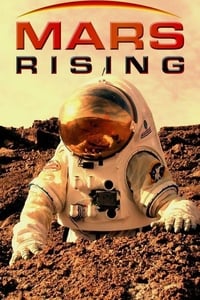
Mars Rising (2007)
Season 1
Taking a look at how challenges are being handled to prepare for a manned flight to Mars.
Released Oct. 7, 2007
Episode 120 min
10+
Genres: Documentary, Talk
Keywords: tmdb.planet-mars, tmdb.miniseries, mdblist.has-trailer
Watch Providers: Tubi TV, The Roku Channel, Pluto TV, Amazon Prime Video Free with Ads
Network: Discovery

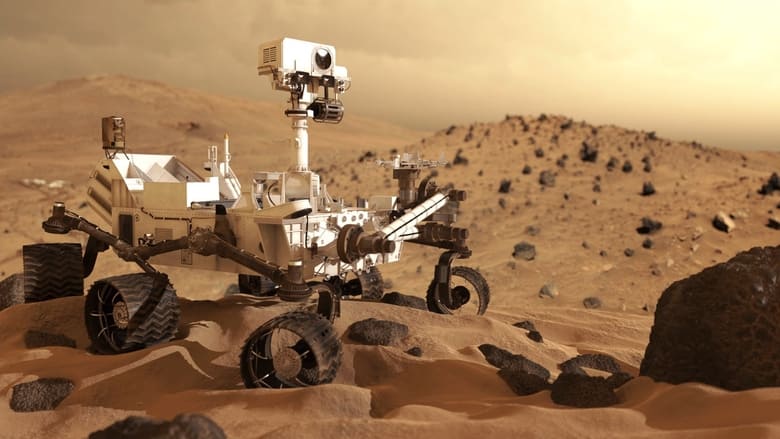
S1E1 - Journey to the Red Planet
Written and Directed by Michael Jorgensen
Dr. Paul Delaney, Professor Physics and Astronomy at Toronto’s York University; and Dr. James Garvin, Lead Scientist for Mars and Lunar Exploration at NASA, guide us though the primary challenges.
International co-operation is key
Leonid Gorshkov of Russia’s Energia Space Agency proudly shows a mock-up of the world’s first manned interplanetary spacecraft, Klipper. After 40 years of building and launching the Mir space station, the Russians have invaluable experience in deep space.
It will take at least six months to travel the 56-million kilometres to Mars. The window for a safe return trip might take 1½ years to open. The European Space Agency is tasked with finding the best trajectory for the mission.
The effects of zero gravity can lead to dramatic loss of body strength and bone mass. Radiation may prove deadly. Scientists are developing space suits that are both protective and flexible. They are also puzzling over how best to
Oct. 7, 2007, midnight
S1E2 - Rocket Power
None
Oct. 7, 2007, midnight
S1E3 - Staying Alive
Preparing and protecting the human body in deep space may be a greater challenge than all the technological factors in planning a mission to Mars.
Living together in a confined environment for up to three years, the six astronauts will become each others’ caregivers. They will face zero gravity with its debilitating effect on muscle and bone mass; solar storms; inescapable cosmic radiation – microscopic particles piercing the skin of the spacecraft and penetrating the bodies of those inside can cause brain damage and cancer.
Retired U.S. astronaut and medical doctor Jerry Linenger describes the loss of 65 per cent of his muscle power. For Massachusetts Institute of Technology professor and retired astronaut Jeffrey Hoffman, cosmic radiation felt like “fireworks in my brain.” The intensity of cosmic rays experienced by astronauts on the Mars mission will be greater than that experienced by earlier astronauts and could damage their learning and memory – vital on the journey to Mars.
Oct. 14, 2007, midnight
S1E4 - The Human Factor
The greatest test of the human mind will be the projected almost three-year manned mission to Mars and back. Mental breakdown, sexual tension, near-suicide and mutiny have already taken place on shorter Earth orbit and space travel missions. The Achilles’ heel of the Mars mission may be the human factor.
Crew selection is perhaps the most critical of choices. At the start of space exploration, NASA selected military test pilots for missions – in the 1960s, one died per week. In the 1980s, scientists and schoolteachers were chosen to orbit Earth. Today, psychiatrists delve into the human psyche to discover the necessary attributes for a successful 21st century astronaut.
The Russians have the most experience in long missions. They test candidates by keeping them isolated and awake for days of non-stop repetitive tasks to duplicate the numbing mindless routine of months of space travel.
Life onboard will be crowded, noisy and dirty. There will be no water for showering and astr
Oct. 14, 2007, midnight
S1E5 - Six Minutes of Terror
The most perilous part of the journey to the Red Planet is the six minutes it will take to travel from the top of the Mars atmosphere to its surface – the six minutes of terror.
Landing on Mars is a complex three-step process: entry, descent and landing. Entry into Mars’ atmosphere begins 125 kms above the surface and lasts about two minutes, with the spacecraft hurtling towards Mars at about 16,000 kms an hour. Only a specially designed inflatable aeroshell outside the Mars Lander will protect the capsule and its occupants from a friction created temperature of 4,000 Celsius. The heat shield must also act as a brake.
NASA Chief Engineer Rob Manning explains the particular problem of Mars – it does not have enough atmosphere for a spaceship to emulate a landing on Earth – and yet it has too much atmosphere to simulate a moon landing.
Within the first two minutes of descent, the heat shield will reduce the craft’s kinetic energy by 90 per cent, and, typically, a parachute syste
Oct. 21, 2007, midnight
S1E6 - Search for Life
The journey to Mars and the search for life on another planet is the most dangerous and compelling mission in the history of space exploration. Bacteria are the most basic and the hardiest life form. And, either still living or now dead, bacteria are one of the things astronauts will be looking for on the Red Planet.
In preparation for the challenges of Mars, scientists are searching for bacteria in the driest and most barren places on Earth. The temperature, valley networks and well-preserved large-impact craters on Devon Island in Canada’s Arctic echo those on Mars. And, 90 per cent of the rocks on Devon Island have bacteria growing on their underside.
Canadian scientist Darlene Lim, a member of the NASA Haughton Mars Project Team, explains her contention that the most primitive forms of life to be discovered on Mars might be carbonate formations similar to those in British Columbia’s Pavilion Lake.
Chile’s Atacama Desert has had little rain in the last 10 million years mak
Oct. 21, 2007, midnight
Watch Trailer
Discovery
120 min/ep
720 min
Oct. 7, 2007
Oct. 21, 2007, midnight
Ended
NR / 10+
Action
Action
Rate this show
Add {Movie} to static lists