
Tutankhamun's Egypt (1972)
Season 1
Documentary series written by Cyril Aldred exploring the mysterious and remote culture during the time of Tutankhamun, Egypt's boy king.
Released April 2, 1972
Episode 19 min
None+
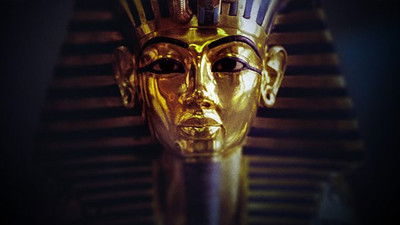
S1E1 - The Pharaoh
From the British Museum's 1972 Tutankhamun exhibition, Cyril Aldred introduces a programme on the role of the pharaoh, one of the most distinctive aspects of ancient Egyptian civilisation.
April 2, 1972, midnight
S1E2 - The Land
Cyril Aldred explores how all the striking achievements of the ancient Egyptians were based upon the farming of the narrow zone of fertile land along the banks of the Nile.
April 9, 1972, midnight
S1E3 - The Nile Fleet
In 1954, road clearing around the Great Pyramid of Gizeh revealed the incredibly well-preserved remains of the royal ship of Cheops. Now almost completely restored, it is the oldest surviving ship in the world. Its construction proves that a nation which was built round the Nile had to be a nation of sailors. Introduced by Cyril Aldred
April 16, 1972, midnight
S1E4 - The Temple
Along the banks of the Nile stand some of the most spectacular buildings in the world - the temples of ancient Egypt. The great gateway of the temple at Edfu is higher and wider than the facade of St Paul's Cathedral, and at Karnac, man is dwarfed by the forest of vast columns in the main hall. Introduced by Cyril Aldred from the 1972 Tutankhamun Exhibition at the British Museum.
April 23, 1972, midnight
S1E5 - Death and Burial
Mummies are the best-known relics of the ancient Egyptian civilisation. Together with the elaborate tombs of the pharaohs, they have created the impression that the Egyptians were a death-centred people with a very materialistic view of the after-life. In fact, their beliefs varied from age to age and from class to class within their society, and they were never really as sure about the next world as their monuments would have us believe. Introduced by Cyril Aldred from the 1972 Tutankhamun Exhibition at the British Museum.
April 30, 1972, midnight
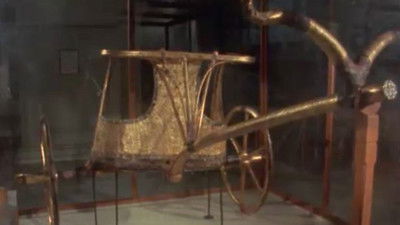
S1E6 - The Warrior Pharaohs
When the horse-drawn chariot was introduced in the 18th century BC, it created a larger revolution in warfare than did the invention of the tank in our day. Not only was a formidable armoured weapon introduced into battle, but it also caused great social changes. The pharaoh himself now took to the field at the head of his armies - composed henceforth of professionals, as distinct from conscripted peasants. Introduced by Cyril Aldred from the Tutankhamun Exhibition at the British Museum.
May 7, 1972, midnight
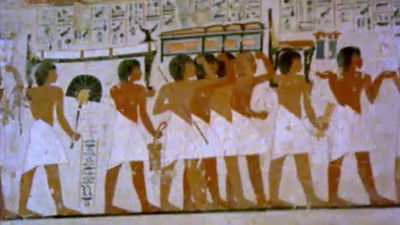
S1E7 - The King's Councillors
It was the officials of the palace, a sort of privy council, who helped the pharaoh to govern. They controlled the revenue of the land, the growing of food and the raising of herds. Many were practical experts who supervised the building of irrigation canals and the construction of temples, tombs and pyramids. Introduced by Cyril Aldred from the Tutankhamun Exhibition at the British Museum.
May 14, 1972, midnight
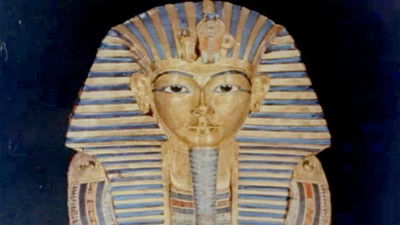
S1E8 - The Scribes
Hieroglyphs are among the most easily recognisable features of ancient Egyptian culture. With their eyes, hands, animal figures and so on, they are probably the most beautiful form of writing ever invented. But most of the time, the ancient Egyptian scribes put their hieroglyphs and other scripts derived from them to very businesslike purposes. On their papyrus writing paper, they amassed a formidable volume of records, accounts, calculations and book-keeping. The scribes were the essential administrative backbone of a highly organised state machine. Introduced by Cyril Aldred from the Tutankhamun Exhibition at the British Museum
May 21, 1972, midnight
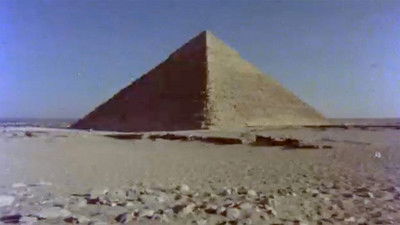
S1E9 - Science and Technology
The ancient Egyptians did not have any science in the modern sense. Though they had some knowledge of mathematics and chemistry, their technical talents really lay in building on an enormous scale. Some of their achievements in this field would still pose problems for us even today, and sometimes we still do not know quite how they went about things. But we do know how they carved out the great obelisks like Cleopatra's Needle and set them up miles away from their quarries, using only the simplest of resources and a lot of ingenuity. Introduced by Cyril Aldred from the Tutankhamun Exhibition at the British Museum.
May 28, 1972, midnight
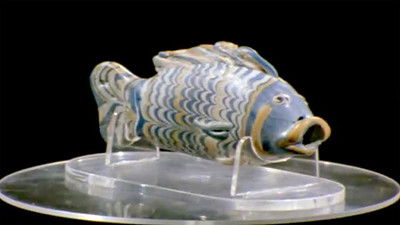
S1E10 - Art and Artisans
From the famous 1972 Tutankhamun Exhibition at the British Museum, Cyril Aldred explores the role of artists in ancient Egypt, noting that they were considered primarily as craftsmen.
June 4, 1972, midnight
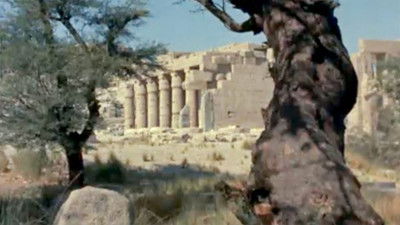
S1E11 - War and Trade
Cyril Aldred explores how important the army had become in New Kingdom times - Tutankhamun's two immediate successors on the throne of Egypt were both generals.
June 11, 1972, midnight
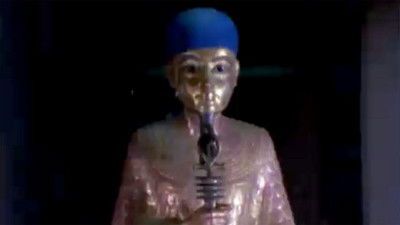
S1E12 - World of the Gods
Cyril Aldred explores the strange and exotic religion of the ancient Egyptians. Many of the numerous Egyptian gods took animal forms, and the stories created about them are even more fantastic.
June 18, 1972, midnight
S1E13 - The Life and Times of Tutankhamun
The final programme of the series looks at Tutankhamun himself. Although the discovery of his treasure-filled tomb made this king world-famous, the details of his life are harder to make out.
June 25, 1972, midnight
Episode Runtime: 19 min.
Season Runtime: 247 min.
Released: April 2, 1972
Last Air Date: June 25, 1972, midnight
Status: Ended
Certification: NR
Rate this show
Add {Movie} to static lists