
Mike Gunton
Director
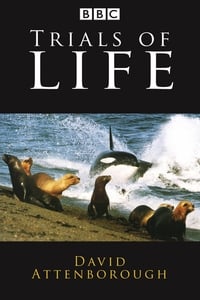
Trials of Life (1990)
Season 1
Each of the twelve 50-minute episodes features a different aspect of the journey through life, from birth to adulthood and continuation of the species through reproduction.
Released Oct. 4, 1990
Episode 50 min
2+
Genres: Documentary, Family
Keywords: tmdb.nature, tmdb.nature-documentary, mdblist.imdb-tv-mini-series, mdblist.ext.2k-blu-ray, imdb.tv-mini-series, imdb.nature-documentary, imdb.nature + 5 more, imdb.bbc, imdb.david-attenborough, tmdb.animals, tmdb.wildlife, tmdb.animal-behaviour
Watch Providers: BritBox, Britbox Apple TV Channel , BBC Select Apple Tv channel
Production Companies: BBC Natural History Unit
Network: BBC One
Country: United Kingdom
Languages:
English
 6.0
6.0
S1E1 - Arriving
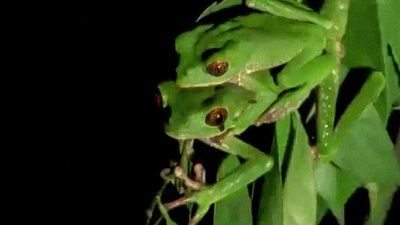
The first episode examines the various methods by which creatures come into the world. Attenborough’s opening statement alludes to the annual spawning of the Christmas Island red crab, of which there are estimated to be some 120 million. The exercise is all the more hazardous since the species is a land crab, and the eggs have to be deposited in the sea - where the most ancient animals on the planet still live and breed. One of the most prolific aquatic egg producers is the giant clam, but some land animals also lay vast quantities, and the mantis is one example. In the Western United States, Attenborough observes a wasp that digs a burrow, conceals it, and stocks it with fresh caterpillars for her emerging young. The grubs of another start life inside caterpillars, and eat the unsuspecting hosts. The problems of larger animals are illustrated by snow geese in the Arctic, which have to defend their eggs from arctic foxes. The process of embryonic growth inside the egg, from laying to h
Oct. 4, 1990, midnight
 6.0
6.0
S1E2 - Growing Up
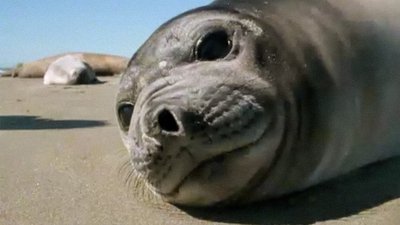
This programme describes the ways that various species care for their young. Attenborough defines childhood as achieving two tasks: growing and surviving. He highlights the elephant seal as an animal that experiences a compressed childhood, being abandoned after three weeks and left for up to another eight alone, while it becomes large enough to be able to swim. For terns, there is safety in numbers as the dense population works together to drive out marauding gulls. The snow geese in the Russian arctic show intense devotion as they escort their goslings by foot to the coast some 50 kilometres away. Scorpions carry their young on their backs, while a shrew will leave hers under a stone while she goes to feed. The eider duck is one creature that shares responsibility for its offspring: females regularly supervise the ducklings of others in a group. The mara is another that uses a crèche system, as does the bat, whose nurseries can be up to a million strong. The Florida scrub jay has dev
Oct. 11, 1990, midnight
 6.0
6.0
S1E3 - Finding Food
The next installment is devoted to the ways in which animals gather their sustenance. Attenborough begins in the South American rainforest, where the proliferation of animal and plant life does not necessarily make it easy to find food. Some leaves are poisonous, and so those that eat them have to be careful. Other plants use food (or nectar) as a bribe to get their pollen transported, and several species of hummingbird have developed exclusive relationships with certain of them. Fruit is also on offer, again as a means of reproduction, and creatures such as squirrel monkeys eat little else. Meanwhile, parrots and macaws take kaolin as an antidote to their diet of toxic seeds. Attenborough witnesses a 60,000 strong flock of knot and dunlin suddenly take advantage of a low tide to feed on tiny mud-dwelling molluscs. Barracuda hunt small fish, and drive shoals of them into bays to be eaten by pelicans, which are besieged by gulls that attempt to steal their catches. One species of gecko
Oct. 18, 1990, midnight
 6.0
6.0
S1E4 - Hunting and Escaping
This episode looks at those that hunt other creatures and ways of avoiding capture. Attenborough is attacked by a pair of skuas as he approaches their nest, which demonstrates this particular bird's aggressive behaviour, both when taking food and defending its young. Off the shores of Patagonia, the same group of killer whales returns each year to ambush sea lion pups, which stray out of the safer shallow waters. Having grabbed their prey, they take it back out to sea and 'play' with it for some time before killing it. Poison can be used both as a weapon and a deterrent, such as by the viper and tomato frog respectively. Some animals advertise their defensive measures in advance, in case deployment occurs too late. Among them are the skunk, which discharges an appalling smell, and some salamanders that display their toxicity by remaining stationary, with their warning markings visible. Several species of stick insect and their elaborate camouflage are shown. However, none of these meth
Oct. 25, 1990, midnight
 6.0
6.0
S1E5 - Finding the Way
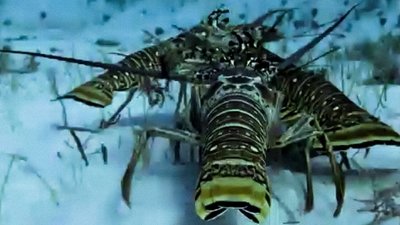
This programme explores forms of navigation. Attenborough starts in Africa at dusk, by describing some of the species that don't rely on sight. The spotted hyena uses its acute sense of smell to guide it while it hunts nocturnally, while galagos urinate on their hands so they can completely mark their movements. Some animals use echolocation and these include swiftlets, bats and river dolphins. By contrast, electric eels use fields of electricity to sense their environment. During the hours of daylight, other methods are employed: the rufous elephant shrew, with its carefully cleared network of pathways, has a sharp mental picture of its habitat - even knowing the various shortcuts with which to evade capture. Attenborough visits the Sahara to illustrate a species that makes the longest overland journey of any insect: cataglyphis, an ant that uses the sun's position to enable it to return to its nest in a straight line. Lobsters in the Bahamas are shown marching in columns to escape st
Nov. 1, 1990, midnight
 8.0
8.0
S1E6 - Home Making
This installment deals with how animals construct their shelters from the elements and predators. Burrows and holes can provide considerable refuge, and Attenborough inspects the home of the American prairie dog, an elaborate construction that has its own air conditioning system. Silk is such a valuable commodity that those that can't make it steal it instead. The hermit hummingbird uses it to attach its nest to the underside of a leaf, while the Indian tailorbird stitches two leaves together. However, the expert in complex nest-building is the weaverbird which makes its abode from over 1,000 strips of grass that are perfectly interwoven - and dismantling it if it fails to attract a mate. The beaver is responsible for one of the biggest animal dwellings: its wooden lodge that rises from the river bed stays in place from one generation to the next, and so requires constant maintenance. Some stingless bees use their wax and the resin of tree bark to create labyrinthine structures contain
Nov. 8, 1990, midnight
 8.0
8.0
S1E7 - Living Together
This episode focuses on those species that co-operate and depend on (or exploit) others. Spotted deer follow langur monkeys as they travel from tree to tree, eating any leaves that get dropped from above. In return, the deer serve as a lookout when the primates are feeding on the ground. Underwater, a hermit crab is shown adding sea anemones to its shell in order to protect itself from attack by an octopus, and a goby assists a virtually blind shrimp. Fleas, lice and mites are parasites: they share no mutual partnership and instead take advantage of creatures for food or shelter. However, parasites have their predators, and an example are the finches of the Galápagos Islands that clear the resident giant tortoises of their ticks, and oxpeckers, which do the same for giraffes in Africa (and even use its fur to line their nests). Some fish regularly clean others, and wrasse and shrimp appear to specialise in this regard, as do remora, which permanently hang on to their hosts. One parasit
Nov. 15, 1990, midnight
 6.0
6.0
S1E8 - Fighting
This programme details how fighting - both physical and psychological - is used for food, land or to gain a mate. Territorial conflict is demonstrated by the hummingbird, and Attenborough illustrates its aggressiveness by placing a stuffed specimen nearby, only to have it speared by its opponent's bill. The midas cichlid on the other hand, has no weapons to speak of, and so uses its mouth to hold on for trials of strength. By contrast, the forelegs of a mantis shrimp are powerful enough to crack the shell of another crustacean: therefore disputes or courtship are fraught with danger. Animals that possess lethal food-gathering weapons usually don't use them against one another, as neither side wishes to risk death. For example, one venomous snake will aim to floor the other, rather than bite. Wolves and big cats largely use snarls and body posture to convey their threat. There are no holds barred between rival zebras: kicking and biting is employed until a victor emerges, whereas giraff
Nov. 22, 1990, midnight
 6.0
6.0
S1E9 - Friends and Rivals
This installment investigates the ways in which those animals that live in social groups interact with each other. The solitary eagle is contrasted with whooper swans landing in Scotland after a 1,600-kilometre journey from Iceland. Once arrived, they must battle for territory with those already there, and pairs or families are usually victorious. Attenborough uses a group of farmyard chickens to demonstrate a pecking order. A pride of lions is shown co-operating to subdue a buffalo. Afterwards, each animal peacefully awaits its turn at the carcass. Baboons live in troops of up to 150, and their complex dominance hierarchy is examined in detail. Vampire bats display mutual assistance by regurgitating blood for any neighbour that has missed out on a night's feeding. Dwarf mongooses live in family groups of around a dozen. While some look for food or sleep, others are always posted on the lookout for predators and quickly raise the alarm if necessary. Meanwhile, some of the most extreme
Nov. 29, 1990, midnight
 6.0
6.0
S1E10 - Talking to Strangers
This episode concentrates on communication. In Kenya, Attenborough accompanies a tribesman who calls to a honeyguide, which in turn answers him and leads the pair to a bees' nest. The tribesman extracts the honey, and some is left to reward the bird. African hunting dogs are shown hunting gazelles, of which the target is the individual that leaps lowest. Larks evade merlin by sending a similar message: by continuing to sing while being chased, it tells the pursuer that its prey is fit and therefore will be difficult to catch. (In 80% of cases this turns out to be true.) Vervet monkeys' cries are among the most complex. Their utterances are effectively words: a vocabulary that defines each of their predators, so an alarm call is specific to a particular threat. Some creatures transmit their presence by display, and Attenborough observes thousands of fireflies illuminating the darkness. Sounds travel further underwater, and over 200 species of fish use them to communicate. In turn, sea l
Dec. 6, 1990, midnight
 6.0
6.0
S1E11 - Courting
This programme surveys the methods employed in attracting a mate, mainly those of birds. The Indian florican inhabits long grass, and so is difficult to see. In order to gain attention, it 'trampolines' in the same spot for up to 400 times a day. Whales sing to their prospective partners, and the female's calls can be heard by suitors for over eight kilometres. When animals send out signals of attraction, they must also ensure that they don't entice the wrong species, and so have markings that differ prominently. Attenborough highlights the booby as an example: there are around half a dozen species, all of which may occupy the same island. However, the blue-footed booby reassures its chosen mate by continually lifting its feet. Tropicbirds and marsh harriers are shown providing graceful aerobatic displays, while the sac-winged bat uses a strong perfume to lure a companion. Among those birds that produce the most spectacular visual displays are the lyrebird (which also has an elaborate
Dec. 13, 1990, midnight
 6.0
6.0
S1E12 - Continuing the Line
The final installment illustrates how species fulfill their ultimate raison d'être and ensure that their genes are passed on to the next generation. It is a universal problem, but one which has given rise to a variety of solutions. Barnacles cannot move, but each has both male and female sex cells, allowing each neighbour to be a potential mate. On the other end of the scale, a female elephant undergoes a long pregnancy - 22 months - and so wishes to ensure that her calf is fathered by a strong and proven male. She is therefore very choosy about her partner. A female chinchilla is even more so, and rejects an unwanted suitor by squirting urine in its face. Mating is a dangerous business when weapons are involved, and a male tarantula approaches his intended with trepidation. Only when he succeeds in holding off her poison fangs is he able to progress any further. For some, the right moments to get together are few and far between: a male crab, for example, must wait until a female moul
Dec. 20, 1990, midnight
BBC One
50 min/ep
600 min
Oct. 4, 1990
Dec. 20, 1990, midnight
Ended
L / 2+
Action
Rate this show
Add {Movie} to static lists