mdblist.com logo The Best Jeff Morrow TV Shows. Go to The Best Movies


Ratings
Between
and
Between
and
Between
and
With at least
votes
Between
and
With at least
votes
Between
and
With at least
votes
Between
and
With at least
votes
Between
and
With at least
votes
Between
and
Between
and
Between
and
With at least
votes
Additional filters
m
m
Networks, Streaming Services, Cast and more
Create List (30 items)

Login to create Trakt list


poster
Amazon Prime Video
89
9.0
/106611/
86
/2438/
85
/970/
92
/68/
95
cc age 10+

The Twilight Zone (1959)
An anthology series containing drama, psychological thriller, fantasy, science fiction, suspense, and/or horror, often concluding with a macabre or unexpected twist.
poster
77
75
7.7
/13082/
76
/381/
78
/239/

The Twilight Zone (1985)
This 1980s revival of the classic sci-fi series features a similar style to the original anthology series. Each episode tells a tale (sometimes two or three) rooted in horror or suspense, often with a surprising twist at the end. Episodes usually feature elements of drama and comedy.
poster
Peacock Premium
79
69
8.3
/13121/
77
/215/
77
/130/
cc age 12+

Perry Mason (1957)
The cases of master criminal defense attorney Perry Mason and his staff who handled the most difficult of cases in the aid of the innocent.
poster
Amazon Prime Video
74
56
8.3
/5722/
70
/72/
70
/49/

The Rifleman (1958)
The Rifleman is an American Western television program starring Chuck Connors as rancher Lucas McCain and Johnny Crawford as his son, Mark McCain. It was set in the 1880s in the town of North Fork, New Mexico Territory. The show was filmed in black-and-white, half-hour episodes. "The Rifleman" aired on ABC from September 30, 1958 to April 8, 1963 as a production of Four Star Television. It was one of the first prime time series to have a widowed parent raise a child.
poster
69
49
7.0
/4787/
68
/86/
70
/32/

Gomer Pyle, U.S.M.C. (1964)
Gomer Pyle, U.S.M.C. is an American situation comedy that originally aired on CBS from September 25, 1964, to May 2, 1969. The series was a spinoff of The Andy Griffith Show, and the pilot was aired as the finale of the fourth season of The Andy Griffith Show on May 18, 1964. The show ran for five seasons and a total of 150 episodes. In 2006, CBS Home Entertainment began releasing the series on DVD. The final season was released in November 2008. The series was created by Aaron Ruben, who also produced the show with Sheldon Leonard and Ronald Jacobs. Filmed and set in California, it stars Jim Nabors as Gomer Pyle, a naive but good-natured gas-station attendant from the town of Mayberry, North Carolina, who enlists in the United States Marine Corps. Frank Sutton plays Gomer's high-octane, short-fused Gunnery Sergeant Vince Carter, and Ronnie Schell plays Gomer's friend Gilbert "Duke" Slater. Allan Melvin played in the recurring role of Gunnery Sergeant Carter's rival, Sergeant Charley Hacker. The series never discussed nor addressed the then-current Vietnam War, instead focusing on the relationship between Gomer and Sergeant Carter. The show retained high ratings throughout its run.
poster
Starz Apple TV Channel
67
42
7.6
/3550/
63
/36/
64
/34/

The Virginian (1962)
The Shiloh Ranch in Wyoming Territory of the 1890s is owned in sequence by Judge Henry Garth, the Grainger brothers, and Colonel Alan MacKenzie. It is the setting for a variety of stories, many more based on character and relationships than the usual western.
poster
69
39
7.3
/2667/
67
/37/
69
/31/

Daniel Boone (1964)
Daniel Boone is an American action-adventure television series starring Fess Parker as Daniel Boone that aired from September 24, 1964 to September 10, 1970 on NBC for 165 episodes, and was made by 20th Century Fox Television. Ed Ames co-starred as Mingo, Boone's Cherokee friend, for the first four seasons of the series. Albert Salmi portrayed Boone's companion Yadkin in season one only. Dallas McKennon portrayed innkeeper Cincinnatus. Country Western singer-actor Jimmy Dean was a featured actor as Josh Clements during the 1968–1970 seasons. Actor and former NFL football player Rosey Grier made regular appearances as Gabe Cooper in the 1969 to 1970 season. The show was broadcast "in living color" beginning in fall 1965, the second season, and was shot entirely in California and Kanab, Utah.
poster
Starz
64
30
8.0
/2268/
55
/21/
60
/22/

Cheyenne (1955)
Cheyenne Bodie was a big man, a former army scout who went west after the American Civil War and drifted from job to job, here a cowboy, there a lawman, and always a larger-than-life hero. CHEYENNE is an American western television series of 108 black-and-white episodes broadcast on ABC from 1955 to 1963. The show was the first hour-long western, and in fact the first hour-long dramatic series of any kind, with continuing characters, to last more than one season. It was also the first series to be made by a major Hollywood film studio which did not derive from its established film properties, and the first of a long chain of Warner Brothers original series produced by William T. Orr.
poster
The Roku Channel
61
22
7.5
/1326/
41
/14/
69
/17/

Police Story (1973)
Police Story is an anthology television crime drama. The show was the brainchild of author and former policeman Joseph Wambaugh and represented a major step forward in the realistic depiction of police work and violence on network TV. Although it was an anthology, there were certain things that all episodes had in common; for instance, the main character in each episode was a police officer. The setting was always Los Angeles and the characters always worked for some branch of the LAPD. Notwithstanding the anthology format, there were recurring characters. Scott Brady appeared in more than a dozen episodes as "Vinnie," a former cop who, upon retirement, had opened a bar catering to police officers, and who acted as a sort of Greek chorus during the run of the series, commenting on the characters and plots.
poster
51
14
7.6
/749/
10
/4/
68
/12/

The Name of the Game (1968)
The Name of the Game is an American television series starring Tony Franciosa, Gene Barry, and Robert Stack that ran from 1968 to 1971 on NBC, totaling 76 episodes of 90 minutes. It was a pioneering wheel series, setting the stage for The Bold Ones and the NBC Mystery Movie in the 1970s. The show had an extremely large budget for a television series.
poster
46
8
7.6
/356/
23
/6/
50
/12/

Studio One (1948)
An American radio–television anthology series, created in 1947 by Canadian director Fletcher Markle, who came to CBS from the CBC. Studio One, presented by Westinghouse, was one of the first of the anthology TV programs. The episodes were often abridged remakes of movies from years gone by and many future well-known television and movie actors appeared in the productions.
poster
36
5
6.6
/286/
10
/3/
33
/11/

Climax! (1954)
Climax! is an American anthology series that aired on CBS from 1954 to 1958. The series was hosted by William Lundigan and later co-hosted by Mary Costa. It was one of the few CBS programs of that era to be broadcast in color. Many of the episodes were performed and broadcast live.
poster
?
7.2
/32/
10
/2/

Official Detective (1957)
An American anthology television series which aired in syndication from 1957 to March 19, 1958. The series was hosted by veteran film actor Everett Sloane.
poster
43
?
7.2
/144/
10
/4/
50
/1/

Temperatures Rising (1972)
Temperatures Rising is an American television sitcom that ran from September 12, 1972 to August 29, 1974 on the ABC network. The network had a good deal of faith in the low-rated series, which went through three cast changes, two different formats, and two time slots during its run.
poster
?
7.9
/72/
34
/5/
50
/2/

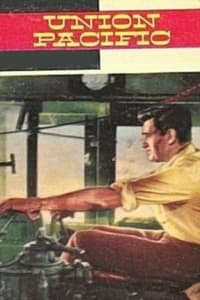
Union Pacific (1958)
Union Pacific is a Western television series starring Jeff Morrow, Judson Pratt and Susan Cummings that aired in syndication from 1958 until 1959. This show was inspired by the 1939 film also named Union Pacific, starring Joel McCrea, Barbara Stanwyck, and Robert Preston. The series follows the exploits of Bart McClelland, played by Morrow, as he supervises the construction and extension of the Union Pacific Railroad west of Omaha, Nebraska, to Promontory, northwest of Salt Lake City, Utah. McClelland was mostly concerned with right-of-way issues, which could be affected by stubborn landowners, ranchers, Indians, outlaws, and other factors. Helping McClelland with his work was surveyor Billy Kincaid, played by Pratt. Susan Cummings rounded out the cast as Georgia, proprietor of the Golden Nugget Saloon, the rolling bar that followed the railroad workers along the tracks. Union Pacific never developed a following and was cancelled after a single season. Union Pacific was filmed by California National Productions at the Iverson's Movie Ranch in Chatsworth in Los Angeles County, California. Other offerings were the syndicated Boots and Saddles and Pony Express and the NBC anthology series, Frontier, which aired from 1955-1956.
poster
44
?
7.2
/246/
10
/4/
54
/7/

The 20th Century Fox Hour (1955)
The 20th Century Fox Hour is an American drama anthology series televised in the United States on CBS from 1955 to 1957. Some of the shows in this series were restored, remastered and shown on the Fox Movie Channel in 2002 under the title Hour of Stars. The season one episode Overnight Haul, starring Richard Conte and Lizabeth Scott, was released in Australia as a feature film.
poster
52
?
7.6
/359/
10
/4/
72
/4/

Schlitz Playhouse of Stars (1951)
Schlitz Playhouse of Stars is an anthology series that was telecast from 1951 until 1959 on CBS. Offering both comedies and drama, the series was sponsored by the Joseph Schlitz Brewing Company. The title was shortened to Schlitz Playhouse, beginning with the fall 1957 season.
poster
41
?
8.0
/111/
10
/4/
35
/3/

Cavalcade of America (1952)
Cavalcade of America is an anthology drama series that was sponsored by the DuPont Company, although it occasionally presented a musical, such as an adaptation of Show Boat, and condensed biographies of popular composers. It was initially broadcast on radio from 1935 to 1953, and later on television from 1952 to 1957. Originally on CBS, the series pioneered the use of anthology drama for company audio advertising. Cavalcade of America documented historical events using stories of individual courage, initiative and achievement, often with feel-good dramatizations of the human spirit's triumph against all odds. This was consistent with DuPont's overall conservative philosophy and legacy as an American company dating back to 1802. The company's motto, "Maker of better things for better living through chemistry," was read at the beginning of each program, and the dramas emphasized humanitarian progress, particularly improvements in the lives of women, often through technological innovation.
poster
58
?
7.5
/332/
35
/9/
65
/6/

Letter to Loretta (1954)
Letter to Loretta is an American anthology drama series telecast on NBC from September 1953 to June 1961 for a total of 165 episodes. The filmed show was hosted by Loretta Young who also played the lead in various episodes. Letter to Loretta was sponsored by Procter & Gamble from 1953 through 1960. The final season's sponsor was Warner-Lambert's Listerine.
poster
50
?
8.3
/231/
10
/4/
57
/2/

You Are There (1953)
You Are There is an American historical educational television and radio series broadcast over the CBS Radio and CBS Television networks.
poster
70
?
8.2
/351/
44
/12/
85
/7/

Hallmark Hall Of Fame (1951)
Hallmark Hall of Fame is an anthology program on American television, sponsored by Hallmark Cards, a Kansas City based greeting card company. The longest-running primetime series in the history of television, it has a historically long run, beginning during 1951 and continuing into 2013. From 1954 onward, all of its productions have been shown in color, although color television video productions were extremely rare in 1954. Many television movies have been shown on the program since its debut, though the program began with live telecasts of dramas and then changed to videotaped productions before finally changing to filmed ones. The series has received eighty Emmy Awards, twenty-four Christopher Awards, eleven Peabody Awards, nine Golden Globes, and four Humanitas Prizes. Once a common practice in American television, it is the last remaining television program such that the title includes the name of the sponsor. Unlike other long-running TV series still on the air, it differs in that it broadcasts only occasionally and not on a weekly broadcast programming schedule.
poster
?
7.5
/54/
27
/5/
63
/3/

The Chevy Mystery Show (1960)
The Chevy Mystery Show is an American television anthology series featuring a different mystery each week that aired on NBC in 1960 as a summer replacement.
poster
44
?
7.3
/107/
10
/4/
50
/2/

Crossroads (1955)
An anthology series based on the activities of clergymen from different denominations.
poster
?
7.4
/66/
10
/5/
50
/1/

Frontier (1955)
Frontier is an American Western anthology series that aired on NBC from September 1955, to September 1956. The series de-emphasizes gunplay and focuses on the hazards of the settlement of the American West. It was only the second anthology Western series in television history, having been preceded by Death Valley Days. Frontier aired premiered on September 25, 1955, and ran sporadically in its last five months. Walter Coy narrated the series and starred in occasional episodes, which are dramatizations based on actual events. The program was produced by Worthington Miner.
poster
42
?
6.9
/152/
10
/4/
50
/6/

Matinee Theater (1955)
Matinee Theater is an American anthology series that aired on NBC during the Golden Age of Television, from 1955 to 1958. The series, which ran daily in the afternoon, was frequently live. It was produced by Albert McCleery, Darrell Ross, George Cahan and Frank Price with executive producer George Lowther. McCleery had previously produced the live series Cameo Theatre which introduced to television the concept of theater-in-the-round, TV plays staged with minimal sets. Jim Buckley of the Pewter Plough Playhouse recalled: When Al McCleery got back to the States, he originated a most ambitious theatrical TV series for NBC called Matinee Theater: to televise five different stage plays per week live, airing around noon in order to promote color TV to the American housewife as she labored over her ironing. Al was the producer. He hired five directors and five art directors. Richard Bennett, one of our first early presidents of the Pewter Plough Corporation, was one of the directors and I was one of the art directors and, as soon as we were through televising one play, we had lunch and then met to plan next week’s show. That was over 50 years ago, and I’m trying to think; I believe the TV art director is his own set decorator —yes, of course! It had to be, since one of McCleery’s chief claims to favor with the producers was his elimination of the setting per se and simply decorating the scene with a minimum of props. It took a bit of ingenuity.
poster
47
?
7.7
/144/
27
/4/
56
/5/

The Philco Television Playhouse (1948)
The Philco Television Playhouse is an American anthology series that was broadcast live on NBC from 1948 to 1955. Produced by Fred Coe, the series was sponsored by Philco. It was one of the most respected dramatic shows of the Golden Age of Television, winning a 1954 Peabody Award and receiving eight Emmy nominations between 1951 and 1956.
poster
46
?
7.8
/654/
10
/4/
50
/3/

The Millionaire (1955)
An anthology series that explored the ways sudden and unexpected wealth changed life for better or for worse. It told the stories of people who were given one million dollars from a benefactor who insisted they never know him, with one exception.
poster
49
?
6.8
/465/
18
/6/
64
/5/

General Electric Theater (1953)
General Electric Theater is an American anthology series hosted by Ronald Reagan that was broadcast on CBS radio and television. The series was sponsored by General Electric's Department of Public Relations.
poster
65
?
8.1
/380/
47
/8/
69
/8/

Search (1972)
Search is an American science fiction series that aired on Wednesday nights on NBC at 10 pm ET, from September 1972 to August 1973. It ran for 23 episodes, not including the two-hour pilot film originally titled Probe. When picked up for series production, the title had to be changed because Probe was the name of an existing PBS series. In the UK the series aired on BBC 1 under the title Search Control. The show was created by Leslie Stevens, and produced by Leslie Stevens, Robert Justman, John Strong and Tony Spinner. The high concept was described as "science fiction in today's world" and the episodes featured many high-tech elements which are considered common in current science fiction shows.
poster
60
?
7.7
/282/
31
/6/
75
/2/

Judd for the Defense (1967)
High-priced Houston lawyer Clinton Judd and his assistant Ben Caldwell take difficult cases throughout the U.S.


mdblist.com © 2020 | Contact | Reddit | Discord | API