mdblist.com logo The Best Norman Scace TV Shows. Go to The Best Movies


Ratings
Between
and
Between
and
Between
and
With at least
votes
Between
and
With at least
votes
Between
and
With at least
votes
Between
and
With at least
votes
Between
and
With at least
votes
Between
and
Between
and
Between
and
With at least
votes
Additional filters
m
m
Networks, Streaming Services, Cast and more
Create List (18 items)

Login to create Trakt list


poster
Amazon Prime Video
87
8.5
/16031/
81
/537/
77
/202/
4.1
/839/
100
/16/
93
cc age 13+

The Prisoner (1967)
After resigning, a secret agent is abducted and taken to what looks like an idyllic village, but is really a bizarre Kafkaesque prison. His warders demand information. He gives them nothing, but only tries to escape.
poster
70
23
7.1
/1446/
65
/36/
77
/14/

Going Straight (1978)
Going Straight is a BBC sitcom which was a direct spin-off from Porridge, starring Ronnie Barker as Norman Stanley Fletcher, newly released from the fictional Slade Prison where the earlier series had been set. It sees Fletcher trying to become an honest member of society, having vowed to stay away from crime on his release. The title refers to his attempt, 'straight' being a slang term meaning being honest, in contrast to 'bent', i.e., dishonest. Also re-appearing was Richard Beckinsale as Lennie Godber, who was Fletcher's naïve young cellmate and was now in a relationship with his daughter Ingrid. Her brother Raymond was played by a teenage Nicholas Lyndhurst. Only one series, of six episodes, was made in 1978. It attracted an audience of over 15 million viewers and won a BAFTA award in March 1979, but hopes of a further series had already been dashed by Beckinsale's premature death earlier in the same month.
poster
?
5.6
/41/
10
/1/
10
/1/

Churchill's People (1974)
Churchill's People is a British anthology series based on A History of the English-Speaking Peoples, Winston Churchill's four-volume history of Britain and its former colonies. 26 episodes were produced by the BBC and initially broadcast from 30 December 1974 to 23 June 1975.
poster
54
?
7.7
/149/
10
/6/
77
/3/

The Main Chance (1969)
The Main Chance was a British television series which first aired on ITV between 1969,1970,1972 and 1975. A drama, it depicts the sudden transformation in the life of solicitor David Main who relocates from London to Leeds.
poster
52
?
7.1
/205/
35
/4/
50
/7/

BBC Play of the Month (1965)
A BBC television anthology series featuring productions of classic and contemporary stage plays usually broadcast on BBC1. Each production featured a different work, often using prominent British stage actors in the leading roles. The series was transmitted from October 1965 to September 1983.
poster
?
8.0
/87/
10
/2/
67
/3/

The Scales of Justice (1962)
Not strictly TV productions, "The Scales of Justice" were cinema second features produced for Anglo Amalgamated running around 30 minutes and followed the "Scotland Yard" series of shorts also introduced by Edgar Lustgarten. Production was sporadic (presumably filling gaps in the Edgar Wallace schedule), the first three released Nov-Dec 1962, a second batch of three released Sept/Oct 1963, two more in Feb 1965, one in Dec 1965 and a final batch (in colour) Sept 1966 to March 1967. The usual Merton Park recipe of familiar British actors in tightly plotted screenplays (based on real cases) with better than usual B movies production standards. All thirteen have now (Oct 2012) been released on DVD by Network.
poster
?
6.9
/10/
10
/3/
60
/1/

The Mask of Janus (1965)
In the fictional European country of Amalia, the political interests of the British, American and Communist espionage communities are explored. Eschewing the action formula of its ITV contemporaries, the series dealt more politically oriented plots such as defections to the west, awakening "sleeper" agents and the leaking of official secrets.
poster
61
?
8.2
/347/
35
/6/
68
/4/

Gideon's Way (1965)
Gideon's Way is a British television crime series made by ITC Entertainment in 1964/65, based on the novels by John Creasey. The series was made at Elstree in twin production with The Saint TV series. It starred Liverpudlian John Gregson in the title role as Commander George Gideon of Scotland Yard, with Alexander Davion as his assistant, Detective Chief Inspector David Keen, Reginald Jessup as Det. Superintendent LeMaitre, Ian Rossiter as Detective Chief Superintendent Joe Bell and Basil Dignam as Commissioner Scott-Marle. The show did not acknowledge any help from Scotland Yard, any other police force or advisor. Daphne Anderson starred as his wife, Kate with Giles Watling as young son, Malcolm, Richard James as older son, Matthew who seemed to have a lot of new girlfriends and Andrea Allan as daughter, Pru. Unusually for police stories, Gideon was shown as a family man at home though urgent phone calls from his bosses tend to disrupt family plans too often. However, he did admit in "State Visit" that his wife had walked out on him for a while years ago when he put the job first and her second. They live in an expensive detached house in Chelsea.
poster
?
4.8
/31/
10
/2/
80
/1/

Story Parade (1964)
Story Parade specialized in adaptations of modern novels. It was broadcast on June 5, 1964 and repeated on August 28, 1964. The teleplay was by Terry Nation (who invented "Blake's 7" and the Daleks in Dr. Who), and Elijah Baley was played by the late Peter Cushing. It also starred John Carson John Carson as R. Daneel Olivaw and Kenneth J. Warren. The master tapes of the program were erased, however a few clips from the production have turned up in various documentaries about Isaac Asimov's work.
poster
50
?
7.6
/128/
10
/4/
65
/3/

Sergeant Cork (1963)
Sergeant Cork is a British detective television series which first aired between 1963 and 1968 on ITV. It was a police procedural show that followed the efforts of two police officers and their battle against crime in Victorian London. In all 66 hour-long episodes were aired during the five-year run, although the last episode was not broadcast until January 1968, 16 months after the others. Journalist Tom Sutcliffe has credited it as a first example of the use of the Victorian-era policeman in a television crime series. A 1969 review in The Age opined that rather than suspense, the strengths of the series were its "excellent period settings and wonderfully thick pea-soupers" which "add up to splendid evocative stuff", as well as the performance of star John Barrie. At no time during the whole series is Sergeant Cork's first name given.
poster
?
6.6
/29/
10
/4/
60
/1/

Studio 4 (1962)
Studio 4 is an anthology drama series utilising BBC Television Centre's Studio Four, and running for two series in 1962 on BBC One. It was envisaged as a sequel to Storyboard, a similar anthology series which had been transmitted the previous year.
poster
?
7.5
/32/
25
/5/

Great Expectations (1967)
Orphan Pip discovers through lawyer Mr. Jaggers that a mysterious benefactor wishes to ensure that he becomes a gentleman. Reunited with his childhood patron, Miss Havisham, and his first love, the beautiful but emotionally cold Estella, he discovers that the elderly spinster has gone mad from having been left at the altar as a young woman, and has made her charge into a warped, unfeeling heartbreaker.
poster
?
8.2
/55/
10
/4/
100
/1/

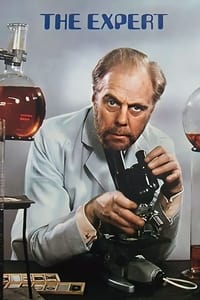
The Expert (1968)
The Expert is a British television series produced by the BBC between 1968 and 1976. The series starred Marius Goring as Dr. John Hardy, a pathologist working for the Home Office and was essentially a police procedural drama, with Hardy bringing his forensic knowledge to solve various cases. The Expert was created and produced by Gerard Glaister. The series was also one of the first BBC dramas to be made in colour, and throughout its four series had numerous high quality guest appearances by actors such as John Carson, Peter Copley, Rachel Kempson, Peter Vaughan, Clive Swift, Geoffrey Palmer, Peter Barkworth, Jean Marsh, Ray Brooks, George Sewell, Anthony Valentine, Bernard Lee, Lee Montague, Geoffrey Bayldon, Mike Pratt, Edward Fox, André Morell, Brian Blessed, Nigel Stock, Philip Madoc and Warren Clarke.
poster
?
7.1
/60/
10
/3/
72
/4/

Theatre 625 (1964)
Theatre 625 is a British television drama anthology series, produced by the BBC and transmitted on BBC2 from 1964 to 1968. It was one of the first regular programmes in the line-up of the channel, and the title referred to its production and transmission being in the higher-definition 625-line format, which only BBC2 used at the time.
poster
59
?
7.1
/602/
40
/11/
58
/9/
70
/11/

Van der Valk (1972)
Van der Valk is a British television series that was produced by Thames Television for the ITV network. It starred Barry Foster in the title role as Dutch detective Commissaris "Piet" van der Valk. Based on the characters and atmosphere of the novels of Nicolas Freeling, the first series was shown in 1972.
poster
44
?
7.1
/163/
33
/6/
40
/5/

Sir Francis Drake (1961)
Sir Francis Drake was a British adventure television series starring Terence Morgan as Sir Francis Drake, commander of the sailing ship the Golden Hind. As well as battles at sea, sword fights, the series also deals with intrigue at Elizabeth's court, often caused by Spaniard, Mendoza.
poster
51
?
7.3
/152/
35
/6/
45
/4/

The Wednesday Play (1964)
An anthology series of television plays which aired on BBC1 from October 1964 to May 1970. The plays were usually written for television, although adaptations from other sources also featured.
poster
52
?
7.3
/290/
24
/5/
60
/5/

Doomwatch (1970)
Doomwatch is a British science fiction television programme produced by the BBC, which ran on BBC 1 between 1970 and 1972. The series was set in the then present-day, and dealt with a scientific government agency led by Doctor Spencer Quist, responsible for investigating and combating various ecological and technological dangers. The series was followed by a film adaptation produced by Tigon British Film Productions and released in 1972, and a revival TV film was broadcast on Channel 5 in 1999.


mdblist.com © 2020 | Contact | Reddit | Discord | API